Showing posts with label performance rights organization. Show all posts

Dividing BMI Songwriting Royalties

Dear Rich  So we have a band and we've done most of the formalizing to make it a real company and make sure everyone is taken care of fairly. One of the things we've run into in trying to register our songs with BMI is that it wants the songwriter percentages. We are a four piece and plan to split everything equally once we are profitable (until then, the money we make from the band helps fund the band so we can keep doing band stuff) But as far as songwriters, that generally falls about 80% to one, 20% to another and all four contribute to the music composition. Lyrics are credited to the band name. Again, everyone agrees to this. But BMI wants people names and SS#'s, Tax ID #. You've said in some of your articles that the band can decide to split the royalties however they want, but how does that work from a practical standpoint if BMI wants to send checks to individual band members? Are the members supposed to sign the checks over to the band? Also, it doesn't seem to be an option to register a band as a songwriter. If BMI will only allow songwriters to be individuals, does that mean we have to have all members registered and credited 25% each so that it reflects our equal split band agreement? And then handle it internally (collecting from band members as specified in the band agreement until profitability is reached?) Performance royalties refers to the money collected by performance rights organizations like BMI and ASCAP and paid to songwriters and publishers. It's revenue derived from charging a license fee to businesses -- radio stations, stores, and taverns -- that publicly play your music. As we explain in our book -- Music Law: How to Run Your Band's Business -- even if you set up a system whereby everyone (songwriters and nonwriters) shares equally in song income, it’s still possible that a credited songwriter will receive more money from BMI. That’s because in the case of performance royalties, BMI and ASCAP split the revenue for each song and make separate payments to music publishers and songwriters. In other words, with performance royalties the songwriter’s portion is paid directly to the songwriter and does not pass through the band’s publishing company. Therefore, if a song is a big hit on the radio or in a TV show, a credited songwriter will probably receive more money than a nonsongwriter. It is possible, as you suggest, that your agreement among the band (or between the band and the publisher) could deal with this share. For example, you could create a music publisher, register that with BMI and the publisher would receive half the income. Then, the songwriters getting checks could kick those into the pot as well. Alternatively you could forget the publisher and just have the members contribute their BMI income. These alternatives require some diligence and bookkeeping which is why it's often overlooked in band situations.

Terminating BMI for ASCAP: What Happens?

Dear Rich: I was in a band that released a few albums. The band's music publisher affiliated with BMI and so did all of the band members who were songwriters. That was about 15 years ago and now I'd like to switch to ASCAP. If I affiliate with ASCAP and terminate with BMI, will ASCAP continue to pay me my share of the songs from my old band? (For readers who may not know, BMI and ASCAP are performing rights organizations that collect money for public performance of songs -- we discussed PROs in a previous entry.) The good news is that you will continue to get paid if you switch from BMI to ASCAP. BMI will write checks to you as a "terminated" writer for a song that is associated with a BMI-affiliated publisher. We weren't aware of the practice but it was confirmed by BMI and ASCAP reps. (BTW, the differences between BMI and ASCAP are highlighted here).

Do I Get Any Money From Cover Song Play?

Dear Rich: Our band covered a song and it's getting good airplay on Live 365 and at some other places. Do we get paid for this? How do we get the money? Most of the money generated from the playing of music --  whether on the radio, at an American Apparel store, or even on Internet stations --  is collected and paid to the songwriters, usually by performance rights societies. So, performing a cover song is usually not the best route to a guaranteed royalty stream. However, there is one way you can earn money for the public performance of your recording. Performers and record labels get paid for every performance of a song by a non-interactive webcaster – for example, Internet radio stations such as Live 365, Pandora, Sirius XM, Cable TV music channels, or virtually any digital transmitter in which the listener is unable to choose the specific song that's played. This money is collected and distributed by SoundExchange and you can sign up with them and list your tracks. The sign-up process is a little labor-intensive but once you are in their system, things should move smoothly.

Rights to Perform Show Tunes

Dear Rich: I represent some members of a theater musicians organization. My question is about transcribing theater numbers from a CD, and performing them in public. Do we have to pay any copyright fees to anyone? Do we have to pay the  Tams-Witmark people who own the rights to the music? Actually, the Tams-Witmark company doesn't own the musical performance rights to musicals; they control what are known as "grand rights," which refer to the permissions necessary to stage an opera, play with music, or a work of musical theater. So, you need to consult Tams-Witmark if you are putting on the show, but not if you are only performing songs from a show -- for example, playing songs from The Wiz, Wicked or West Side Story.
BMI and ASCAP. Performance rights organizations such as BMI and ASCAP collect for such performances by charging venues with an annual blanket fee. So the venue ends up paying for it, not the musicians. The business of transcribing the music may technically require permission, but it is unlikely anyone will chase you for writing out the chord changes and melody of a song unless you attempt to sell these transcriptions.
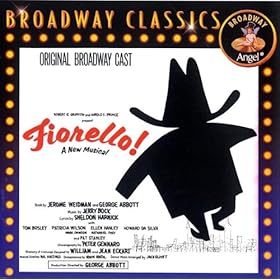
The Name's Laguardia. Can you believe that there was once a hit broadway show about Fiorello LaGuardia and it won the Tony and Pulitzer Prize? The Dear Rich Staff remembers it fondly (probably because we had the lead in one high school performance).