Showing posts with label transformative. Show all posts
Showing posts with label transformative. Show all posts
Wants to Use Statler and Waldorf Puppets
Monday, December 10, 2012
0
comments
Dear Rich: Can you tell me if I can use the original Statler & Waldorf masks on YouTube without getting into copyright problems? I want to do an item in our show (which is being planned at the moment) with us wearing the masks and do activities and visit events and comment on it! We are planning to earn money with YouTube (don't think the chance is big, but we don't want trouble if we would start earning money with it) Or is there a website where I can find out stuff about the copyright of the muppets? Statler and Waldorf -- the heckling Muppets named after New York City hotels -- are both protected under copyright law. The copyright is owned by Disney. Your use is likely to be considered infringing -- you are creating a substantially similar work that does not seem to be transformative, such that it would be permitted as a fair use. (BTW, The copyrights for Muppets that first appeared on Sesame Street are owned by the Sesame Workshop).
Bottom Line Dept. We've written several times about getting permission from Disney (put "Disney" into search box on right), but you don't need to bother reading those entries. Disney is highly unlikely to give you permission. The bigger issue is whether they'll notice your use, and if they do notice whether they'll care. As always, the more popular you become, the more likely you'll get a cease and desist letter.

Wants to Use Dictionary Definitions
Thursday, April 12, 2012
0
comments

Fair Use? Using a copyrighted work for a transformative purpose may provide a fair use defense. But we're not clear why you believe your use is transformative. It seems like you're using the definition for the intended purpose -- to explain the meaning of each word. Similarly, just because your project is mocking the idea of literary comprehensibility, doesn't make it a parody. A parody is a work that ridicules another, usually well-known work, by imitating it in a comic way. Typically, the work that is borrowed -- in your case, the dictionary definitions -- is the work that's being parodied. That doesn't seem to be the case here. If you were only using one or two definitions, you might be able to argue fair use (or the merger doctrine). But considering the large number of borrowed definitions, we're not seeing a safe defense. Of course, as we always note in our windups, MW's lawyers may not see or care about your project, so you could always consider forgetting about us and our square opinions!
Wants to Use Thrift Store Dolls to Illustrate Stories
Monday, October 24, 2011
0
comments

What if You Get Signed to a Big Deal Publisher? If you're planning to sign with a commercial publisher then things could get more complicated because most publishers will require that you clear copyrighted materials beforehand -- they're not big fair use fans. And they'll insist that you indemnify them as well. Which means that if they get sued, you'll pay for their legal costs. Ouch! So, if you're looking at a commercial publishing deal take your questions to a copyright lawyer for an expert opinion on each use. Then, you can proceed with more confidence if you need to indemnify.
Adapting Pop Songs For Musical Show
Wednesday, July 13, 2011
0
comments
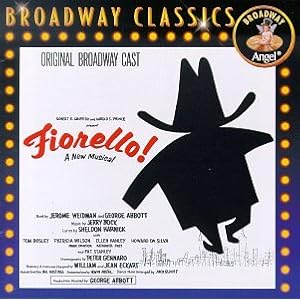 |
| musical in which Dear Rich staff had the lead in MacArthur High School |
- your work is totally original. Sorry, we're sure there is a lot of originality in your work, but it's also derived from other works. The copyright owner controls the right to make derivatives. Yes, there's creativity required to adapt works but doing so without authorization is infringement.
- your work doesn't compete with the original songs. Your work doesn't have to compete to infringe.
- your work promotes (advertises) the original work. Does it? It may cause listeners to conjure up the original -- that's the reason why people create parodies of famous songs -- but it's primarily being used to promote your ideas and concepts.
- the songs 'work' whether or not the listener knows the original. That's not a defense to infringement and in any case that's true for most parodies. We would probably appreciate Weird Al's "Eat it" whether or not we know the MJ version. But the real success of the adaptation relies on its juxtaposition and familiarity -- otherwise, why use the original in the first place.
- your plays are not commercial. This may be factor in a fair use analysis or in assessing damages, but won't make much difference when determining if you are infringing. In any case, you're seeking revenue for your work so we think this argument is moot, as the lawyers say.
- your adaptations are transformative. Don't confuse the fact that you are "transforming" the songs with the transformative standard used in copyright law. Most courts require that the transformation comment upon or parody the original. It is usually not considered transformative when the material is used to poke fun at something other than the original -- for example to use the Dr. Seuss style to poke fun at the judicial system. Check out these fair use examples.
We don't want to dissuade you from creating musicals. The world needs more. But we also don't want you to invest a great deal of money in promoting or publishing these works only to get hit with a cease & desist letter. The use of a song in a show requires a special license from the music publisher as does the modification of the lyrics (that's right, Weird Al has to pay big bucks for these songs!). So unless you're positive you'll be flying below the radar, we think you're engaging in some risky behavior.
Subscribe to:
Posts (Atom)


