Showing posts with label infringement. Show all posts

Someone Stole My PowerPoint!

Dear Rich: A colleague of mine is getting ready to submit an article for publication. While finalizing things, she came across her own PowerPoint presentation on the internet that she and some other staff had created together for educational purposes. When she found it, someone else had slightly altered the presentation (although not much) and attached their name to her work. My colleague had not copyrighted the work so we were wondering how to proceed. Your friend has a copyright on her PowerPoint regardless of whether she has done anything affirmative -- for example, registering with the Copyright Office. The government graced her with copyright once she completed her presentation and saved it to a server or hard drive. That's because in most countries, including the U.S. and Canada, all that is required for a work to acquire copyright protection is that it be "original" and "fixed." "Original" means that the presentation is original to your colleague and that it was not copied from another source. A work is "fixed" when it exists in some tangible manner such as saved onto a computer disk. You can register it and registration has some benefits.
What can do you about the stolen presentation? You can write to the Internet Service Provider (ISP, or network service provider hosting the site) that has posted the infringing PowerPoint online and ask them to take it down. This can be accomplished using the DMCA procedures outlined in this video. That should deal with removing the illegal posting. Assuming it does, your colleague can also pursue the interloper with other federal copyright remedies.

Can I Be A Disney Party Princess Impersonator?

Dear Rich: I want to be a princess party entertainer for kids. If I make a costume (not licensed) and NOT call the princess by its "Disney" name, can I charge for my party entertainment services? Is there a loophole on the whole copyright thing? What about celebrity impersonators? Can't I be the blue princess celebrity impersonator? (Dress blue and white, not licensed). Sorry, I'm not trying to get you in trouble with "The Mouse." We're not sure what you mean about being a celebrity impersonator princess ... is it something like this. As for a copyright loophole, we assume you're seeking a legal means of escaping liability for infringement. We doubt whether you would qualify for any of the existing methods -- for example, fair use, the first sale doctrine, etc. Under copyright law, Disney can go after anyone who reproduces or exploits a substantially similar version of one of their proprietary princesses. Even so, we believe most "liability evasion" occurs because Disney hasn't learned about the infringement or is so booked up with legal matters that it cannot act on princess rip-offs. As usual, the lower your profile -- don't book a show on Buena Vista Street in Burbank -- the better your odds of evading detection. Also, you might want to check out our past entry on Disney princesses

Did I Infringe at ESL School Abroad?

Dear Rich, I taught at two for-profit, non-compulsory private English as Second Language (ESL) schools overseas that both used reading guides for the reading books that they assign the students to read or listen to as an audio recording. The guides included quotes, references, and pictures directly from the books assigned. The students had to buy the guides and novels (or audiobooks). I am not sure how the recordings were made, or if they were officially licensed by the publishers. I didn't bring this up with my employers for fear of losing my job. Was I using pirated material? It's possible you're asking because you want to report your ex-employers for copyright infringement. That's not unusual. Disgruntled ex-employees are a major source for reporting intellectual property violations (and they're often rewarded for their reporting). 
In any case, we couldn't tell you with any certainty if a copyright owner could pursue an infringement claim. Most likely the unauthorized audio recordings constitute infringement but as for the rest, that depends on the amount taken, whether the use is excused as a fair use, whether the copyright owner can maintain a lawsuit in the foreign jurisdiction (or has a basis for suing in the U.S.), and who committed the alleged infringement. 

Re-Drawing Movie Still at a Website

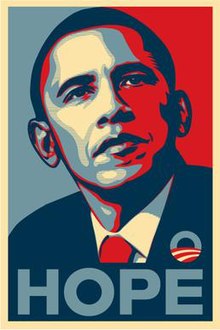
Dear Rich: I saw your entry on "Using Movie Stills at a Website." What if I draw a picture from the scene? Is that still copyright infringement? Would the quality of reproduction also have a factor (i.e. a very realistic recreation of the still vs. something more paint-like)? As we mentioned last February, unauthorized reproductions are infringements unless excused by a defense such as fair use. The same rules apply for unauthorized derivative works and these can trigger the same legal responses as straight infringements (as Shepard Fairey learned when he created his artsy Obama Hope imagery -- which has triggered its own derivative infringements). You don't protect yourself by making a more "artistic" derivation.  It's infringement as long as a lay observer believes that the underlying (or preexisting) work has been copied (for example, as in the example, above). In any case, this legal mumbo-jumbo we're spouting is ignored by millions of people on the web every day. So, the real question is whether your creation of an unauthorized derivative work based on a movie still will make somebody so mad that they'll come after you, take your home, car and new Mac laptop. As usual, we couldn't tell you ... though as we've mentioned before, you're likely to be better off if you use smaller images (thumbnails are best), you don't poach from popular licensing sites such as Getty Images (that regularly troll for their digital fingerprints), and you don't use the image more than once, or for commercial purposes such as merchandise. And of course, the popularity of your site may also make you a more likely target.

Getting Paid for Reporting Software Infringement

Dear Rich: Is it true you can get paid for reporting software infringement? I would love to report an ex-employer. Does it matter if I am in Ohio and the ex-employer is in Indiana?  Yes kids, here's another way to make money at home! Apparently, you can earn some serious bucks for reporting software infringement (provided the report results in a settlement or judgement). The Business Software Alliance will cut you in on payments it receives as result of your reports. You need to fill out a form and proceed through the BSA process. It doesn't matter where you are located as long as the employer is located in the U.S.


Does the VEOH Case Affect My Website?


Dear Rich: We're a web startup (a pre-startup, actually).  Can you explain the effect of the recent VEOH ruling regarding website infringement? Wow, a pre-startup! That sounds hopeful!
The case you're referring to -- UMG Recordings v. Shelter Capital, Partners -- has to do with the level of policing required by a website when users post infringing content. Veoh, a site that permits users to upload video content, was sued by Universal Music, after infringing videos were discovered on the site. Veoh had complied with all requests to remove content and had used software to seek out and identify infringing content, but some infringing music videos still made it on to the site.
DMCA as a shield. Universal argued that Veoh (our source for the kitty video) must have known of the "apparent" infringements and should not be able to use the Digital Millenium Copyright Act (scroll down) as a shield. The 9th Circuit Court of Appeals -- the first appeals court to rule on this issue -- held that the burden was on Universal to report the infringements to Veoh, stating,"Copyright holders know precisely what materials they own, and thus are better able to identify infringing copies than service providers like Veoh." The ruling doesn't shield websites from liability for infringement but it does permit websites to use the DMCA as a shield when the website has anti-infringement policies and has otherwise responded to all requests for takedowns.

Can We Paraphrase Three Paragraphs?

Dear Rich: What is the rule on paraphrasing. I was told that it's okay to paraphrase articles from the web at our site if (1) the original work has been posted for more than a year and (2) only three paragraphs are paraphrased. I can't find anything about this rule on the Internet. That's because there is no such rule. The idea that paraphrasing always excuses infringement is one of the more popular copyright myths. We can't tell you the quantity of paraphrasing that's permissible but here are some cases to guide you:
The caselaw. In a 1974 case, a text book publisher took a popular child psychology book and hired a series of freelance writers each to rewrite the chapters of the book so the result was all paraphrasing. The writers were instructed to maintain the same sequencing of topics and weighting of subject material. A court found such massive copying to be an infringement. Another court later stated, “We recognize that even in the absence of closely similar language, courts have found copyright infringement on the basis of “recognizable paraphrases.” The Second Circuit Court of Appeals stated that infringement occurs when “an alleged infringer borrow[s] virtually an entire work and attempts to avoid liability by doing little more than changing the verbatim language or slight details in the structure.” But wait, there's more: Another 1970 case held that extensive paraphrasing amounts to infringement including the rewording of legal agreements, and in 1972, a court would not excuse extensive paraphrasing when the defendant rewrote a book about guitar playing.
Bottom line dept.  Courts examine paraphrasing on a case by case basis. Don't assume that changing the words automatically absolves you from liability.

Can I Get Away With Selling Counterfeit Goods?

Dear Rich: My cousin sells knockoffs from a famous fashion brand. She makes a quite a bit of money with this 'side busines's and she's offered to set me up. The initial investment is a few thousand dollars. I know it's illegal but what I'm trying to find out is the likelihood that I will get in trouble. What are the chances?We can't tell you the chances for getting caught for selling counterfeit goods. That depends on luck, geography, your online presence, whether you have any acquaintances who have a reason to turn you in, whether your supplier gets busted and decides to flip you, or whether you fall for a sting operation. The sad part of the story -- from a business plan POV -- is that the more successful you become, the more likely you will become a target of all this mishigas. We get similar questions occasionally, so we've posted an article on the subject detailing the legal rules.

Can't Find Copyright Owner: What Do You Do?

Dear Rich: If one has tried and failed to locate the copyright holder of an image or if they no longer are in business or are unknown to the author (myself), is it sufficient to use a disclaimer such as "All reasonable attempts have been made to contact the copyright holders of all images," and perhaps "You are invited to contact ____ if your image was used without identification or acknowledgment." We recently watched an excellent Vidal Sassoon documentary and at the end was a similar statement – something to the effect of “For those photographers whose images we used without permission, we tried to find you and couldn’t and thank you for your wonderful contributions.” Orphan works. What you're dealing with is an “orphan work” --- one that is still protected under copyright but whose owner is missing in action and there's nobody to contact for permission. (There was an attempt to legislate rights for orphan works a few years ago but sadly that failed.) A disclaimer like this won’t relieve you of a claim for infringement but it could go a long way towards limiting your damages if (1) somebody appears out of the woodwork to chase you, and (2) you can demonstrate you made a reasonable good faith to search for the owner. A typical good faith search would include an Internet search and a search of the Copyright Office records.

What Does It Mean to 'Induce' Patent Infringement?

Dear Rich: Thanks for explaining the Supreme Court's decision in the Roche v. Stanford patent case. Could you make that a regular feature? Wow, we're really torn. On the one hand we love to come up with new regular features, and on the other hand so many bloggers already discuss these big cases (in the case of  patent law, check out Patent Baristas and Patently-O). On the other, other hand (wait, is that three hands?) we have to write about something!
Right, you wanted to hear about a Supreme Court case. Last week, the Supreme Court decided Global-Tech Appliances v. SEB. SEB patented a deep-fryer whose exterior was cool to the touch. Global-Tech Appliances, operating outside the U.S. copied everything but the cosmetic aspects of the SEB deep fryer. Global-Tech then branded these deep fryers for sale by Sunbeam, Montgomery Ward, and others. SEB sued Global-Tech for inducing others to infringe its cool-touch patent. Global-Tech defended itself by arguing that it couldn't induce others to infringe because it had no actual knowledge it was infringing SEB's patent. (Global-Tech had vetted its device with a patent attorney but had failed to disclose to the attorney that their device was copied directly from the SEB deep-fryer.)
Justice is (Willfully) Blind. The Supreme Court ruled for SEB. Yes, said the court, inducing infringement required knowledge of the existing patent, but that knowledge could be inferred using a legal standard referred to as "willful blindness." As the Court stated:
Many criminal statutes require proof that a defendant acted knowingly or willfully, and courts applying the doctrine of willful blindness hold that defendants cannot escape the reach of these statutes by deliberately shielding themselves from clear evidence of critical facts that are strongly suggested by the circumstances.
The Court went on to distinguish willful blindness from a lower court's standard known as "deliberate indifference." As for the differences, we won't go into all the details, but practically, the bottom line is that when asking an attorney to render a legal opinion (Does my deep-fryer infringe?), don't hide information (like, 'I copied this from another deep-fryer').

Accused of Selling Knockoffs: What If I Do Nothing?

Dear Rich: I buy handbags from an importer and resell them online. I advertise them as knockoffs at various sites, including eBay. I never claim they're originals ... I always tell people they're copies. Recently, I got a letter from a lawyer saying I had to stop selling them or I would get sued.  Would I be better off running my business as a corporation so that I won't be personally liable? What will happen if I don't respond to the letter? Sorry, but the Dear Rich Staff has lost its ability to predict the future. (We think it happened when Google implemented Panda One and switched its search algorithm.) In any case, any of the following scenarios are possible after receiving a cease and desist letter:
  • you keep selling the knockoffs, the lawyer files a lawsuit, gets a default judgment and enforces it against you personally (assuming you're not an LLC or incorporated) or against your business
  • you stop selling the knockoffs, the lawyer drops the whole thing
  • you stop selling, the lawyer sends a second letter, gets no response and files a lawsuit and gets a default judgment. 
  • you blow off the letter, keep selling the knockoffs, and the lawyer is impressed with your moxie, and decides to hire you as an investigator of trademark counterfeiting. You do really well in that position, give up your handbag business and eventually write a book about the knockoff industry. 
Actually, the last choice --the Catch Me If You Can approach -- isn't very probable at all. If you continue to sell without either fighting the letter or otherwise responding, the lawyers will most likely pursue you because, as the young people say, that's how they roll.
Does forming an LCC or corporation shield you from these lawsuits? Converting your business to an LLC or corporation can establish limited liability and will shield you from personal liability in some instances -- the lawyers can only go after your business assets. But your liability is likely to be tied to your status at the time of the infringement. So if you're a sole proprietor when you got the letter, then you're probably going to be treated that way (personally liable) in court, as well, even if you later convert to an LLC or corporation. In addition, keep in mind that the LLC/corporate shield also won't protect you from the following:

  • You personally guarantee a loan or lease.
  • You owe federal or state taxes. 
  • You act negligently (people are injured by your handbags).
  • You fail to abide by corporate rules. 
That Said Dept. That said, perhaps you should reconsider your business model (as well as your business entity). First, you need to determine whether the lawyers are right -- that is, are your bags infringing? If yes, you should abandon the infringing items. If you're not infringing, you should consider whether you want to fight or move on. If you fight, you may be able to have some luck fighting takedown notices (we'll talk about them more this week) but keep in mind that if you're dragged into court, you'll be hit hard in your bankroll and the only guaranteed winners will be the lawyers.

Can We Turn Boston Red Sox into Zombies?

Dear Rich: I have come up with a couple of designs that depict the Red Sox baseball team as zombies, and before I start trying to sell them online, there are several points regarding Fair Use as parody that I am concerned about. First, is the use of the team's name at all permissable? My design's currently show the name "Red Sox" in a generic font, but the word "Red" is covered by the word "Undead", changing the term to "Undead Sox". The "Red" is still discernable. Is it necessary for me to remove the "Red" entirely? Second, I use modified versions of two logos. The Red Sox's Hanging Sox logo -- my version is an original drawing that includes a dismembered zombie foot in on of the socks, with several toes poking through a hole in the end of the sock. Also, the MLB logo has been modified to replace the baseball player silhouette with a zombie. Thus, both logos have been modifed from the original so that they are unique but clearly reference the original. Is that protected as parody under fair use laws? Third, I use a modified version of the MLB name. In my artwork, it is altered to read Major League Zombies or MLZ. Again, is this permitted as parody? Short answer dept. If your concept is successful, you'll probably get sued by the MLB. If you can afford to defend the lawsuit, you might win; then again, you might not.
Trademark parodies. What you need to keep in mind is that you're dealing with trademark parodies, not copyright parodies so the copyright concept of "fair use" isn't really relevant (and we're not going to address trademark fair use which is an entirely different animal.) Here's a previous post on the subject and here's a good explanation of the trademark parody rules. Keep in mind that to create a true trademark parody, you must convey contradictory messages: you want people to think of the MLB, but you also want people to see your use as a parody that's not connected with the MLB (Chilling Effects elaborates on that distinction here -- scroll down for the explanation).
Why will you get sued? Famous companies typically sue over parodies under a trademark theory known as dilution. When you dilute, people think less of the mark because you've tarnished its famous reputation. Even if a company believes you have a good free speech defense, the company may proceed with the lawsuit because it has more money to spend on the lawsuit and is more likely to force you into a settlement. If we were to analogize to the world of zombies, the MLB lawyers will want to devour your grey matter.