
Showing posts with label trademarks. Show all posts
Showing posts with label trademarks. Show all posts
Song Titles as Chapter Headings
Tuesday, June 18, 2013
0
comments

What Good are Marks on the Supplemental Register?
Monday, April 1, 2013
0
comments

Trademarks: Does Punctuation Matter?
Wednesday, February 6, 2013
0
comments

What Makes a "Series" for Registering Book TM?
Friday, August 31, 2012
0
comments

How many is a series? Apparently, two separate creative works is enough to establish a series according to the Manual of Examining Procedure. However, you will want to make sure that the submissions are significantly different in content -- for example, it's not simply the same book, but slightly revised. Also, the title (or portion of the title) used as a trademark must create a separate commercial impression (TMEP 1202.08(d)(i)) -- meaning that the size, font, and color used for the mark being registered for the series should be separable or different from the remainder of the title.
Can I Use Photo of '54 Buick?
Tuesday, August 21, 2012
0
comments

What about the property release? A property release is typically used to allow someone permission to enter property (typically, a house or building) and use the location in a photo or film. A property release wouldn't be required at an auto show show (unless the venue had photo restrictions).
Wants to Use Sports Nicknames
Monday, April 30, 2012
0
comments

Nicknames. The legal right to exploit a player's nickname may belong to that player, particularly as with Linsanity, where the nickname incorporates the player's surname. In that case, the player may be able to assert right of publicity claims or trademark claims. As the search results for Linsanity show (above), there are presently nine people vying for the Linsanity registration for products ranging from computer software to perfume (Bouquet de Gym Socks?). We think, except for this applicant, most applicants will likely have wasted their $345 application fees.
Invented New Word and Wants to License It
Friday, February 3, 2012
0
comments

Approaching manufacturers. We think you'll have a hard time convincing manufacturers to buy rights to your word. All the made-up words that we've seen used as trademarks -- for example, Nerf, Kodak, Viagra, and Kleenex -- are usually associated with new products. (Actually, Nerf is an acronym for Non-Expanding Recreational Foam.) So unless you also have some proprietary product ideas to go with your new word, we think you're headed in the same uphill direction as Sisyphus.
Can you claim rights under an intent to use application? A manufacturer is going to want an assurance that you have rights to the mark. We know you'd like to use the word as a mark but do you actually have a bona fide intent to use the word as a mark? As this case and others have shown, without actual evidence of your intent (more than a desire to profit), your claims over the word may be subject to challenge. Here's more on the subject.
Can you sell what you have? Sure, you can sell the domain names anytime, no problem. But we don't think anyone would want to pay for the "trademark rights" because you won't have any rights until the word becomes a trademark. That occurs after the mark has been used in commerce. We think this is one of those cart-before-the-horse situations and suggest you could save money on trademark fees by reading up on some of Nolo's excellent trademark articles.
Can We Use Cars in CD Cover Art or Movie?
Wednesday, January 4, 2012
0
comments
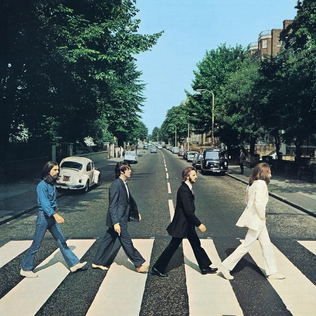
The Abbey Road Cover. The image of a VW on the Abbey Road cover (above) is unlikely to trigger any trademark issues because the usage is primarily editorial -- that is, it's an incidental use and no particular attention is drawn to the car. Of course, at the time, fans saw hidden meanings in the presence of the car (Beetle = Beatle) but it turns out the car was simply a vehicle owned by someone in a nearby flat. (BTW, the license of the car was stolen soon after the album came out). If consumers were likely to be confused into thinking that Volkswagen (or any other car manufacturer whose vehicle appears on the street) endorsed the Beatles (or vice versa), the car company never saw fit to take action. After all, if the world's most popular band at the time is including your product on a popular album, that's not something you're likely to complain about. (In general, it was a less litigious world back in 1970.) BTW, an editorial use of a trademark -- for example, a picture of a Ford truck in a documentary about trucks -- is not infringing.
Herbie and VW Marks. As for Herbie and the Love Bug movies, Disney removed the name and logos (scroll down) from Herbie in the first movie in the series. Apparently the company was concerned about claims of trademark infringement. But several years later when the sequel appeared (Herbie Rides Again) in 1974, VW sales were down and the VW company insisted that Disney put the trademarks and names back. (The names and marks stayed on Herbie for the subsequent four Love Bug sequels.)
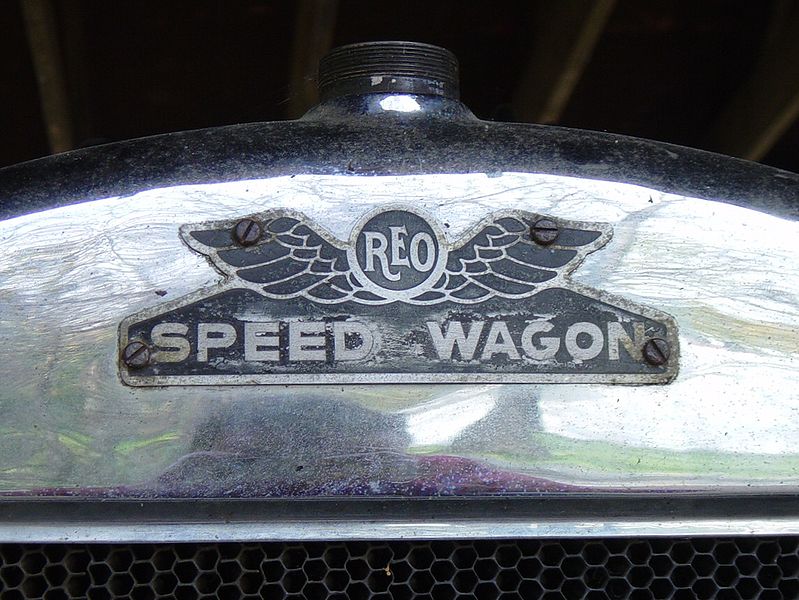
As a general rule, you want to avoid making people think the car company is affiliated or endorses your product or service -- for example, calling your band Miata -- or diluting a famous mark by tarnishing its reputation in a commercial context. However, we also note that there's plenty of leeway in these standards as the Caterpillar company found out when they tried unsuccessfully to prevent the use of their villainous tractors in a George of the Jungle movie.
Can I Sell Sports App That Uses RSS Feed?
Wednesday, December 7, 2011
0
comments
 Dear Rich: I've already made an app that feeds RSS feeds from SkySports and goal.com. The app informs people on the go about their football team. I'm about to change the app slightly and putting more work into it. I'm thinking about selling it for 1 pound. Would this be copyright infringement because I'm making a profit (or am I just feeding people the infomation from the direct source, that is, skysportsnews.com and goal.com)? Start by considering the two extremes of RSS feeds apps. On one end you have RSS reader apps like Xnews. These apps don't infringe because they are simply providing access to a variety of feeds. On the other end you may have a news app that pulls feeds from a few specific news sites and reproduces the material within the app. This is more likely to be copyright infringement because it is reproducing specific RSS feed content for readers, as well as trademark infringement because it is confusing consumers as to the source of the material. (BTW, we wrote about this issue about six months ago.) Your app seems to be somewhere in between these two extremes (and the fact that you are charging money doesn't affect the determination). The more you move away from the reader model where the user chooses the RSS feed and gets unadulterated content, and the more you hype the name of the company supplying the feed, the more likely you will run into problems. In your case, reproducing content from two specific feeds (whose trademarks are featured) could trigger a cease and desist letter.
Family Named Business Can't Always Use Family Name
Wednesday, November 30, 2011
0
comments

P.S. Speaking of restaurants, here's an adventurous desert we recently ordered at our local seafood shack -- Chocolate ganache wrapped in filo topped off with peanut butter sauce and hot fudge. It was great!
Can Scouting Group Claim Color Scheme?
Thursday, October 27, 2011
0
comments

- Claiming Color schemes as a trademark is tough. In order for American Heritage Girls (AHG) to prove that Frontier Girls (FG) infringed solely on the basis of the color scheme, AHG would have to prove that their use preceded FG, that consumers of scouting-style services associate AHG with red, white and blue, that the colors are not functional, and that FG's color scheme is substantially similar to AHG such that consumers are confused when seeing a FG uniform and believe it is AHG. Proving these claims requires substantial evidence -- for example, consumer surveys and expert testimony. We think it will be hard for AHG to claim the color scheme as protectible.
- Trade dress is also tough to protect. AHG may seek to stop FG based on their overall trade dress -- the total appearance of their uniforms (not just the colors). For example companies such as Re/Max and Bank of America go after red, white and blue competitors but usually only if the overall appearance of the signs or marks is similar (not simply the colors). AHG features at least five different uniforms in their program. So it may be a challenge for them to prove that consumers associate any one of the five as a specific source identifier. In addition, as you point out, AHG's blue "neckerchief" distinguishes the AHG uniform, somewhat, from the FG uniform.
- Bad publicity. It's possible that the potential headlines -- "Scouting Group Claims Exclusive Rights to Red, White and Blue" -- might dissuade AHG from seriously pursuing the claim.
- Dilution, anyone? In addition to claiming infringement, AHG can make a dilution claim regarding the colors if it can prove that red, white and blue comprise a famous mark for AHG and that the colors are not functional. We think that's a tough claim to make as well.
Using 70's Voice Over in New Music Track
Friday, October 21, 2011
0
comments
Dear Rich: I'm in the final stages of producing a music single. In the song I've sampled the voice-over of a 1970's TV ad. The voice-over is of a familiar and famous figure from that period. Would I need to clear this and for this purpose with whom, as I assume in this case that no record company or music publisher would be involved. We're not sure which familiar and famous person's voice-over you're using but if you're creating a second single, you might want to consider a classic 70s TV ad in which a size-challenged nautical figure -- perhaps a descendant of this character -- rides around in a boat in your toilet and urges consumers to pollute the waters with blue chemicals. How '70s is that?
Right you had a question. You're correct that you wouldn't need to clear the voice-over recording with a music publisher or record company. You may not need any permission at all, as explained below, but there are three possible legal rights you need to consider:
- the copyright on the commercial. The most likely permission needed is that of the copyright holder -- that's likely to be the ad agency that created the commercial, or the company whose product is featured in the commercial. The copyright owner would own rights to the text of the commercial and to the audio. You wouldn't need permission if you claimed fair use (which can always be a bit tricky). And you probably wouldn't need to bother with permission if the company holding copyright had disappeared and you couldn't track down a successor. (And of course, you wouldn't need permission if your song had limited appeal and was unlikely to be heard by anyone connected with the copyright owner -- what we call the "tree falls in the forest" theory.)
- the use of the famous figure's voice. If the familiar and famous person's (FFP) voice is recognizable and listeners think that it is being used for purposes of endorsement, the FFP might have a claim based on the right of publicity. We wouldn't worry about this too much because the FFP's ROP probably won't be triggered unless the song is used for a 3rd party commercial purpose -- that is, it's licensed for use with another product or service (This article provides a short ROP summary).
- trademark rights. If the product name (the subject of the commercial) is included in your song, that might trigger claims of dilution or infringement but both of these claims are unlikely to succeed as use of trademarks is permitted for informational (or editorial) uses such as songs. One judge characterized the conflicting interests of the parties "Speech-zilla v. Trademark Kong."
Can I Use 'Fortune 500' ?
Thursday, October 6, 2011
0
comments

Can I Reproduce Magazine Cover When My Product Is Featured?
Wednesday, August 17, 2011
0
comments

Copyright issues. The safest use (and one that would likely be excused) would be to use a thumbnail of the magazine cover -- something in the ballpark of the illustration size above. Recent cases have considered thumbnails as permissible fair uses, including a case in which magazine covers were used in a book. You can probably even claim fair use successfully using larger sizes, though we must always remind readers that fair use is a defense that you have to prove in court (a scary proposition). You can also consider another factor that we mention to Dear Rich readers. Will the magazine find out about your use and will they care? Obviously -- based on the zillions of unauthorized reproductions of product reviews -- many people in your position take this "stop me if you don't like it approach."
Trademark issues. We know that the writer of the magazine article endorsed your product (Yay!) but that doesn't necessarily mean that the magazine endorses your product and it may have a policy that asks readers not to associate the magazine's name with product or service advertising. Other magazines may have a policy prohibiting use of the logo or other trademarks in advertising. Check out the magazine's trademark rules (usually posted at its website or within the magazine) and look for any blanket prohibitions. As a general rule you should be okay with straight informational statements like "Our cool binoculars were mentioned in Bird Magazine and the writer called them "extraordinary." (You can probably include a few lines from the review without running into copyright problems.)
Will an Intent-To-Use Trademark Application Stop Theft of TM?
Wednesday, August 10, 2011
0
comments

No secrets with your ITU. Keep in mind, there's nothing confidential about the ITU filing. Your advantage for trademark purposes is that you have priority based on your date of filing -- in other words, you can stop later users. As you're aware, the ITU application will only ripen into a trademark registration once the mark is used in commerce. So reserving the mark is a good idea but it will have no value if you can't demonstrate your use on the goods or services.
How do you show bona fide intent? You can't simply list a group of goods and services in your ITU and expect that the USPTO will allow you to endlessly renew your ITU application. At some point, absent actual use, you will have to prove that you have a bona fide intent (BFI) to use the mark in commerce in the manner described in your application. Documentation is the key to proving your BFI. This documentation should be in the form of business plans, correspondence, product or service research, market research, manufacturing activities, promotional activities, steps to acquire distribution or licensing, expenses incurred towards your goal, and similar evidence. In addition, your BFI must exist for all the goods and services named in your application.
What's the TTAB have to say? The Trademark Trial and Appeals Board (TTAB) has held that "the absence of documentary evidence on the part of an applicant regarding such intent is sufficient to prove that the applicant lacks a bona fide intention to use the mark in commerce as required by Section 1(b)," Commodore Electronics Ltd. v. CBM Kabushiki Kaisha 26 USPQ2d 1503, 1507 (TTAB 1993). Our friends at the TTABlog have provided numerous examples of how these ITU cases play out at the TTAB. Check them out here, here, here, and here.
Wants to "Own" Shakespeare Phrase for Merchandise
Wednesday, August 3, 2011
0
comments

All that glistens is not gold. Your plan is admirable and ambitious but we're always a little wary of attempting to plan the launch of a commercial universe all at once. We think it's usually better to take it step by step and see what works and what doesn't. With that caveat in place, here are the answers to your questions.
Good enough to call your own. The idea of "owning" a Shakespeare phrase for merchandise is possible but it requires money and diligence. As you're aware, "ownership" of the phrase would require that you acquire trademark rights. (And as with all intellectual property rights, your claim will only have value if you have the money to go after those who infringe your trademark.) For each class of merchandise, you will need to register a trademark claim (between $275 and $325 per class, depending on how you register). So, candy would be in one class, greeting cards another, etc. By the way, if you register the phrase for greeting cards, that would give you the right to use the phrase for a line of cards; it wouldn't guarantee your exclusive right to use the phrase as the card's message. You can get the trademark registrations only by using the mark on the goods in commerce -- that is, you'll need to be selling the goods to get the rights. However, you can reserve the mark by filing an intent-to-use application, provided you have a bona fide intent to use the marks on the goods. Also, you cannot get trademark rights for a single book, but you can get it for a series of books.
What's in a name? As for using Shakespeare quotes for a book title, no problem, though you might want to check this site to avoid any confusion.
Let's kill all the lawyers. As for your last question, the Dear Rich Staff cannot refer you to any attorneys although there are many online sources for locating attorneys (including our employer's legal directory). As for doing the legal work yourself, that's always possible. Publishing the book won't bring up many legal issues and it sounds as if you have the necessary releases. More can be found in our Getting Permission book. As for the licensing deals, those probably will involve a lawyer and we would recommend contacting one once you have a solid offer in hand.
Can I Expose Exxon in My Documentary?
Monday, July 25, 2011
0
comments
- Copyright - Because you did all the filming, we don't see much of an issue with copyright. If you are quoting from Exxon's written materials, using their photos, or video, that's an infringement but we think you have a strong fair use claim. However, as we always note, fair use can only ultimately be excused by a court which means you're spending money on lawyers.
- Trademarks - We don't see much in the way of trademark issues. The reproduction of trademarks in an informational film about Exxon is permitted under first amendment principles and we discussed those issues here. These rules regarding informational uses would protect you against claims for trademark infringement and trademark dilution. Our only suggestion would be to avoid modifying the logos.
- Privacy/Publicity Rights - Because your film is a documentary (and it's not a commercial endeavor), you may be able get away without releases as you are skirting right of publicity issues. However, without a release, the people portrayed in your film can possibly argue the film violates their right to privacy, or alternatively, it defames them. These aren't likely claims if you make a fair factual film, but as you know, employees who are concerned about retaining employment may regret their statements or wish to recant them. In your defense, you may be able to claim that their permission is implied by the fact that they talked to you and were aware of who you were, and that the material was being filmed. (In the future, you should consider getting a video release. While the camera is rolling, explain what you're doing and what the video will be used for and ask for authorization to use the material in your film. We explain more of these releases in our Getting Permission book.)
- Trade Secrets - You're familiar with this one. When you disclose confidential business information that you acquired by an unlawful means, a company can claim that you stole their trade secrets. So, if someone has stolen trade secrets from Exxon and they give them to you and you publish them, you could be enjoined (stopped) from distributing them. As you know, this is a gray area encouraging litigation because only a court can ultimately sort out what qualifies as a trade secret.
- Contract Claims - You're already familiar with tortious interference -- when you're accused of coming between two parties to a contract to undermine their dealings with each other -- another gray area of law in which a he said/she said battle can drag on in the courts. Your settlement agreements may also establish some contractual limitations on your future behavior (although it doesn't sound like it from your description).
- Defamation/Trade Libel -- If you include untrue statements that cause harm to Exxon's business reputation (or to any of their executives or employees), you may expose yourself to defamation claims.
- Likelihood of Being Sued When There are No Profits -- You asked if you were a likely target if you had no profits. Profits probably only matter when discussing copyright, trademark and contract claims. And Exxon may not care about your profits, anyway. They may be more concerned about stopping the film (getting an injunction). You could be personally liable for defamation, right of publicity or other tort claims. Some people who make documentary films attempt to shield their personal assets by creating an LLC or corporation to produce, own, and distribute the film.
Can You Own a Community Event?
Thursday, July 7, 2011
0
comments
Dear Rich: I'm on a non-profit board that puts on a race of human powered art machines. The non-profit was formed when “ownership” of the race was tied up in litigation and the artist who started the race asked a group of his friends to find a way to keep the tradition alive. The non-profit was formed, the event name changed and now we have been putting on the race for five years. Further, the non-profit has other fundraisers it does to fund the Memorial Day race. This year the artist’s son claims, as heir to his father’s estate, he “owns” the race and sent a cease and desist letter that we were putting on “his” race illegally. He has not used the old race name in 5 years. We don’t have much money for a legal battle around this, but can find no trademarking of events or races at the USTPO. Battles over who owns festival or event rights are almost always about who owns the name/trademark. (Here's a recent example and here's one from 2010.) It's possible that other issues may arise in these disputes -- for example, contract disputes (if agreements have been made between the parties) or claims of defamation. But in general, if the dispute is about who "owns" the festival, the dispute will come down to who owns the rights to the name and logo. Event names can be registered at the U.S. Patent and Trademark Office (to see examples, visit the USPTO site, choose Search Marks, then Basic Word Mark Search and type in "festival").
What About the Artist's Son's Claims? Because you're using a different name, we're not sure what claims the son may have. The idea of "owning" the race apart from the trademark seems like a weak claim unless there's a breach of an agreement or one party has interfered with a contractual relationship. (What was the result of the litigation?). If the son is planning to use the same name you've been using for the event, you probably have a superior claim because of your five years of use.
What about the son's five years of nonuse of the trademark? Three years of nonuse of a trademark creates a presumption that the trademark has been abandoned. At least that's the rule for federally registered marks. That's just a presumption however and if the son can prove that during the five years he always intended to resume use, then his rights to the mark will not be considered abandoned.
Takeaway points. You should file a federal registration for your trademark (probably in Class 41). Often the success of an event hinges on the organizer's relationship with the government that issues the permits and the merchants who serves as sponsors. It's possible that if you focus on these relationships and maintain your name rights, you will be able to continue without hassle from others.
Using Movie Quotes on T-Shirts
Tuesday, July 5, 2011
0
comments

Subscribe to:
Posts (Atom)


