Showing posts with label books. Show all posts
Showing posts with label books. Show all posts
Creating Book Quiz App
Monday, July 8, 2013
0
comments

Song Titles as Chapter Headings
Tuesday, June 18, 2013
0
comments

Illustrating Book About Chinese Zodiacs
Friday, April 26, 2013
0
comments
 Dear Rich: I'm an artist and my friend is a writer. She wants me to illustrate her book on Chinese zodiac astrology. My art would be heavily displayed in the book. How do we work out my getting paid for my art? Do I charge her a flat fee or take a cut of the earnings? Consider the following questions before proposing anything to the writer.
Is the artwork supplementary or essential? If the artwork is an essential part of the purchasing decision -- as in a home decorating or children's picture book -- that would be more likely to justify a cut of the earnings. If the illustrations simply supplement the writing (as in most nonfiction books), flat fees are more common.
How much time will it take and what is your time worth? Estimate the number of hours per drawing. If you were billing an anonymous client for the same work, what would you charge? This would be your starting point in determining what you want to earn back (though of course there may a steep discount for your friend). The Graphic Artists Guild Handbook provides assistance with pricing.
How likely is it that the book will be distributed by a commercial publisher? If this work will be the subject of a book deal, the typical advance (assuming there is one) for a nonfiction book would be between $3,000 and $10,000 (though others indicate these advances are higher; we don't think that's an accurate reflection of today's marketplace). Royalties would be 5 to 10% of the book's income but would only be paid after the advance has been earned back. Nonfiction books usually have a sales life of 12 to 14 months. If a book deal is in the works, and you feel you are entitled to a cut of the earnings, you should seek to become a party to the publishing contract. Otherwise, you must rely on the writer to receive the income and then forward your payment.
What does your friend want to do? Because you're dealing with a friend -- not an anonymous client -- we'd like to see you work out an arrangement that doesn't jeopardize your personal relationship. You could propose a two-tiered system -- for example a reduced flat fee but an additional payment if a book deal is signed.
What about the rights? Are you transferring copyright ownership? Do you want to retain certain rights so that you can continue to use, sell or display the artwork. Determining rights may affect the price. For example, if you would like the right to sell limited edition prints, or to advertise those prints in the book, you might want to adjust your fees accordingly.
Is Permission Needed to List Websites in Book?
Friday, April 19, 2013
0
comments

Can I Let Amazon Search Inside Self-Published Book?
Wednesday, April 10, 2013
0
comments
 Dear Rich: I have recently self-published my first book and would like to allow Amazon to present it through their "Search Inside The Book" (SITB) feature. However, it's not clear to me whether I have the legal right to do so, as my book contains some quoted material to which others hold the copyright (material which is either used by permission or is fair use). From a legal viewpoint, would I be seen as granting Amazon permission to use material copyrighted by others? How do I determine whether I have the legal right to allow Amazon to present my book through their SITB program? If you have the legal right to publish other people's material in your book -- whether by permission or via fair use -- you likely have the right to permit the "Search Inside the Book" features.
Amazon's POV. As you know, it's not possible to ask Amazon to exclude specific pages or materials from SITB books. The retail behemoth has the final say as to what's SITB-able (although opting out of the program is possible, even for self-publishers). We're not aware of any lawsuits testing the copyright aspects of SITB, and we assume that Jeff Bezos' legal staff views SITB as the virtual equivalent of browsing in a bookstore (and therefore a fair use).
Your permission agreements. Technically, it may be a violation of your permission agreement to permit the digital display of SITB segments. However, we doubt that anyone will complain about the issue because it will probably be viewed as an accepted part of the book-selling process. However, if your permission agreement specifically prohibits this type of use, you're best off opting out.
Fair use. As for the segments for which you can prove fair use, you should be fine. That's because, if your fair use arguments succeed for the print or electronic versions of the book, they will likely succeed for the SITB virtual display.
Wants to Create IPad App Based on Book
Tuesday, December 11, 2012
0
comments

Rights associated with a book are always separable. Typically, the publisher obtains worldwide English-language print rights. These are the rights to sell book versions of the work and nowadays that includes "passive" eBook versions -- for example, Kindle, ePub or Mobi book rights. These eBook formats are passive, not interactive, or as publishing attorney Lloyd Jassin states, these are "verbatim" displays of text. (Note, older "legacy" contracts were not clear about who retained these ebook rights.) Enhanced eBooks, such as are often sold in iBook or App format often include features that allow the reader to engage additional content or media or otherwise engage the user. They are considered interactive, and Jassin believes that most publishers are not in a position to exploit them. In the old days -- back in the 1990s, interactive rights might only be applicable for videogames or CD-Rom applications based on the book. But nowadays the borders are often blurred. The closer the work is to a verbatim reproduction of the text, the less likely it would be considered interactive ... Wow, have eBooks really been around for 40 years? ...
What Makes a "Series" for Registering Book TM?
Friday, August 31, 2012
0
comments

How many is a series? Apparently, two separate creative works is enough to establish a series according to the Manual of Examining Procedure. However, you will want to make sure that the submissions are significantly different in content -- for example, it's not simply the same book, but slightly revised. Also, the title (or portion of the title) used as a trademark must create a separate commercial impression (TMEP 1202.08(d)(i)) -- meaning that the size, font, and color used for the mark being registered for the series should be separable or different from the remainder of the title.
He Wants to Create 'Book Summary' Business
Tuesday, August 7, 2012
0
comments

Can I Use Real Sports Teams in Novel
Friday, July 13, 2012
0
comments

Working With Developmental Editor
Monday, July 9, 2012
0
comments

The Author’s commitment to maintaining the confidentiality of Company’s Confidential Information shall not extend to information the Author already possessed at the time of disclosure by Company, information which is in or subsequently becomes public domain, whether through release by Company or through a source other than the Author.
Company understands that the Author will share information about the Author’s work, including, but not limited to, draft manuscripts and/or concepts for a book or books (hereafter “Author’s Confidential Information”) with Company during Author’s dealings with Company. Company agrees to keep Author’s Confidential information confidential, except as necessary to provide services to the Author.I wanted to know if that’s all I need for an initial meeting with a book development editor.
We're excited because this is the first time that a reader and the Dear Rich Staff went to the same summer camp -- Camp Lohikan. We have fond memories of our times there but we're glad we got out before the Honda dirt bikes arrived.
Right, you had a question. The first paragraph, above, is a typical "exclusionary" clause from an NDA and we explain its purpose at our NDA site. It's nice to have this clause but its absence probably wouldn't make much difference, as a court would insist on these exclusions even if they weren't part of the contract. The second paragraph establishes that confidential information about your book won't be disclosed unless it's required for the Company to do its job. You might inquire as to what types of services require disclosure. If concerned, you might even insist that the agreement be modified so that your permission is sought whenever the Company discloses the book to a third party.
Is that all you need for the meeting? You could have an attorney look at the remainder of the contract, or you could review the basics of confidentiality agreements at our site. And of course, if you have sufficient clout in negotiations with the editor, you might want to consider providing your own contract. That agreement could sort out any copyright or ownership issues or prohibit the editor from publishing a work that competes directly with your project.
Who do you trust. Mostly it comes down to trust. The biggest issue for you is whether the editor is reputable and whether you can trust her. Generally, it's difficult for an editor with an unethical reputation of stealing book ideas to stay in business for a long time. So if an editor's been around for many years, that may be an indicator of trustworthiness. Perhaps you can also ask to speak with other clients, as well as checking the editor's reputation online.
Wants Self-Publishing Rights Back
Friday, July 6, 2012
0
comments
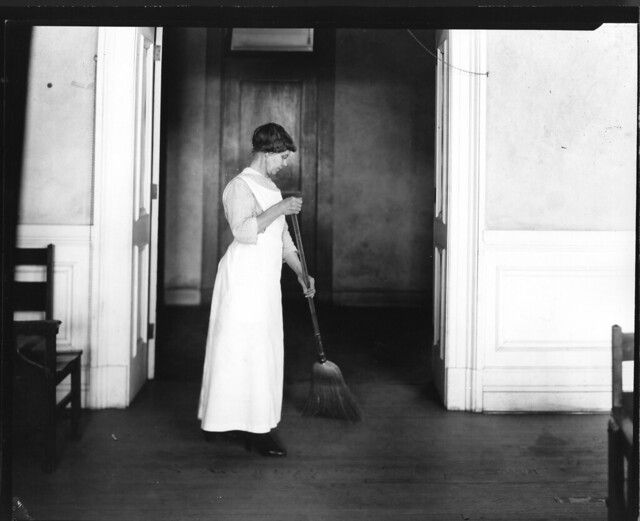 |
| From "Correct Postures for Housework" |
Who gets copyright in book publishing contract?
Friday, June 15, 2012
0
comments
 |
| out of print -- The Book Of Wonders (late 14th Century) |
There may be some administrative advantages for the publisher to acquire protection in its name (and it used to make it easier to proceed against infringers) but what probably matters more than the name of the copyright holder, is whether rights will revert under the publishing contract and what triggers reversion. In today's digital publishing universe, the issue often comes down to when a book is considered to be out of print -- many authors are arguing for a standard based on a limited number of sales per quarter. Here's a related blog entry on the subject.
She Has Non-Compete in Book Contract
Wednesday, May 16, 2012
0
comments

NON-COMPETITION. The Author shall not prepare or be concerned in the preparation other than for the Publisher of any work which shall be an expansion or abridgment of the current Work, in whole or in part, or of a nature likely to affect prejudicially sales of the current Work. The Author will consult with Publisher before publishing or producing another work likely to affect prejudicially the sales of the Work herein contracted for.How long? Our initial concern about this provision -- besides the fact that it doesn't accurately define a competing work, and is written in a funky old-school contract writing style -- is how long the provision can be enforced. Since no time period is mentioned, we assume it's enforceable for the term (time period) of the agreement. We don't know what the term is, but it should be written somewhere in your agreement. In book contracts, it's typically for as long as the book remains in print (see our previous entry) or for the length of copyright. In either case, that's a long time. So, if you have the bargaining power, you might want to put a timer on this one -- for example, to preface the provision by saying, "For a period of one year, following publication of the Work, the Author shall not ....
What's competing? Our second concern is that it doesn't clearly define a competing work. It's no accident that this provision is vague. In the minds of some attorneys, ambiguity increases the breadth of coverage because it makes it possible to threaten and intimidate an author over any type (as long as it will "affect prejudicially sales") or size ("an expansion or abridgment") of work. An author with some bargaining power would want to limit this to a specific thing -- for example book-length works on the same specific topic. Also, if the contract contains a clause providing a right of first refusal for your next work (the publisher has first dibs on your next book), you should add language saying that if the publisher doesn't want to publish it, that your second book will not be considered a competing work.
Does your other stuff compete? Because the provision is so vague, we can't say whether the publisher will care about your other works and if so, what will the publisher do. If we were a betting blog, we would bet that the publisher probably won't care or do anything. First, they're probably aware that you're the expert on this particular subject and they're aware of your site and your freelance column, so they won't want to put a halt to this type of self-promotion -- it helps the book. Your one-off articles may or may not trigger friction. That depends on who is publishing them and where they are being published. One way to secure your position is to include a mention of the book in any of these efforts as that way you can make a reasonable argument that they are promotional not prejudicial.
Just sayin'. If you speak with one of the editors or publisher reps, you may want to discuss these concerns. The publisher may not change the contract (which will ultimately control what happens) but they may assure you that the provision is rarely enforced.
PS Feel free to send our contracts book to the company's legal counsel.
Wrong Author Listed on Book
Thursday, May 10, 2012
0
comments

No Sales: Can Book Contract Be Terminated?
Tuesday, May 1, 2012
0
comments

Print on Demand. We looked at the contract clause you forwarded and unfortunately it appears that termination for insufficient demand is made at the publisher's discretion. The termination/reversion clause also specifically states that print on demand is enough to justify the publisher's rights under the agreement. This is an onerous (but likely enforceable) reversion clause. A more equitable termination provision would have stated that you are justified to terminate if sales are under a certain number of units -- say less than 25 books per quarter -- for three or four consecutive quarters. (The issue of reversion clauses was recently discussed at this blog.)
Throw in the towel? That doesn't mean you still can't terminate the contract. But you must come up with evidence that the publisher committed some material breach of the publishing agreement. Typically, that means a failure to pay royalties. Just because there's nothing in the contact that details an obligation to make timely payment and accounting, these obligations are implied and may be your route to reclaiming rights. You should have a publishing attorney review the contract to determine if that is a basis or if there is another basis for reversion. The attorney would also review your contract's "assignment" provision to make sure that the successor publishers have the rights they claim to have. There may also be creative theories available. Though it's a longshot, a California court may be open to the argument that an exclusive licensee (the publisher) has an implied obligation to exploit the licensed work.
Can they keep the copyright forever? No, but they may be able to keep it until 2033. A copyright owner who transfers rights is entitled to reclaim them after 35 years. See our recent blog entry.
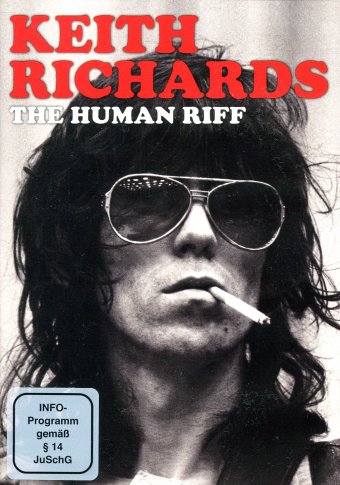
Can We Do a Book About the Rolling Stones?
Thursday, December 8, 2011
0
comments

Right, you had a question. If you don't use any copyrighted materials owned by the Stones -- lyrics, photographs, etc., -- then you won't need to ask permission or deal with compensation. If you do use some limited excerpts or clips, you may be able to excuse that use under fair use principles. For example, under U.S copyright law, you can probably get away with thumbnail reproductions of album covers as a fair use. You're probably fine to use Rolling Stones logos and trademarks because your uses are strictly information/editorial and permissible under trademark law. However, we think you are best avoiding the use of of logos (such as the logo reproduced above) on the cover of the book as that may imply endorsement by the Stones.
Wants to Use Historical Photos in Book
Monday, November 7, 2011
0
comments

The 1914, 1924, and 1965 photos. If the photos were never published and the photographers died before 1941, the works are in the public domain (Here's the official explanation). Otherwise, the unpublished photos will not become public domain until the author has been dead for 70 years. (Based on this rule, the 1965 photo could not be in the public domain.) Even though your one or more of your uses is likely to be unauthorized -- and an infringement -- we think that you will have a strong fair use argument, and we also think that the likelihood that the descendants of the photographer will learn of your use (or care) is slim. A commercial publisher may require that you indemnify the publisher if there is a problem. You may want to consult an attorney at that point.
As for the pre-1923 portrait. If the pre-1923 portrait was first published with authorization before 1923 it's in the public domain and you're free to use it. If it was first published after 1922 but before 1964, the photo is in the public domain if it wasn't renewed (and most were not). If the first publication was in 2002, and the author died before 1941, it is also in the public domain. (See, we told you it was complicated). As for the prolific California historian William B. Secrest, we think -- and we could be wrong -- that he owns the photo and lent it for use in the book. The "courtesy" he has extended is that he provided access to the photographic print. Was there a copyright notice associated with the publication in the 2002 book? That could also be indicative, though not decisive as to the photo's copyright status.
Wants to Use Magazine Imagery in Book
Tuesday, May 24, 2011
0
comments

Right, you had a question. We think you will be fine using the name of your magazine within your book. That's a trademark issue not a copyright issue and editorial uses of trademarks -- for example, talking about a magazine in a how-to book -- does not require permission. A conservative approach would also be to add a disclaimer at the front of the book to the effect that you and your publisher have no association with the magazine and that all rights in the magazine vest in the magazine owner. If you use imagery from the magazine, you'll trigger copyright issues and probably need permission either from the magazine or, if the magazine doesn't own the rights, from the photographer or designer who created the materials you're using. We think selective uses of the magazine in the context of a crafts project would likely be excused as a fair use since it is clearly a transformative use, but as Dear Rich readers know, fair use is just another word for a lawsuit, because that's often the only way you can prove fair use rights. As for the fact that your book adds value to the magazine, that may or may not be true, but it probably won't have much effect on your claim of fair use.
Subscribe to:
Posts (Atom)