Showing posts with label music. Show all posts
Showing posts with label music. Show all posts
Wants to Use Song Snippets For Guitar Lessons
Friday, July 5, 2013
0
comments
Dear Rich: I am working on a "for profit" project to create musical exercises for instrumentalists. Part of this will be to use a "snippet" of a popular song as the basis of the exercise. In one case, this is one measure of the guitar part with no reference to the lyrics or the greater song. The exercise would introduce some slight variations on the pattern and then would then transpose the pattern in each key. Would this be considered "fair use" since I'm building a "new work" from this very small kernel of a previously published and performed work? I've learned from your blog that providing an acknowledgement of the composers, the song name, and the album the song originally appeared isn't a factor, but I'm planning on doing that anyway. As you may be aware there are two copyrights on music recordings. One is the sound recording copyright (the recorded performance), usually owned by the record company; the other is the songwriting copyright for the song (the chords, melody and arrangement -- basically what you see on the sheet music). If you're using a snippet of the original recording -- for example, a segment from a Jimi Hendrix recording -- it's possible (though unlikely, as we'll explain) you could be liable for infringing both copyrights. If you've recreated the segment by recording it yourself, you've reduced your liability somewhat because there's one less entity that might hassle you -- the record company that owns the original recording -- although you still may be hassled by the song owner. (You can read more about sampling here.)
Fair use. We think that the smaller the size of your snippets, the stronger your fair use argument. We're not sure about the rest of the factors ... and we're not sure that you're actually transforming the work or building a new one. Transpositions and retiming of a sound wave are likely to be viewed as superficial transformations (and the variations could be perceived as derivative infringements).
The reality. We can point you to a few cases ... one that says that any use of a sound recording is an infringement (we think that's an aberration), and one that says that just sampling a short segment of the song copyright may be excusable as a fair use (you can read about both in a previous entry). But we don't think either case really offers much guidance. As usual, it really comes down to whether record companies and music publishers discover your use and care (or are too busy pursuing pirate sites to go after your business). After all, zillions of YouTubers are offering similar styled guitar lessons without apparent hassle. If you're concerned about the risks, we'd suggest building your project in steps ... post a few lessons at a time. If you get a cease and desist letter from someone, take down that lesson instead of trying to fight it.
P.S. And check out our video above to learn Bruce Anderson's great guitar/sitar solo.

Bringing in a Musician After the Song is Written
Monday, May 20, 2013
0
comments

Three things:
- There's a difference between sharing co-writing copyright credit and sharing revenues. Only someone who has materially contributed to the writing of the composition is entitled to copyright co-ownership. On the other hand, you're free to share your songwriting revenues with anyone.
- A lot depends on how you structure the music publishing. We can't go into the gruesome details here but you can learn more about music publishing (and see examples of royalty splits for a band) in our Music Law book (or check out Randy Wixen's
The Plain and Simple Guide to Music Publishing).
- There are no fixed rules for dividing songwriting revenue.
Music Publishing: Admin v. Co-Publishing
Wednesday, May 1, 2013
0
comments

Differences ... As you're aware a music publisher is a company that owns and profits from song copyrights. Some music publishers serve solely as "administrators," making sure you're properly registered with performing right societies and collecting revenue. For these tasks of managing your songwriting business they collect a fee, for example, 5 to 25% of your revenues. A co-publishing deal requires that you give up more, including half of the copyright, in the hopes that you'll get more in return. The co-publisher earns 25% to 50% or more of the songwriting arrangement under a convoluted system that's discussed in more detail in our Music Law
 book. We talk about the differences in a previous entry.
Musician Claims Contract Signed Under Duress
Monday, December 24, 2012
0
comments

Can the contract be enforced against you? A valid contract is one that a court will enforce. Some reasons your contract might not be enforceable are if (1) it violates the law or public policy, (2) there's no consideration -- you didn't receive any benefit from the arrangement, (3) the other side fraudulently induced you to sign, or (4) you were coerced (duress) into entering into the agreement. If fraud or duress are present, then you can void the contract. All parties are released from their obligations and you can pursue your claims against the band. In cases of intentional fraud—for example, if a band mate deliberately lied to induce a deal, you can elect to seek additional damages under tort law. (BTW, even if the agreement is valid, you may also have claims that the other side breached it, thereby terminating the agreement.)
What is duress? Duress occurs when a party’s consent to a contract is physically or mentally coerced. A party under duress lacks the legal free will to refuse to sign. Therefore, the agreement is not voluntary and the contract that results must be voided. Threats of physical force are rarely used as a means of inducing a contract. Instead, economic duress has emerged as a bigger issue. Economic duress (also known as “business compulsion”) occurs when, for example, a supplier of goods jacks up the price on a customer who is in desperate need of goods, or one party threatens to breach an existing contract unless the other party agrees to some further demand. But keep in mind that proving duress in a court or at an arbitration -- which is where you'll have to prove it -- requires more than threats. You'll also need to show you had no other choice but to comply, a sometimes difficult task.
Does the agreement transfer copyright? The musical compositions and the musical performances are works that are subject to copyright. In order for the band to acquire those rights, the agreement (or some other written agreement) must specifically transfer these rights. If the agreement doesn't say anything about copyright ownership, your rights in those works may be unaffected and you are probably free to register your rights in your name. Along with that, you can exploit your interest in the songs and collect royalties for their use.
Bottom Line Dept. If you want true closure, you should see a music attorney.
When Does a Version of a Song Qualify as Fair Use?
Monday, June 4, 2012
0
comments
 Dear Rich: I am working on a tribute album and I'm trying to figure out the distinction between derivative works and transformative fair use. At what point is a song transformative enough to be considered fair use, vs. a derivative work? And how can I use this knowledge to negotiate with publishing companies, prior to recording/selling and performing the songs? If I am not given permission to create or sell a derivative work and I only perform them live, what is the risk and potential liability of infringement? Sorry, we would have gotten to your questions sooner except we've been obsessed with creating animated GIFs ever since Photoshop Elements 10 arrived (finally, you can change the timing on the animation). We expect to get over it soon, and yes, we know they're annoying to watch.
 Right, you had a question. If you're doing a tribute album, we assume you're doing cover versions of existing songs and that it is a "tribute" to a band or performer. There are two legal rules at work here.
The "So What" Issue. Even if you believe you have a strong fair use argument, a music publisher is likely to respond, "so what?" Only a court -- not you or your lawyer -- can verify that it is a fair use, so a publisher is unlikely to feel pressured to grant permission based on your arguments. What you might wish to consider -- although this advice is contrary to Section115A -- is to simply pay the mechanical license fees even though you have modified the songs. Our experience is that most publishers just want to be compensated and don't want to have to deal with special permissions. As for performing the songs live -- any venue where you play will have to pay performing rights fees for each song -- so it is unlikely that music publishers will care about your version just as long as the song title is correct.
- Compulsory license. First, under Section 115A of the Copyright Act, a music publisher must permit you to record any song that has previously been recorded and released to the public. However, you cannot use the compulsory (mechanical) license if you change the basic melody or fundamental character of the song. For example, a singer cannot alter a song’s lyrics without permission. That said, many people change elements of songs without a problem (as we mentioned in this previous entry).
- Derivatives and fair use. A derivative work is one that is based upon or modifies an existing work. A fair use is when an existing work is used in such way that a court, balancing four fair use factors determines that permission is not required. The transformative quality of the work is an important factor but so is another factor -- the amount and substantiality of the portion taken. In most music cases where fair use is found it's because a relatively short segment of the original work is used. We don't think providing a full-length cover of a song will qualify as a fair use -- even if it is as transformative as this.
The "So What" Issue. Even if you believe you have a strong fair use argument, a music publisher is likely to respond, "so what?" Only a court -- not you or your lawyer -- can verify that it is a fair use, so a publisher is unlikely to feel pressured to grant permission based on your arguments. What you might wish to consider -- although this advice is contrary to Section115A -- is to simply pay the mechanical license fees even though you have modified the songs. Our experience is that most publishers just want to be compensated and don't want to have to deal with special permissions. As for performing the songs live -- any venue where you play will have to pay performing rights fees for each song -- so it is unlikely that music publishers will care about your version just as long as the song title is correct.
What's Best Way for Band to Go Digital?
Friday, April 27, 2012
0
comments

Right, you had a question. You can't submit your songs directly to iTunes. You'll need to go through a distributor, probably either CDBaby or Tunecore, as they have emerged as the main routes to digital distribution. You affiliate with one of them, upload the MP3s and these companies take care of the rest. Both services distribute to a host of download services including streaming services like Spotify, and download services like Rhapsody and Amazon MP3. They both usually manage to post on iTunes within two days of the hand-off. What's the difference between the two? The main difference is that CDBaby takes a 9% cut of your net revenue from downloads. Tunecore doesn't take a cut, but requires that you pay an annual renewal fee per album. Here's a summary:
- CDBaby. CDBaby will sell your physical CDs as well as distribute and sell your digital downloads. (If you just want to go digital and forego physical sales, you can do that as well.) There's a one-time fee of approximately $50 per album or $10 per single. You upload the music and artwork and they get your stuff out to everybody. The company keeps 9% of digital net sales. So after iTunes takes its 30% cut of each download, CDBaby takes 9% of the remainder and pays you the rest by PayPal. You get a CDBaby product page at their website and a fairly sophisticated dashboard so you can learn exactly who in Kazakhstan is buying your music. CDBaby can also handle synchronization licensing services. (Disclaimer: We've used them for years and have never had a problem.)
- TuneCore. TuneCore only handles digital distribution. (You cannot sell physical CDs.) Your band simply uploads your music and artwork and the company takes care of the rest, distributing the downloads to all of the major (and minor) players. The one-time fees for registering an album or single are similar to CDBaby: approximately $50 per album and $10 per single. However, Tunecore doesn’t take a cut from your digital sales. Instead they require that you renew each album and single annually (currently that's $50 per album, $10 per single). The company, through their relationship with IndieMerchandising (www.indiemerchandising.com) also offers merchandise production services.
- The others. A few other companies also attract customers in this competitive space. Among these are BFM Digital, ONErpm, and indieheaven.com. We have not researched these services so we can’t provide information except to note their existence. The Orchard, and IODA also offer digital distribution but they're more selective about who they handle and you must apply and get approved before they will deal with your music.
Needs Music Producer Agreement
Monday, March 26, 2012
0
comments

- record company/producer agreement. In this arrangement, a record company hires a producer to produce a song or an album. Even though the record company hires the producer, the payment typically comes from the artist. That is, the record company pays the producer and then later deducts that cost from the artist royalties. The royalties that are paid to the producer, often in addition to the producing fee, are also usually deducted from the artist royalty. So, for example, if the artist is getting a 15% royalty, the artist may have to pay 3 or 4% of that to the producer. This type of production agreement usually includes a few major components including: the producer assigns copyright to the label, the producer takes on some specific administrative tasks -- for example, hiring the studio or paying musicians, and the producer performs certain production tasks in terms of delivering acceptable master recordings.
- artist/producer agreement. In this case, the artist, not a record company, hires the producer. This is a common course of action for an indie artist who wants to release music directly or wants a suitable master to shop to a record company. In this case, there may be a flat fee (say $500 per song) and no royalty payments. This type of agreement would include an assignment of all copyright to the artist, as well as a detailed listing of the producer's obligations. Typically, in this situation, the artist pays for the studio and any extra costs.
- spec agreement - production company/artist. In this situation, a production company or producer agrees to produce a song or an album, often on spec (that is, without an upfront payment), and in return, the production company usually helps to shop the final product and obtains various future rights. These may include future royalties, part-ownership in songwriting, a percentage of any record company advances or even more, such as dibs on merchandise.
Putting together an agreement? We're going to assume you don't need the first or the third agreements, mentioned above. Both of those are fairly complex and are usually prepared by lawyers. You might be able to prepare an informal, enforceable version of the second type of agreement -- an agreement between an artist and a producer -- by yourself, particularly if you already know and get along with the producer. A bare-bones version would contain the following provisions: (a) an assignment of all copyright for work created, performed or produced by the producer, (b) a schedule for payment and delivery, (c) a division of labor -- who does what and pays for what and a system for resolving disputes. Payment should be fixed (per track) and you may want to set it up to make the payment in stages based upon delivery of the tracks. You might also want to include an approval process although such provisions are tough to create and difficult to enforce.
Can We Arrange Elvis Songs?
Thursday, February 23, 2012
0
comments
Dear Rich: I’m planning to create an arrangement of Elvis Presley tunes for string quartet. Do I need permission to just use these arrangements for my own string quartet? What if I want to sell the arrangements to others? We love your idea (and others like it, too). You're probably okay arranging and performing a few Elvis songs for private performances. That's because the owners of the music are unlikely to notice (or to care if they do find out). If you plan to perform the music, publicly, the venue would need to pay for public performance royalties (sidebar on right under U.S. copyright law). If you were to record and release the music, you'd need to pay mechanical royalties.
What if you want to do more? You will need permission if you plan on promoting sales or distribution of sheet music arrangements to other quartets (or seek to stop others who copied your arrangement). That's because the making of sheet music requires authorization whether it is a straight reproduction of the sheet music or an “arrangement” or “orchestration” that qualifies as a derivative work. In other words, you can't reproduce the underlying work -- for example, Heartbreak Hotel -- in a printed arrangement, without the publisher's permission. You can usually find the music publisher’s contact information at the following sites: Harry Fox, BMI, ASCAP, or Limelight. Also, the National Association for Music Education website has an example of a request form for permission to create musical arrangements.
Can We Do a Book About the Rolling Stones?
Thursday, December 8, 2011
0
comments

Right, you had a question. If you don't use any copyrighted materials owned by the Stones -- lyrics, photographs, etc., -- then you won't need to ask permission or deal with compensation. If you do use some limited excerpts or clips, you may be able to excuse that use under fair use principles. For example, under U.S copyright law, you can probably get away with thumbnail reproductions of album covers as a fair use. You're probably fine to use Rolling Stones logos and trademarks because your uses are strictly information/editorial and permissible under trademark law. However, we think you are best avoiding the use of of logos (such as the logo reproduced above) on the cover of the book as that may imply endorsement by the Stones.
What's the "Right" Way to Post Cover Songs on YouTube?
Thursday, November 10, 2011
0
comments

Right, you had a question. The short answer is to give up on doing it the "right" way. The proper way to post a video of a cover tune is to obtain a 'sync license' from the owner of the song -- usually a music publisher that owns songwriting rights. The chances of you, as an unsigned artist, accomplishing that task would be about as likely as obtaining John Lennon's tooth. (BTW, a book on celebrity teeth -- Keith Richards call your dentist -- is apparently available in Canada.). It's for that reason everyone including an aspiring Justin Bieber, apparently posts covers without permission. (Note, that all may change if new punishments are adopted.)
We're talking about covers, here ... YouTube does have a means of locating videos that use major label recordings -- for example if you use a Prince song as a soundtrack for your child's dance routine. YouTube seems to possess digital fingerprints for pre-recorded pop tunes because when we posted a video of our commute to Nolo and included a track by everybody's favorite, Rockwell, we received a notice within hours of posting. YouTube had found unauthorized material on our video (and as punishment was going to run ads over our video). YouTube reserves the right to take down our video but in the interim, the company apparently divides the advertising revenue with the rightsholders -- music publishers and record companies. We're pretty sure YouTube doesn't have similar method for detecting cover versions -- that is, when someone else performs a Prince song. Of course, these unauthorized uses could still be located via old-fashioned text searches or spot scanning of videos. And songwriters who discover covers of their material can still issue a DMCA notice to YouTube (although you don't hear much about that practice these days). So, in summary, the 'post now, deal with it later' approach is the default mechanism for covers.
What about Limelight and Harry Fox? Harry Fox and Limelight are companies that provide a means of obtaining a compulsory license -- the right to release CDs and MP3s of cover songs. These licenses do not apply to audio-visual works.
Eat Pray Ask Permission?
Tuesday, October 4, 2011
0
comments
Dear Rich: I'm interested in knowing if you have ever encountered clearing an "inspired by" situation. For example, I have written a piano solo inspired by the novel, "Eat Pray Love." I have not put that information on the cover of the piece because my instinct tells me "Eat Pray Love" would need to be cleared. The Dear Rich Staff kind of missed the boat on Eat Pray Love. It's not that we don't like Chicklit or RomComs or Julia Roberts (We felt bad for her when she broke up with Kiefer Sutherland ... and then felt happy for her when she started dating Jason Patric because he was so great in that Kathryn Bigelow vampire movie). Anyway, we're glad you found the movie (or book) inspiring enough to write a piano solo. (This movie might inspire us to write a song, however.)
Right, you had a question. From a purely legal POV, there's nothing preventing you from calling your composition Eat Pray Love or from stating that it was inspired by Eat Pray Love. Many artists have named compositions after books and films (and vice versa). But you will run into problems if you imply that the owners or creators of the book or movie somehow endorse what you're doing. That might be the case if you have included an image of the book cover or a picture of Julia with your sheet music or performance. You also may run into problems if buyers are confused with the song that's become associated with the movie.
Using Pop Songs in Videos
Thursday, September 29, 2011
0
comments

A different approach. Let’s start with another question: What does your daughter plan to do with these videos? If she wants to share them with friends and have limited private showings, there probably wouldn’t be an issue especially because the copyright owners would never learn of the use. If she intends to place the videos on YouTube, one of three things could happen: (1) nothing, (2) the song owner would issue a DMCA notice, in which case the video would be removed by YouTube (unless you fought over the issue based on a fair use claim -- see below), or (3) YouTube would flag the video, send you an email stating that it thinks you're using unauthorized music and then run ads along with the video (which is what happened when the Dear Rich Staff posted a video with one of its favorite 80’s pop songs). By the way, the person you can thank for the latter alternative is probably Stephanie Lenz who posted a 29-second YouTube video of her kids dancing to “Let’s Go Crazy” by Prince and then, by challenging the DMCA notice -- because the label failed to consider fair use -- she made it more difficult for labels to send out DMCA notices.
DISCOUNT AT LIMELIGHT.The folks at Limelight, the mechanical licensing utility, are offering a 15% discount on mechanical licenses. If you want to check it out, the company has a special discount code: THANKSRICH15. The 15% discount is good through the end of October, 2011 (and no, FTC, we don't get compensated.)
Can You Be Sued Over What's in Your Digital Music Locker?
Thursday, September 22, 2011
0
comments

Backstory. MP3Tunes offered a cloud based service in which people could purchase songs and place them in their digital music lockers, or they could upload songs they owned, or they could search for versions of the songs they owned online (including unauthorized versions).
MP3Tunes received DMCA notices from record labels and removed user links to the infringing songs but the company failed to delete the infringing copies from the user's music locker.
Here comes da' judge. The district court ruled against MP3Tunes for failing to remove the infringing content from user's music lockers, although that ruling was considered a "hollow victory" for the labels because the judge refused to grant the label's request to remove "MP3Tunes' safe harbor exemption. As long as MP3Tunes removed links to infringing material and deleted infringing content as requested by the copyright owner, the company could take advantage of the DMCA's so-called safe harbor.
Rock Me Amadeus. We hope you're not downloading unauthorized Falco recordings. We got in a nostalgic mood the other day and Spotified some great Falco tunes. Funny thing, Falco doesn't sound nostalgic at all. So sad he's gone. (And don't forget one of our favorite-ist Falco lyrics.)
Can I Sample Johnny Cash Beat?
Tuesday, September 20, 2011
0
comments
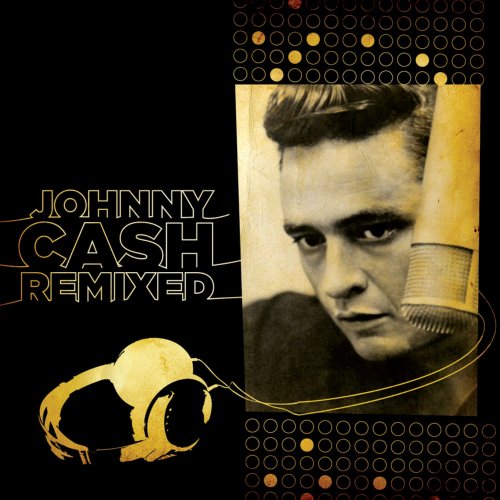
What are you doing wrong? Start with the premise that both of you are infringing: the beat maker made an unauthorized derivative sound recording and may have infringed the underlying composition. The singer would be providing an authorized performance and (if duplicating copies), unauthorized reproductions. Of course, whether anyone hears your sample, recognizes it, and bothers to pursue you is another matter. If you're simply using it to perform locally, or handing out some privately-pressed CDs, we think it's unlikely to cause a problem. But once it reaches a national stage and things go viral, things would likely change. (As you can imagine, it's tough for an independent artist to get sample clearance.) We've written an article explaining when clearance is needed, and another article explaining how to get sample clearance. We've also talked about sampling law in previous posts: check out the basic rules and some recent cases. Our Music Law book also describes the ins and outs of sample clearance with all the required forms and contracts.
He walked the line. BTW, Johnny Cash has been the subject of authorized hip hop remixes and unauthorized releases, as well.
'Sup With Compulsory Music Licensing?
Tuesday, September 13, 2011
0
comments
Section 115A. Under Section 115A of the Copyright Act, a music publisher must permit you to record any song that has previously been recorded and released to the public. In other words, if the songwriters never recorded their song, or if it was played on TV or in a movie but never released on a sound recording or sold as an authorized download, you cannot use the compulsory license. Also, you cannot use the compulsory license if you change the basic melody or fundamental character of the song. For example, a singer cannot alter a song’s lyrics without permission. That said, many people change elements of songs without a problem (as we mentioned in this previous entry). Finally, this license does not include the right to sync a song with a visual such as a video; it's only for the sale of recordings on CD or by download. You can learn more about how to obtain a compulsory license online (or in our Music Law book.)
License or loophole? There are others who feel the way you do but the Dear Rich Staff is not among them. We've written songs and we've recorded cover songs in our life and having a simple compulsory license program, especially like the ones at Harry Fox and Limelight, allows responsible musicians to pay for the right to record other people's music. It also makes it much easier to get paid for songs. It's possible that in the old days, the compulsory license may have been the way for a cover artist like Pat Boone or Elvis to have a hit from someone else's songwriting. But we believe that a hit is a hit, and songwriting -- whether the writer covers the song or someone else does it -- is usually the most lucrative aspect of the music business.
Wants to Invest in a Band
Monday, August 1, 2011
0
comments

LLC or corporation. We recommend that the band form an LLC or corporation because investors in those entities have limited liability. That way investors will be shielded if the band throws a TV out of their hotel window and it lands on someone's Ferrari. These entities are also better suited for making investments than a partnership. There are plenty of self help books and forms, and online programs that explain how to form and invest in LLCs and corporations, though our hearts are with the Nolo products (insert FTC disclaimer, here).
Why it matters that you learn about the industry. Every industry has its quirks and the music industry has more than most. You should take a basic primer in music copyrights and trademarks because the assets of the band are concentrated in those intangibles. You'll probably want the songwriters in the band to contribute their songwriting copyrights to the band entity. However, that's not something they're obligated to do. So, before you drop your money into the band's piggy bank, you should probably be sure that the assets placed into the entity, reflect the money-making features of the band. And of course, it's probably in everyone's best interests for you and your partner to have your own attorney and the band to have different representation. That will go a long way to prevent a post-breakup challenge to the agreement.
Compulsory Notice Questions for Ballet CD
Wednesday, July 27, 2011
0
comments

Right, you had a question(s). Yes, you can use the compulsory notice for music that includes some improv and personal progressions. It's true that major revisions to a song require permission, but practically, publishers don't really care about what you do between the grooves provided you pay the toll (9.1 cents per track).
As for your second question. If you're using two tunes on one track, you have a few choices: you can pay both publishers 9.1 cents (again, they won't care what you're doing); you can pay only for the dominant/primary tune that you're using and hope that the other publisher doesn't hear (or care) about your "quoting" of the melody. (The other publisher is unlikely to learn of it unless the title is included in the CD notes -- for example, "Track 5: Charade/Chim-Chim-cher-ee.") And finally, you can try to negotiate with both publishers for a lower rate (probably a waste of time unless you're a major label.) We think you're probably fine with the second choice.
And your third question. The compulsory license is for nondramatic uses so your use on a CD would qualify. A dramatic use would be if you wanted a license to perform the music publicly as part of a show.
Sampling: Comparing Beasties and George Clinton
Tuesday, June 21, 2011
0
comments

Newton: A Lawsuit Over the Musical Composition. In Newton (the case involving the Beastie Boys' use of a James Newton flute sample), the Beasties paid for a license to use the sound recording, but they did not obtain a license to use Newton's underlying composition. When Newton sued, the court ruled that the borrowing of the composition was de minimis (too small to matter).
Bridgeport: A Lawsuit Over a Sound Recording. In Bridgeport (in which a film company used a George Clinton/Funkadelic song sample in a movie soundtrack), the defendants were sued solely over the failure to obtain the sound recording license. The court asked the same question as you, and answered as follows:
"[This case] raises the question of why one should, without infringing, be able to take three notes from a musical composition, for example, but not three notes by way of sampling from a sound recording. Why is there no de minimis taking or why should substantial similarity not enter the equation. Our first answer to this question is what we have earlier indicated. We think this result is dictated by the applicable statute. Second, even when a small part of a sound recording is sampled, the part taken is something of value. No further proof of that is necessary than the fact that the producer of the record or the artist on the record intentionally sampled because it would (1) save costs, or (2) add something to the new recording, or (3) both. For the sound recording copyright holder, it is not the "song" but the sounds that are fixed in the medium of his choice. When those sounds are sampled they are taken directly from that fixed medium. It is a physical taking rather than an intellectual one."Mental, eh? Unfortunately for musicians the takeaway is that based on Newton and Bridgeport, all sampling of sound recordings requires permission, whereas some sampling of compositions is excusable. We can't say we agree.
Can We Sample Tequila? The Song That Is ...
Tuesday, May 31, 2011
0
comments

Analog Not Digital. Since you're not doing any digital sampling, we think you're in a better position to go without permission and claim two defenses:
- the de minimis defense. Four seconds of Tequila is not an infringement because the use is so minimal, or
- the fair use defense. You are using the song for transformative purposes (perhaps commenting on Tequila's retro-classic cultural significance, or referencing Tequila to make a point about alcohol consumption.)
He Wants to Avoid Paying Taxes for Band
Thursday, March 31, 2011
0
comments

Right, you had a question (and you're in a hurry). Your husband should take the gig and take the payment. You won't have any problem with your taxes because your husband can deduct all of the payments he makes to the other band members (on his Schedule C). After that, he would only have to pay taxes on the remainder (which should be his payment). If he pays the other individual musicians more than $600 in a year, he must issue 1099s. That's not hard to do (we've done it ourselves and you can even automate the process online). The Music Law book explains all this and you'll have plenty of time to read it before tax time.
Subscribe to:
Posts (Atom)