If you're a "dot-your-i's" kind of person ... The permissions required are fairly straightforward and include permission to "perform" and "reproduce" the poems and songs. In the case of Leonard Cohen, you'd need permission from the owner of the song (probably a music publisher) but you wouldn't need permission from the owner of the sound recording copyright (the record company). We have permission forms you can adopt for these uses in our permissions book.
Home » Posts filed under permission
Showing posts with label permission. Show all posts
Wants to Use Poems in Play
Dear Rich: I have two questions the answers to which I need as soon as possible. I want to use a few unpublished poems written to me by a former acquaintance who happens also to be a published poet and who in the past read his poetry on a professional performance circuit in Europe. The play is a 10-minute one-act to be used as one of 10 others in a single admission-payment-required performance at a local community theater of 250 seats and written/acted by amateur playwrights and actors. The poet is a citizen of another country, he and I have no mutual acquaintances locally, we have no communications between us, and the odds that he could be made aware of the use are infinitesimally small. My ex-husband is a legal scholar in the field of intellectual property, however, so I'm respectful of such rights for the most part. What, if any, permissions need I obtain from the poet? Also, I would like to use some brief portions of recordings by Leonard Cohen as part of the one-act, same circumstances. What permissions need I obtain? We know you are in a hurry for an answer and wish that you felt comfortable asking your ex-husband this question, but in any case, we feel fairly certain that legal scholars would agree that both your uses are infringements, both might be excused as fair uses, and that obtaining permission would eliminate any potential liability. On the other hand, if the chances of the copyright owner learning about your use are, as you say, "infinitesimally small," there's little reason to seek permission, now. If the play receives wider attention, you can always seek it later.
If you're a "dot-your-i's" kind of person ... The permissions required are fairly straightforward and include permission to "perform" and "reproduce" the poems and songs. In the case of Leonard Cohen, you'd need permission from the owner of the song (probably a music publisher) but you wouldn't need permission from the owner of the sound recording copyright (the record company). We have permission forms you can adopt for these uses in our permissions book.
Failure to Respond to a Permission Request: What Does it Mean?
Dear Rich: In a recent post, you made the comment that it’s inefficient for large companies to deal with and track minor permissions requests. I’m curious about situations where a request is made but no response is given. While I know a lack of an answer does not equal permission, does the lack of an answer do anything to strengthen the fair use argument? In other words, would my ‘good faith effort’ in trying to seek permission weigh in my favor if I resorted to a fair use argument? A related question, regardless of how the previous question is answered, is it appropriate to associate no response with a lack of care about the particular request, thereby indicating a lower risk of being pursued? A failure to respond to a fair use request should not strengthen or weaken a fair use defense. For example, in the Pretty Woman case (in which rappers borrowed the first line of the Roy Orbison song), the music publisher had refused the permission request. Despite the refusal, the rappers went ahead with their plans, and the Supreme Court ultimately determined that it was a fair use. The reason why the copyright owner's response won't matter is that a fair use analysis happens after a court has determined that infringement has occurred. In other words, by the time a court looks at fair use, permission doesn't matter.
Why seek permission? If permission is unnecessary for a fair use defense, why ask for it? First, acquiring permission bypasses the need for a legal dispute (and the uncertainties and expenses associated with it). Second, seeking permission also demonstrates your good faith and may mitigate the damages assessed if your fair use defense fails and there is a negative decision against you.
Does a failure to respond to a permission request mean that there is a lower risk of being pursued. We doubt it. Although, as anecdotal evidence, we can offer this story: Our mom called a lawyer at a well-known movie company for permission for her nonprofit to use a licensed character in a presentation. His response, "You never made this call." In other words, having to say "no," would have obligated the attorney to follow up.
FYI Dept. -- Silence doesn't mean legal assent. We remember getting letters from lawyers that would say things like, "A failure to respond shall confirm blah, blah, blah." But 99.9% of the time that's just not the case. Inaction, or silence rarely triggers any legal conclusion (either affirmative or negative). For example, there's a famous 19th-century English contract case in which a man offered to buy a horse and stated that unless he heard otherwise from the seller, “I consider the horse mine.” The British court ruled that his assumption didn’t create a contract; the other party’s acceptance had to be clearly expressed.
Why seek permission? If permission is unnecessary for a fair use defense, why ask for it? First, acquiring permission bypasses the need for a legal dispute (and the uncertainties and expenses associated with it). Second, seeking permission also demonstrates your good faith and may mitigate the damages assessed if your fair use defense fails and there is a negative decision against you.
Does a failure to respond to a permission request mean that there is a lower risk of being pursued. We doubt it. Although, as anecdotal evidence, we can offer this story: Our mom called a lawyer at a well-known movie company for permission for her nonprofit to use a licensed character in a presentation. His response, "You never made this call." In other words, having to say "no," would have obligated the attorney to follow up.
FYI Dept. -- Silence doesn't mean legal assent. We remember getting letters from lawyers that would say things like, "A failure to respond shall confirm blah, blah, blah." But 99.9% of the time that's just not the case. Inaction, or silence rarely triggers any legal conclusion (either affirmative or negative). For example, there's a famous 19th-century English contract case in which a man offered to buy a horse and stated that unless he heard otherwise from the seller, “I consider the horse mine.” The British court ruled that his assumption didn’t create a contract; the other party’s acceptance had to be clearly expressed.
Is a Release Needed for Using Musician in Book?
Dear Rich: I am writing a book that will feature women in music, but I need to have a release agreement they can sign that allows me to include their names, trademarks and biographies in this book. How and where do I get such an agreement. I will not be paying anyone to be included in the book, it will be all voluntary on their part. Good news! You don't need a release or copyright permission to include factual biographical information about musicians in your nonfiction book. In the event any musicians own trademarks, you're free to reproduce them without permission as well (because it's for editorial or "informational" purposes). You would only need permission if you were using copyrighted material, for example, song lyrics, photographs of the musician, or if you were copying somebody else's writings about the musician.
She Wants to Use a Word From Cheesiest Song Ever
Dear Rich: I'm trying to avoid seeking permission to mention a song in a novel I'm writing and plan to self-publish. I understand that song titles can't be copyrighted, but I'm wondering if quoting a single word from a named song will require permission, given the context: two of my characters are arguing about the lyrics to Kiss From a Rose, with one saying that a grave is mentioned in the song, and the other contending that the word is "gray" (which my research tells me is the case). One character also says that the lyrics refer to a kiss and a rose, but since these words are given in the song title, I would hope that they are safe. Am I on dangerous ground with the grave-versus-gray dialogue? Also, if one of my characters refers to Kiss From a Rose as "like, the cheesiest song in the world," would this be considered libelous? Let's address your last question first. You are not committing libel because you are not making a false statement. "Cheesiness" is defined as "trying too hard, unsubtle, and inauthentic." Therefore, we can conclude that Kiss From a Rose is actually like, the cheesiest song in the world (it's number two of cheesy songs on this list). Even if it was the third or fourth cheesiest song in the world (or didn't even make the top ten), you and your characters are free to diss any Seal song under First Amendment principles.
Using lyrics. It's fine for your characters to talk about songs and even quote one or two lines under fair use principles. (Spoiler Alert: In our humble opinion, Kiss From a Rose contains some of the strangest, most incomprehensible lyrics ever!) In any case, you should probably only consider seeking permission if you're using more than a couple of lines. We talk more about when permission is needed for song lyrics (and how to get it) in this book.
Needs Anatomy Pix for Dissertation
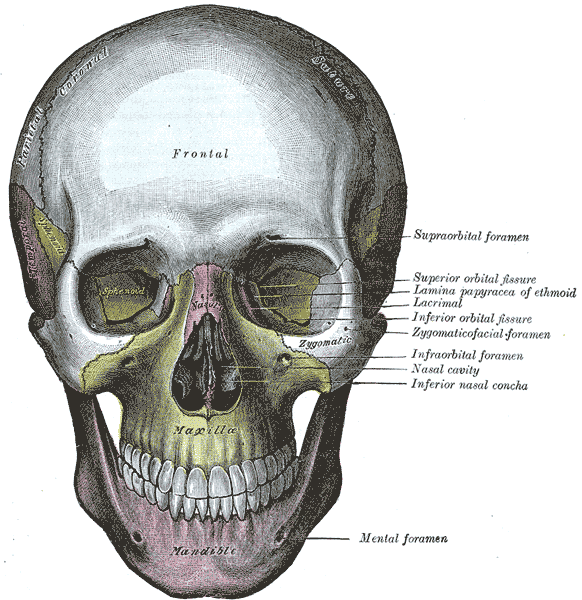
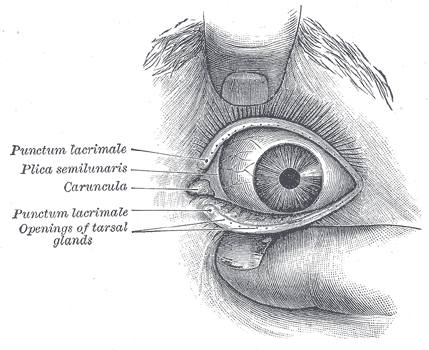
Dear Rich: I'm writing my postgraduate dissertation for surgery and I need to use pictures from the Skandalakis anatomy book, how do I ask for permission or can I use them? Wow, two anatomy questions within six months. (Our last question had to do with public domain imagery like the image, left.) We get seriously sidetracked with these anatomy questions -- is that really where the liver is? Just looking at this cross-section of the digestive tract has us vowing to quit processed cheese.
Right, you had a question. The Skandalakis anatomy book (we assume you're referring to Surgical Anatomy and Technique, by Lee John Skandalakis, John E. Skandalakis, and Panajiotis N. Skandalakis), is published by Springer International, in Germany. Springer explains its permission process at its website. (Note the fairly enlightened explanation of U.S. fair use which may be helpful in your case.) The company supposedly provides a downloadable permission request form on the permissions page but when we clicked it, we were re-directed to the homepage (ist der programmer abpoofen?) Probably your request should go to this Springer employee. But if that doesn't work, this page may provide more guidance. Of course, we explain the process for getting these types of rights in more detail in our permissions book.
Stand and Deliver Video Rights
Dear Rich: I am a lawyer who presents onsite training. In my marketing video for the trainings, I have included short clips from "Stand and Deliver" and "Freedom Writers" to illustrate how some of the issues play out in educational settings. I am assuming I should get permission to use the video clips but I am unclear of the the process to do so. Yes, you should seek permission if you're using the clips for marketing purposes. It's always possible your uses could qualify as a fair use (more on that in a sec) but because of your position as an attorney-trainer, we think it's best to keep risks to a minimum. We believe that the 1988 film, Stand and Deliver is owned by Warner Brothers. Here's a Warner Brothers request form with instructions for seeking use of a clip or still. (It looks a little bit worky but hopefully somebody at WB can help you through the process.) Freedom Writers looks like it's owned by Paramount. That company directs folks like you to click on their Paramount Film Clip Licensing link which unfortunately leads nowhere (or at least it did when we tried it). We also tried to find a link for MTV Films, the co-production company but all our links for that lead, alas, back to Paramount. Perhaps you'll have better luck at the Freedom Writers website but we think you get the idea. You need to find some way to contact the owners. Once you do, plead for permission, and hope your request doesn't get buried on some paralegal's desk.
The Fair Use Argument. If you can't obtain permission, you may -- depending on the length and context of the clips -- be able to justify your borrowing as a fair use. The marketing aspect of your effort works against that argument but take a look at some of the audiovisual cases (scroll down to the Artwork and Audiovisual cases) to get an idea. As always, remember that fair use is a defense, meaning that a complaining copyright owner can drag you into court to defend yourself.
Can we use lyrics within artwork?
Dear Rich: Can I use lyrics in a series of art posters I'm creating? The posters are a collage featuring images of musicians and events from the year that the song was a hit. So, for example, I have images that match a few lines from Marvin Gaye's song, What's Going On, along with a few lines from the lyrics. We're not sure why you bothered asking the Dear Rich Staff. After all, the folks over at Yahoo Answers seem to have already addressed this issue. Oh wait, we see why ... because the Best Yahoo Answer kind of sucks. We're guessing it's the 'Best Answer' because it's the answer that best suits the needs of the person asking the question. Oh well, it will all be over soon!
Right, you had a question. A few months ago we answered a question about using lyrics in a book, and for the most part, the same rules apply when using lyrics in connection with artwork. Limited use of lyrics -- perhaps four or five lines -- may be excused as a fair use. But more extensive quoting of the lyrics requires permission. Of course, if you're just doing a one-of-a-kind artwork, it's unlikely to be an issue (unless you write to the lyricist to share your excitement). But if you're mass producing posters with lyrics and distributing them via the web, you're more likely to trigger a cease and desist letter.
Ryan Gosling Memes: Infringing?
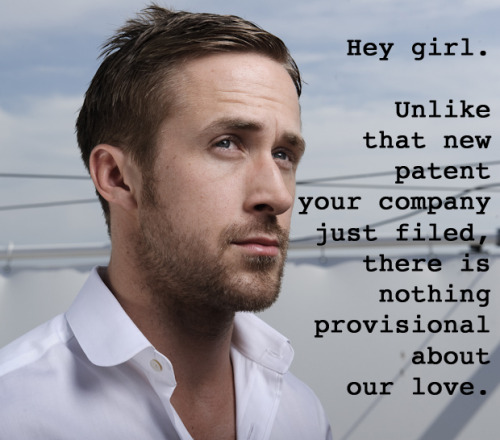
Dear Rich: I read your explanation about using paparazzi photos and it made sense. But then how do you explain the Ryan Gosling meme? I assume that most of the photos that are being used were taken by professional photographers, and I doubt if many of the web sites and Tumblr accounts that have been spreading them are paying for permission to use the images. How can you know when it is ok to use an image without getting permission? For those over-worked readers who are always late to the viral party (and perhaps still not familiar with Rebecca Black, Obama Girl, and LOLcats), the Ryan Gosling meme refers to the collection of Ryan Gosling photos that are modified with captions -- always a short statement attributed to Ryan that starts with "Hey Girl" and follows with some invitation to intimacy or a proclamation of love, devotion etc. The meme has split into various trails, including a feminist Ryan Gosling meme and a Silicon Valley RG meme (that includes a rare patent law reference).
Hey Girl, Can You Copy Me? As for the legal rights connected with meme-ing, the Dear Rich Staff believes that if you're asking about permission to use Ryan Gosling photos, you're also probably wondering about how often you need to get your cholesterol checked. In other words, folks who meme usually don't care about no stinking badges. It's true that all of the Ryan Gosling photos are likely protected by copyright law, but for some reason we're not hearing of any copyright owners going after these folks (and Ryan, himself seems to condone the use as well -- so much for right of publicity claims). Of course, the Internet use is one thing -- and we can understand why copyright owners might be gun shy about going after a popular meme -- but the reproduction in a book does require permission (and is expensive -- scroll down to the Jan 14 blog entry). Although some copyright owners do have a breaking point, we think most of these fleeting Internet memes tend to fly under copyright radar.
Can I Reproduce Images From Gray's Anatomy?
[REVISED 1/13/2012 -- Please see comment posted below]
Dear Rich: I am trying to get through the murky waters regarding what constitutes public domain. I design patient education fliers for many different departments in a medium-sized hospital. We are having trouble getting permission from most medical illustration resources to create these materials with external illustration without going way over budget. The problem being we can't offset the cost of purchasing the usage rights for patient materials since we're not selling these images -- we're giving them out free as a much needed service. I have found a site called Bartleby.com and they have a huge number of wonderful illustrations from the original 1918 printing of Gray’s Anatomy of the Human Body that I can use for these materials. The pitfall is our research librarians aren't certain if we are allowed to utilize any of the online imagery since it's saying the company renewed the copyright in 2000. If I use the reproduced 1918 digitized illustrations from the Bartleby site am I violating any copyright? Or am I well within the public domain period to use these images without permission or attribution? First of all thanks so much for asking about Gray's Anatomy because that allows us to put the book title into our header which may fool alternate-spelling Internet searchers seeking information about the popular TV show (Grey's Anatomy). We're not sure if that's a deceptive business practice (class action attorneys take note), but we hope that it is. We need to do something to jumpstart our Blawgsearch rankings. Also, we hope you don't mind that we cut 212 words from your question. That gives us more space to blather on and hopefully will keep our bounce rate down.
Right, you had a question. Good news. Copy all you want from the 20th edition of Gray's Anatomy. You're free to copy it from Bartleby.com (we discuss their terms of use, below), or if you're uncomfortable with that, use any of the 1247 graphic plates from the book that have been digitized and posted at the Wikimedia site. When you click on any image there, you'll see an expanded reproduction and this tag on the bottom of the page.
What about the terms of use at Bartleby.com? Bartleby.com's terms of use claims, "All materials published and provided on the [site] are protected by copyright ..." That kind of wishful thinking is popular at a lot of sites that publish public domain works. It's true that the 21st through the 30th editions of Gray's Anatomy are protected, but the 20th edition published in 1918 -- the one featured at Bartleby.com -- is safely in the PD. Unless the site has done something original to the works, for example, added distinctive coloring and titles, there is no claim the site can make to the images.
P.S. Dept. We recently answered a similar question and provided more detail about the public domain.
Dear Rich: I am trying to get through the murky waters regarding what constitutes public domain. I design patient education fliers for many different departments in a medium-sized hospital. We are having trouble getting permission from most medical illustration resources to create these materials with external illustration without going way over budget. The problem being we can't offset the cost of purchasing the usage rights for patient materials since we're not selling these images -- we're giving them out free as a much needed service. I have found a site called Bartleby.com and they have a huge number of wonderful illustrations from the original 1918 printing of Gray’s Anatomy of the Human Body that I can use for these materials. The pitfall is our research librarians aren't certain if we are allowed to utilize any of the online imagery since it's saying the company renewed the copyright in 2000. If I use the reproduced 1918 digitized illustrations from the Bartleby site am I violating any copyright? Or am I well within the public domain period to use these images without permission or attribution? First of all thanks so much for asking about Gray's Anatomy because that allows us to put the book title into our header which may fool alternate-spelling Internet searchers seeking information about the popular TV show (Grey's Anatomy). We're not sure if that's a deceptive business practice (class action attorneys take note), but we hope that it is. We need to do something to jumpstart our Blawgsearch rankings. Also, we hope you don't mind that we cut 212 words from your question. That gives us more space to blather on and hopefully will keep our bounce rate down.
Right, you had a question. Good news. Copy all you want from the 20th edition of Gray's Anatomy. You're free to copy it from Bartleby.com (we discuss their terms of use, below), or if you're uncomfortable with that, use any of the 1247 graphic plates from the book that have been digitized and posted at the Wikimedia site. When you click on any image there, you'll see an expanded reproduction and this tag on the bottom of the page.
This faithful reproduction of a lithograph plate from Gray's Anatomy, a two-dimensional work of art, is not copyrightable in the U.S. as per Bridgeman Art Library v. Corel Corp. ...What's that mean? It means that the original image in the book is in the public domain in the U.S. and that slavish digitized reproductions (exact copies) are also in the public domain, per the Bridgeman case. Because you're only asking about print rights in the U.S., we don't address worldwide rights (and we are not sure that you can rely on Wikimedia's conclusions regarding worldwide use, as well. You'd be better off consulting Steve Fishman's Public Domain book.
What about the terms of use at Bartleby.com? Bartleby.com's terms of use claims, "All materials published and provided on the [site] are protected by copyright ..." That kind of wishful thinking is popular at a lot of sites that publish public domain works. It's true that the 21st through the 30th editions of Gray's Anatomy are protected, but the 20th edition published in 1918 -- the one featured at Bartleby.com -- is safely in the PD. Unless the site has done something original to the works, for example, added distinctive coloring and titles, there is no claim the site can make to the images.
P.S. Dept. We recently answered a similar question and provided more detail about the public domain.
My Book Uses Paparazzi Photos
Dear Rich: Was lucky enough to be offered a book deal by a major trade publisher. The publisher intends to publish my book in both electronic and print format and sell it to all the major book retailers that still exist. The book is to include tons of paparazzi-esque celebrity photos and wanted to know how to go about this legally. Do I have to get permission to use each and every one from the photographer? Are there services that do this in batches? Are there any fair use of public domain instances I should be aware of? Because you mentioned the word "paparazzi," we must take a moment to honor Federico Fellini, whose film, La Dolce Vita (how did Anita Ekberg get that kitten to stay on her head?), introduced the character, Paparazzo, a photographer. That eventually led to the generic use of the term paparazzi, for annoying celebrity photographers.
Right, you had a question. As annoying as such photographers may be, they are still entitled to copyright for the photographs they take (though those copyrights are often sold to celebrity mags, licensing agencies, and TV shows). There are agents and photo reps who can acquire rights for you -- for example, the American Society of Picture Professionals can set you up with a photo researcher. But the costs for such experts may be cost prohibitive. You may find it easier to use licensing services such as PRPhotos.com. For example, we sought to license an image of Brad Pitt for use inside the first edition of a book and could have acquired the license for $200 (see below).
Again, that may seem prohibitive for many but we're afraid that's typical for licensing photos for print purposes.
Fair use and public domain. As for fair use and public domain issues, we don't think you're likely to have much luck with either claims. Fair use is a defense which means you and the publisher have been dragged into a dispute. That's not a good position for an author, particularly if your contract has established that you'll indemnify the publisher. As for the public domain, it's unlikely celebrity photos are in the public domain unless: (1) the photographer donated it to the public domain, (2) the photo was taken by a federal employee within the scope of employment (think of Nixon shaking hands with Elvis), or (3) the photo was published before 1923 (Will Rogers, anyone?).
Creative commons. You may want to look for celebrity photos that are offered under Creative Commons licenses. Finding these photos requires some search engine chops but it can be done. Note that many celeb photos are illegally posted on the web and the interloper labels them as Creative Commons, so unfortunately, you can't always count on the labeling; you need to go to the source, for example, the photographer's Flickr site.
Right, you had a question. As annoying as such photographers may be, they are still entitled to copyright for the photographs they take (though those copyrights are often sold to celebrity mags, licensing agencies, and TV shows). There are agents and photo reps who can acquire rights for you -- for example, the American Society of Picture Professionals can set you up with a photo researcher. But the costs for such experts may be cost prohibitive. You may find it easier to use licensing services such as PRPhotos.com. For example, we sought to license an image of Brad Pitt for use inside the first edition of a book and could have acquired the license for $200 (see below).
Again, that may seem prohibitive for many but we're afraid that's typical for licensing photos for print purposes.
Fair use and public domain. As for fair use and public domain issues, we don't think you're likely to have much luck with either claims. Fair use is a defense which means you and the publisher have been dragged into a dispute. That's not a good position for an author, particularly if your contract has established that you'll indemnify the publisher. As for the public domain, it's unlikely celebrity photos are in the public domain unless: (1) the photographer donated it to the public domain, (2) the photo was taken by a federal employee within the scope of employment (think of Nixon shaking hands with Elvis), or (3) the photo was published before 1923 (Will Rogers, anyone?).
Creative commons. You may want to look for celebrity photos that are offered under Creative Commons licenses. Finding these photos requires some search engine chops but it can be done. Note that many celeb photos are illegally posted on the web and the interloper labels them as Creative Commons, so unfortunately, you can't always count on the labeling; you need to go to the source, for example, the photographer's Flickr site.
Can I Use Artwork Created from Coloring Books?
Dear Rich: My daughter, who has Down syndrome, loves to color design coloring books such as Ruth Heller's Designs for Coloring. She has a good eye for color and puts hours into each picture. She would like to submit her work to a book compiled by Woodbine Publishers about Down syndrome artists. Is she allowed to? We think you should try to get permission first. Assuming you can get in touch with the copyright owners, we believe they are likely to grant permission. We think that because the reproduction won't harm their sales, it's the right thing to do, and it's good public relations. If you can't get permission, we think you can probably get away reproducing the imagery without permission (though we can't guarantee that result).
How do you get permission? The copyright is likely held by the Ruth Heller Trust Fund but we think the place to start your request is with Grosset and Dunlap/Penguin Putnam Books for Young Readers, the publisher. They have an online permission system and a set of FAQs explaining the process and their online database indicates they control about a dozen Ruth Heller books. If the coloring book you are using is not covered, perhaps G&P can lead you to the proper source or to the trust.
Can you use it without permission? We think including one or two images (with proper attribution) would probably not trigger a cease and desist letter. Although the copyright pages of the coloring books don't specifically grant permission for uses like yours, a coloring book is an implied invitation to create a derivative work. It can also probably be argued that the sale of a coloring book implies a limited right to post and reproduce the resulting "colored-in" works. And for what it's worth, the company has not objected to the posting of colored-in versions of their imagery at Amazon. Again, we can't guarantee that the copyright owner won't object to your use, but it's difficult to imagine that they would.
How do you get permission? The copyright is likely held by the Ruth Heller Trust Fund but we think the place to start your request is with Grosset and Dunlap/Penguin Putnam Books for Young Readers, the publisher. They have an online permission system and a set of FAQs explaining the process and their online database indicates they control about a dozen Ruth Heller books. If the coloring book you are using is not covered, perhaps G&P can lead you to the proper source or to the trust.
Can you use it without permission? We think including one or two images (with proper attribution) would probably not trigger a cease and desist letter. Although the copyright pages of the coloring books don't specifically grant permission for uses like yours, a coloring book is an implied invitation to create a derivative work. It can also probably be argued that the sale of a coloring book implies a limited right to post and reproduce the resulting "colored-in" works. And for what it's worth, the company has not objected to the posting of colored-in versions of their imagery at Amazon. Again, we can't guarantee that the copyright owner won't object to your use, but it's difficult to imagine that they would.
Making Merchandise from Video Game Characters
Dear Rich: For a while I have been making digital merchandise based off of famous movie and video game characters. At first I wasn't really making any money off of them. I know now that not making a profit doesn't change anything as far as trademark violations, but I thought it did before, so I stopped selling the merchandise a while ago because I had started making real money and didn't want to make money off of other people's creations without their permission. But now, after so many months, I find myself still wanting to make and sell that merchandise, and other people are asking me to as well. Its a bit frustrating, because I see other people creating things based off of trademarked characters, both in my market and in other markets on the internet. Like all of the Star Trek merchandise you see on Etsy. What's the likelihood of a small one-person business like me getting permission to create merchandise like this? If it's possible, how do I do it? The likelihood of getting permission is very slim. Owners of video game characters usually only deal with established merchandisers (with serious sales voodoo). Also, they often enter into exclusive licenses. That means they can't grant permission to you without violating their license with someone else. It's possible that if you were offering a new product category, you might have a chance. But that's tough to pull off. (PS. Here's the lowdown on trademark licensing.)
How do other people get away with it? It's a matter of odds. The owners of valuable character properties usually put their resources into pursuing the bigger fish, and for the most part, that often bypasses individual sales at Etsy or eBay. So, unless the trademark owner is intending to make an example of a small fry infringer, a cease and desist letter may be sent, and that's sometimes the end of it.
What should you do? We wish it wasn't frustrating to get permission. Like, wouldn't it be great if you could pay "per impression" for reproductions of licensed characters. Of course, that may blow any standards of quality ... but hey, merchandise happens. Anyway, infringement is always a gamble and we'll leave the risk assessment to you.
How do other people get away with it? It's a matter of odds. The owners of valuable character properties usually put their resources into pursuing the bigger fish, and for the most part, that often bypasses individual sales at Etsy or eBay. So, unless the trademark owner is intending to make an example of a small fry infringer, a cease and desist letter may be sent, and that's sometimes the end of it.
What should you do? We wish it wasn't frustrating to get permission. Like, wouldn't it be great if you could pay "per impression" for reproductions of licensed characters. Of course, that may blow any standards of quality ... but hey, merchandise happens. Anyway, infringement is always a gamble and we'll leave the risk assessment to you.
Will Negative Review of Art Reduce Permission Chances?
Dear Rich: I'm writing an academic essay on art criticism and some artworks I criticize and others I say better things about. In looking for free copies of these images, how do I handle the galleries whose artists are coming under critique? Is it ethical to hide the fact that they won't come out so well? I feel far more comfortable asking for free copies of images from galleries and museums in which the artist comes out better. We know what you mean about that ethical thing. The Dear Rich Staff has worked as a reviewer and sometimes we feel funny panning somebody's work even if we didn't have to ask permission for anything. That's because we know how much effort went into the thing and we feel bad deflating the tires, so to speak. On the other hand, everybody's a reviewer these days so maybe reviews really don't matter any more.
Right, you had a question. Obviously your chances of obtaining permission are reduced if you inform the person from whom you're seeking permission that you intend to pan the artwork. So, our suggestion would be not to mention it. Like Admiral Hopper used to say, "It's easier to ask for forgiveness than it is to get permission." Though some may disagree with that approach, we feel it's fine in this situation. After all, academic criticism is valuable and is intended to provide benefits to the artist and the public. So, we see nothing wrong with simply stating that you are preparing an academic essay and need a high quality reproduction of the work for reproduction with your essay. If you cannot get permission and you are going to produce a printed publication, you may be able to reproduce thumbnails under fair use principles -- at least that's been the trend recently for books and websites. And of course, though it may be expensive, some artwork can be licensed with few questions asked through sources such as VAGA and ARSNY. (Columbia University has a site explaining the licensing principles of museums and galleries.) And while you're at it, we're curious what you think of this artwork?
Can We Pilfer Celebrity Photos From IMDB?
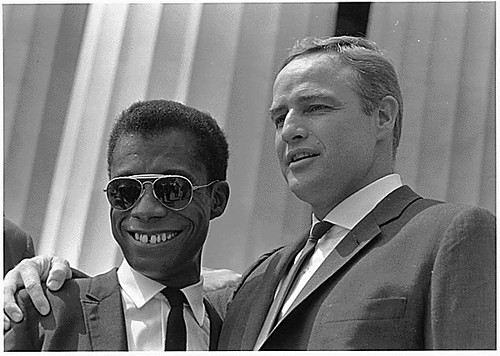
| Marlon Brando and James Baldwin at 1963 March on Washington |
Operating without clearance. If you work for a website company, you're best off not jeopardizing your job by using unauthorized photos. The price you'll have to pay -- time, threats, lawsuits and payments -- if you're caught will far outweigh the licensing costs. If you're just posting a photo occasionally to your personal blog, you're less likely to get hassled but beware that photo agencies employ various means of tracking digital photo use including digital watermarks and embedded metadata.
Right of publicity. The rules we provide here are for websites where you are using the celebrity photo as a means of illustrating a story about the celebrity -- for example, you're discussing the funny side of Mike Tyson. If you are using the celebrity photo to imply endorsement of your site or to sell a product or service, you'll need the celebrity's permission as well.
Public domain photos. There are some public domain photos of celebrities. Try sites such as Wikimedia and read and observe the terms of the licenses. We're not so sure about so-called public domain photos at other sites -- that is, whether the photos are actually in the public domain. We typed in "public domain celebrity photos" and found mixed results (including pictures of Dwight Eisenhower and Britney Spears -- we don't want to think about the potential mash-up!). Of course photos taken by government employees -- for example, Elvis shaking hands with President Nixon (soon to be a movie) are in the PD. We think that's the case with our photo of Marlon Brando and James Baldwin (above) -- perhaps taken by an FBI agent. (And here's a related video made around the same time).
Those 70's Lyrics: Do I Need Permission?
Right, you had a question. To some extent, it may depend on what you're doing with the lyrics. If you're using them for purposes of criticism and commentary and are only reprinting a chorus or verse -- usually four or five lines -- you can probably rely on fair use as a defense. (But, as we always warn, there's no guarantee that a music publisher won't hassle you over fair use claims). If you're reprinting more than that, or you are not commenting upon the lyrics, you should seek permission from the music publisher to reprint a song’s lyrics in a book. The fees for such uses are not fixed, so a music publisher can charge whatever the market will bear and fees range from $50 to hundreds of dollars to reprint lyrics in a book. We've provided a "lyric permission" letter in our permissions book, but nowadays you can probably work it out with an email exchange. You can research music publisher information at ASCAP, BMI, or Harry Fox. Alternatively (as the lawyers like to say), if you are self-publishing to a limited audience, you can take the risk and operate without permission, though successful writers opine against that.
Eat Pray Ask Permission?
Dear Rich: I'm interested in knowing if you have ever encountered clearing an "inspired by" situation. For example, I have written a piano solo inspired by the novel, "Eat Pray Love." I have not put that information on the cover of the piece because my instinct tells me "Eat Pray Love" would need to be cleared. The Dear Rich Staff kind of missed the boat on Eat Pray Love. It's not that we don't like Chicklit or RomComs or Julia Roberts (We felt bad for her when she broke up with Kiefer Sutherland ... and then felt happy for her when she started dating Jason Patric because he was so great in that Kathryn Bigelow vampire movie). Anyway, we're glad you found the movie (or book) inspiring enough to write a piano solo. (This movie might inspire us to write a song, however.)
Right, you had a question. From a purely legal POV, there's nothing preventing you from calling your composition Eat Pray Love or from stating that it was inspired by Eat Pray Love. Many artists have named compositions after books and films (and vice versa). But you will run into problems if you imply that the owners or creators of the book or movie somehow endorse what you're doing. That might be the case if you have included an image of the book cover or a picture of Julia with your sheet music or performance. You also may run into problems if buyers are confused with the song that's become associated with the movie.
Wants to Use Magazine Imagery in Book
Dear Rich: I am writing a book about an art technique using a national magazine. I can illustrate the process using the magazine without actually showing any of it's actual images, (see picture) but I must use the name as it is the only magazine that will work with this process. I have contacted the company and so far no one has been able to help me. The other product that I use has given me permission and is going so far as to help me promote the book because it will help them. This would also be the case with the magazine. I will be adding value rather than compromising it. I will list them in my sources. Would this be considered fair use? Do I need to have their permission to use their name? This reminds us of when our cousin Andrew used to paste rubber cement on a piece of wood and then apply rubber cement to a magazine picture and press them together after they dried (and I think he ran water over it until the paper washed off). He ended up with a piece of wood with an image on it, except you could see the wood grain, too. Kind of an old-timey look. He priced them at $50 or $100. We were about 13 at the time and that seemed a lot to charge for something you made with rubber cement. He told me, "If you don't charge a lot, people won't take it seriously." He was so young to know that.
Right, you had a question. We think you will be fine using the name of your magazine within your book. That's a trademark issue not a copyright issue and editorial uses of trademarks -- for example, talking about a magazine in a how-to book -- does not require permission. A conservative approach would also be to add a disclaimer at the front of the book to the effect that you and your publisher have no association with the magazine and that all rights in the magazine vest in the magazine owner. If you use imagery from the magazine, you'll trigger copyright issues and probably need permission either from the magazine or, if the magazine doesn't own the rights, from the photographer or designer who created the materials you're using. We think selective uses of the magazine in the context of a crafts project would likely be excused as a fair use since it is clearly a transformative use, but as Dear Rich readers know, fair use is just another word for a lawsuit, because that's often the only way you can prove fair use rights. As for the fact that your book adds value to the magazine, that may or may not be true, but it probably won't have much effect on your claim of fair use.
Do I Need Permission to Publish My Animation?
Dear Rich: I have worked in animation for 30 years (as an animator, visual development artist and storyboard artist) and I decided to put together a compilation book of my own artwork (from games, TV shows, and animated Feature films) to sell. It would be self published, probably in a print run of 500 copies, and I would primarily sell it directly at comic book shows and my own website (and perhaps at some specialty shops). I am wrestling with whether to go ahead and print it, without seeking permissions. But, after much deliberation, I began the request process with a few clients that I have recently been working with and so far so good; I have been getting permission with only one firm "NO" so far. But there’s another issue. I used to work at an animation studio that did everything from commercials to TV shows, games, and even effects for feature films. I did TONS of design work for them, on properties they were trying to develop themselves and for clients coming to them for development. The tricky part is that this particular studio has been out of business since 1996 and so I have no way of knowing who actually owns the rights to some of the artwork. So, here are my questions: (1) Do I need to get permissions at all? (2) What is the worst case scenario for not getting permission? (3) Is it legal to just say that I tried to locate the rights holder and could not? And (4) What happens to the intellectual properties of a company that has been out of business for 15 years? Can we answer your questions in reverse order? For some reason we find that more fun. (And speaking of permission, thanks for letting us use one of your images.)
(4) What happens to the intellectual properties of a company that has been out of business for 15 years? The successor to the business owns it. If there is no successor it becomes an orphaned work and a minor annoyance for those who must get permission. For example, if an author has assured her publisher that she will get permissions for her book, she'll have a problem with an orphaned work, and the publisher may make her take the work out. We don't think you need to worry much about that issue, as we explain below.
(3) Is it legal to just say that I tried to locate the rights holder and could not? It's still infringement but it's not a bad idea to put a statement like that on the copyright page and to disclaim copyright in those works. That doesn't mean you may not have to eventually pay for their use but if you can document your attempts to find the owner, that will go a long way to mediating any damages you might be assessed (in the way outside chance you end up in court).
(2) What is the worst case scenario for not getting permission? The worst case is that you run into one of these types and you can't seem to remove their teeth from your pants leg. They will drag you into court and not let go until you get out your checkbook. In your case, this worst case is not a very likely outcome. You have several factors buffeting your position.
First, you have an excellent fair use argument, similar to the argument raised in this case involving the artist Basil Gogos. Gogos created covers for monster movie magazines and the copyright owner of the monster movie magazines sued over the use of the covers in a Gogos biography. A court determined that the use was transformative and permitted it as a fair use. One of the factors in the artist's favor was that the magazines were no longer in print. Another was that the artwork was part of a biography/retrospective of the artist. Another reason that you may not have to worry is the limited publication. It would be difficult for a copyright owner to claim much in the way of damages if only 500 copies were distributed (and money is the main motivator for lawsuits).
1) Do I need to get permissions at all? See above. By the way, did you know it's easy, fast and kind of fun to search copyright office records? We're working on a video to explain the process but until then, check out the Copyright Office search engine.
(4) What happens to the intellectual properties of a company that has been out of business for 15 years? The successor to the business owns it. If there is no successor it becomes an orphaned work and a minor annoyance for those who must get permission. For example, if an author has assured her publisher that she will get permissions for her book, she'll have a problem with an orphaned work, and the publisher may make her take the work out. We don't think you need to worry much about that issue, as we explain below.
(3) Is it legal to just say that I tried to locate the rights holder and could not? It's still infringement but it's not a bad idea to put a statement like that on the copyright page and to disclaim copyright in those works. That doesn't mean you may not have to eventually pay for their use but if you can document your attempts to find the owner, that will go a long way to mediating any damages you might be assessed (in the way outside chance you end up in court).
(2) What is the worst case scenario for not getting permission? The worst case is that you run into one of these types and you can't seem to remove their teeth from your pants leg. They will drag you into court and not let go until you get out your checkbook. In your case, this worst case is not a very likely outcome. You have several factors buffeting your position.
First, you have an excellent fair use argument, similar to the argument raised in this case involving the artist Basil Gogos. Gogos created covers for monster movie magazines and the copyright owner of the monster movie magazines sued over the use of the covers in a Gogos biography. A court determined that the use was transformative and permitted it as a fair use. One of the factors in the artist's favor was that the magazines were no longer in print. Another was that the artwork was part of a biography/retrospective of the artist. Another reason that you may not have to worry is the limited publication. It would be difficult for a copyright owner to claim much in the way of damages if only 500 copies were distributed (and money is the main motivator for lawsuits).
1) Do I need to get permissions at all? See above. By the way, did you know it's easy, fast and kind of fun to search copyright office records? We're working on a video to explain the process but until then, check out the Copyright Office search engine.
He Needs Poets' Permission for Choral Work
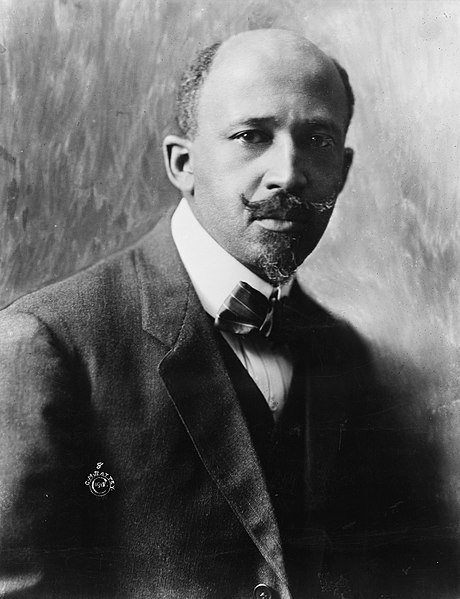
Dear Rich: I am a professional composer and I am looking to gain the text permissions from several authors for use in a commissioned choral composition I am writing. The author's works are found in a book entitled Earth Prayers, published by HarperCollins Publishers. The work I am writing has been commissioned by The Bucks County Choral Society. The authors are as follows; Wendell Berry, W. E. B. DuBois, Joyce Fossen, and Stephanie Kaza. I am comfortable with the fact that I may not be able to get any permissions from these authors. The DuBois permission I am sure would be through some estate. Since Berry is still alive and his poetry is widely published, he may deny permission as well. He may not even like music, though I cant imagine that. I just would like the chance to ask him. Joyce and Stephanie, I am not sure of. My initial research of their works online have yielded little results. The Dear Rich Staff wishes you well and hopes you don't run into the kind of problems faced by composer Eric Whiteacre (but if you do, there's always crowdsourcing). As for your permissions:
- It's possible that some (if not all) works by W.E. DuBois (above) are in the public domain. DuBois lived from 1868 to 1963. Any works of his published before 1923 -- for example Darkwater: voices from within the veil (published in 1920) -- are in the public domain. And all works published before 1964 were subject to renewal; most works were not renewed. Many of DuBois' works written after 1923 have been the subject of multiple copyright claimants, a strong sign that these works are either in the public domain, or that nobody is pursuing rights. You can check these details further by searching Copyright Office records.
- Stephanie Kaza appears to retain copyright in her work, at least according to Copyright Office records. So, you could start your search for her by checking with her most recent publisher Shambhala. They published her recent (2005) work, Hooked! Buddhist writings on greed, desire and the urge to consume.
- We love Wendell Berry (especially his recent book, Remembering).You should probably start your search through his current publisher, Counterpoint, which maintains the Wendell Berry website.
- We located Joyce Fossen in the Copyright Office records and if it is the poet you're seeking, she appears to have passed away in 1989. The copyright claimant for her work is a George J. Fossen and we imagine he would be the person to contact for permission (although we have no way of locating that information).
Why Can't I Take Photos in Court Room?
Photo Week #2
Dear Rich: I want to photograph an empty courtroom but the people at the courthouse told me photographers weren't allowed unless a judge approved it. I just want to photograph the court room, not the people. It's possible that the courthouse personnel mistook your request. They may have thought you wanted permission to photograph during a business day or trial. That's a matter usually left up to the judge. Otherwise, the regulation of photography within government buildings is determined by the relevant city, county or state government (as discussed yesterday). Alas, taking photos of public buildings is sadly over-regulated in a post-9/11 world. You need to find the local public official who can grant permission -- often indicated somewhere within the local rule or permit requirement.
Today's public domain photo: by Ann Rosenera, is a 1943 image of California shipyard workers on the ferry to the Richmond Shipbuilding Company yards.
Dear Rich: I want to photograph an empty courtroom but the people at the courthouse told me photographers weren't allowed unless a judge approved it. I just want to photograph the court room, not the people. It's possible that the courthouse personnel mistook your request. They may have thought you wanted permission to photograph during a business day or trial. That's a matter usually left up to the judge. Otherwise, the regulation of photography within government buildings is determined by the relevant city, county or state government (as discussed yesterday). Alas, taking photos of public buildings is sadly over-regulated in a post-9/11 world. You need to find the local public official who can grant permission -- often indicated somewhere within the local rule or permit requirement.
Today's public domain photo: by Ann Rosenera, is a 1943 image of California shipyard workers on the ferry to the Richmond Shipbuilding Company yards.
Subscribe to:
Posts (Atom)