Showing posts with label character. Show all posts
Showing posts with label character. Show all posts
Can You Really Protect a Cartoon Character with Copyright?
Thursday, April 18, 2013
0
comments

Sorry, You Can't Patent Cartoon Characters
Thursday, April 11, 2013
0
comments
 Dear Rich: I would love to know more about patent drawing requirements. Well, first off my drawing in this case are cartoons characters which I would love to share around the internet but I am afraid that it will be easily stolen. Is it possible to patent cartoons for example, Mickey Mouse? If yes what should I do to achieve such actions and what documents are required? I'm interested in starting an online comic and my further plan is to sell some small merchandise into the market and therefore I will need such protection. We think you misunderstand the purpose of patent drawings. They're technical illustrations that explain how to make and use a patented innovation. So, they're not the right choice for protecting a cartoon character.*
How do most cartoonists protect their creations? Most cartoon characters are protected under copyright and trademark law (not patent law). Even though copyright is free and automatic, we still recommend copyright registration (online $35). Read more about copyright protection and registration for protecting cartoons and comic strips. You can also acquire trademark protection for your character. That provides exclusive rights to the character name, logo, and image on certain goods and services. Read more about trademark law, here. Keep in mind, no matter what laws protect your character, you can't prevent others from stealing it. These legal protections give you the basis - assuming you can afford it -- to chase, sue and recover from the wrongdoers.
* That Said Dept. Although there's no way you can obtain a utility patent for a cartoon character (utility patents only protect functional inventions), you can file a design patent, if, for example, your character is incorporated into the design of a lamp base. It's probably overkill in your situation because of the costs involved for filings (particularly if you are seeking expedited treatment). Copyright and trademark laws should provide equivalent or better protection.
Can I Create Raggedy Ann or Peter Rabbit eBook?
Tuesday, January 8, 2013
0
comments

Turf protection. There's a lot of money riding on the proposition that trademarks can protect these public domain franchises -- for example, Disney's proprietary approach to Cinderella, Pinocchio, Snow White, Little Red Riding Hood, Sleeping Beauty, and the Little Mermaid. Peter Rabbit's lawyers are internationally active and we assume the Hasbro and Simon & Schuster legal teams for Raggedy Ann (and BFF Andy) are also vigilant.
Bottom Line Dept. We don't want to discourage your use of public domain materials and we like your book ideas. We also think that there's some case law that supports your position -- for example, the Supreme Court prohibited the use of trademarks to create a "mutant" copyright regime and the high court also liberated titles of public domain works. There's simply no bright line test to determine when (or whether) fictional characters from public domain books can be used to limit public domain reproductions. For that reason, proceed with care. As a general rule the further you stray from the original public domain publication, the more likely you are to trigger a cease and desist letter. And if you plan to proceed with your projects, include prominent disclaimers stating that the works are not associated with the various trademark owners.
Wants to Create Mobile Movie Trivia App
Wednesday, October 24, 2012
0
comments

Making Merchandise from Video Game Characters
Monday, December 26, 2011
0
comments

How do other people get away with it? It's a matter of odds. The owners of valuable character properties usually put their resources into pursuing the bigger fish, and for the most part, that often bypasses individual sales at Etsy or eBay. So, unless the trademark owner is intending to make an example of a small fry infringer, a cease and desist letter may be sent, and that's sometimes the end of it.
What should you do? We wish it wasn't frustrating to get permission. Like, wouldn't it be great if you could pay "per impression" for reproductions of licensed characters. Of course, that may blow any standards of quality ... but hey, merchandise happens. Anyway, infringement is always a gamble and we'll leave the risk assessment to you.
At What Point Does Copyright Protect a Plot and Its Characters?
Wednesday, April 20, 2011
0
comments

- his first name was Billings (ideal for a lawyer),
- he was friends with the artist Maxwell Parrish (and his wife posed for one of Parrish's paintings),
- he considered himself a melancholic (and "hopelessly hypochondriac"), and
- he was the godfather of J.D. Salinger's daughter, Peggy.
The Salinger Connection. Salinger and Hand, neighbors in Cornish, New Hampshire, were close friends. Salinger considered Hand a "yogi" and according to J. D. Salinger: A Life by Kenneth Slawenski, Hand's relationship with Salinger was perhaps the "fullest he had enjoyed." The men shared an intense interest in spiritual topics, and Salinger confided in Hand about his wife Claire's loneliness. Slawenski writes:
Nichols v. Universal Pictures (1930). Abie's Irish Rose, a corny tale of interfaith marriage, had been one of the longest-running shows on Broadway (inspiring playwright Lorenz Hart to pen the couplet: "Our future babies we'll take to Abie's Irish Rose -- I hope they'll live to see it close.") Despite a critical drubbing (Robert Benchley said, "People laugh at this every night, which explains why democracy can never be a success.") the play was a huge hit and and like all hits, inspired imitators including the motion picture, The Cohens and the Kellys. The owners of Abie's sued for copyright infringement.
Abie's and The Cohens shared similarities: both plots involved children of Irish and Jewish families who marry secretly because their parents are prejudiced. At the end of each work there is a reconciliation of the families, based upon the presence of a grandchild. Beyond that, the works had little in common except for some ethnic cliches. The challenge in assessing this type of infringement is how to measure nonliteral similarities -- that is differences other than verbatim copying. Learned Hand's visionary analysis demonstrated a deep understanding of the creative process:
P.S. Bridget Loves Bernie Dept. The unprotectible plot premise discussed in Nichols was resurrected in the 1972 TV show Bridget Loves Bernie. Oddly, an Irishman named David Birney played the Jew, Bernie, who married his co-star in real life. Sadly, the network dumped the show after one season - even though it was in the top five for ratings -- reportedly because the networks had so many complaints about interfaith marriage. Go figure.
"Sadly, both men were enmeshed in troubled marriages, a fact both painstakingly concealed from others. Perhaps most important, both Salinger and Learned Hand suffered from periods of deep depression, a penchant towards melancholy that fused them together in a way unique to such sufferers."Salinger wrote to Hand regularly and those letters were among the many paraphrased in a biography of Salinger by Ian Hamilton in the 1980s. Salinger sued over Hamilton's paraphrasing of his letters and an appeals court ruled against Hamilton, relying on a Learned Hand case, Nichols v. Universal Pictures, as precedent.
Nichols v. Universal Pictures (1930). Abie's Irish Rose, a corny tale of interfaith marriage, had been one of the longest-running shows on Broadway (inspiring playwright Lorenz Hart to pen the couplet: "Our future babies we'll take to Abie's Irish Rose -- I hope they'll live to see it close.") Despite a critical drubbing (Robert Benchley said, "People laugh at this every night, which explains why democracy can never be a success.") the play was a huge hit and and like all hits, inspired imitators including the motion picture, The Cohens and the Kellys. The owners of Abie's sued for copyright infringement.
Abie's and The Cohens shared similarities: both plots involved children of Irish and Jewish families who marry secretly because their parents are prejudiced. At the end of each work there is a reconciliation of the families, based upon the presence of a grandchild. Beyond that, the works had little in common except for some ethnic cliches. The challenge in assessing this type of infringement is how to measure nonliteral similarities -- that is differences other than verbatim copying. Learned Hand's visionary analysis demonstrated a deep understanding of the creative process:
"Upon any work, and especially upon a play, a great number of patterns of increasing generality will fit equally well, as more and more of the incident is left out. The last may perhaps be no more than the most general statement of what the play is about, and at times might consist only of its title; but there is a point in this series of abstractions where they are no longer protected, since otherwise the playwright could prevent the use of his "ideas," to which, apart from their expression, his property is never extended."In other words, the premise of a film -- say Boy-Meets-Girl-Boy-Loses-Girl-Boy-Gets-Girl -- is never protected but the fully expressed plot -- say, When Harry Met Sally, can be protected. And the same is true for the characters within a play. Hand wrote -- in what was to become one of the most quoted statements in copyright law:
"If Twelfth Night were copyrighted, it is quite possible that a second comer might so closely imitate Sir Toby Belch or Malvolio as to infringe, but it would not be enough that for one of his characters he cast a riotous knight who kept wassail to the discomfort of the household, or a vain and foppish steward who became amorous of his mistress. These would be no more than Shakespeare's "ideas" in the play, as little capable of monopoly as Einstein's Doctrine of Relativity, or Darwin's theory of the Origin of Species. It follows that the less developed the characters, the less they can be copyrighted; that is the penalty an author must bear for marking them too indistinctly."We don't want to belabor the point -- though we are lawyers -- but Nichols was the breakthrough that enabled judges to assess and compare narrative works built around similar underlying ideas. Although it is true that wherever Hand's line of abstractions is drawn, it may seem arbitrary, "that," as the judge stated in Nichols, "is no excuse for not drawing it." Nichols has been cited in over 1,900 cases and its precepts have been borrowed for legal theories affecting software and websites. Thanks Judge.
Royalty or Equity for Copyrighted Character
Monday, March 28, 2011
0
comments

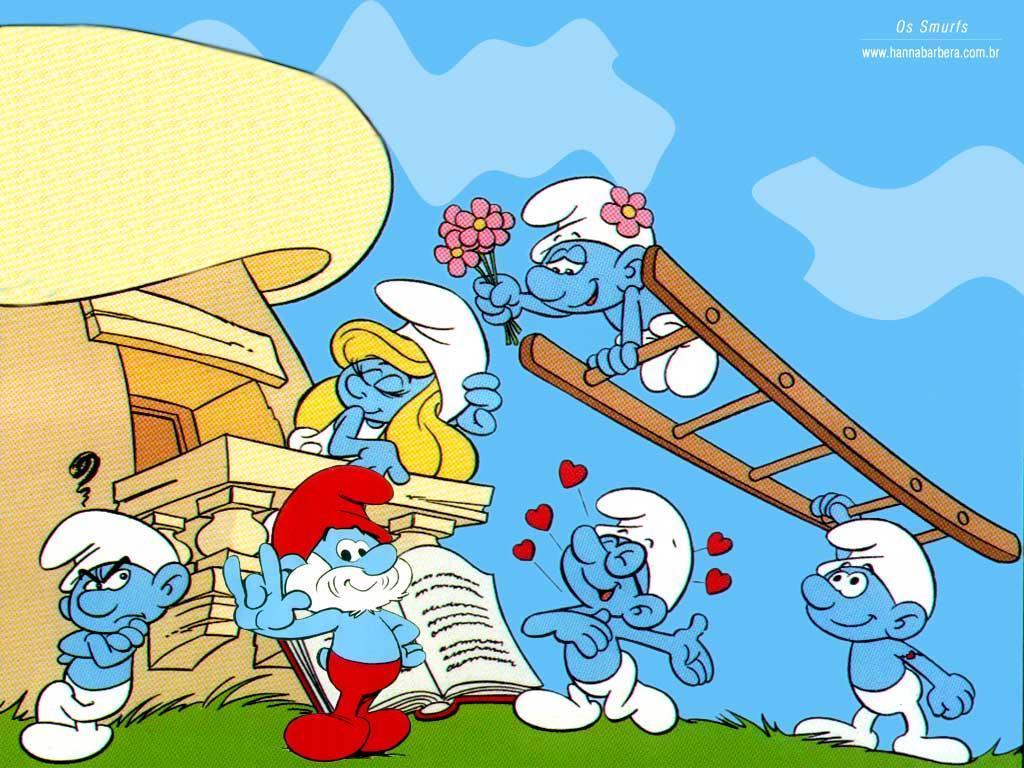
Right, you had a question. You're kind of in the position of a pre-Smurf Peyo. We admire your business planning and strategizing (as General Eisenhower said, "plans are useless; planning is indispensable") but what you should keep in mind is that while you proceed, legal decisions are being made without you knowing about it. For example, if you and someone else are creating a copyrightable character, then you're both co-authors of that character (once created) under copyright law. No paperwork is required for that to occur. As co-authors, either one of you can license the character provided the other co-author is reimbursed. If you've already created the character, you'll need to deal with (and acknowledge) that fact. Sometimes, this is accomplished by assigning your rights to the venture and once you assign your rights, that's it. You won't be able to get those rights back for 35 years. Alternatively, if you're hired as an employee, and you create the work after becoming an employee, the company will own whatever you create. So, if you haven't created the character then you should probably work out the paperwork before beginning ... so you're not playing catch-up later. At the same, if you and the founder are currently contributing to the business and planning to share in the revenues and you haven't 'created' a company, then you're operating as a partnership, with all of the legal obligations that entails.
What paperwork do you need? It's all about how you will be compensated. Maybe equity -- stock ownership of the business -- will be sufficient. If you acquire stock and the company is sold, you'll probably receive a payment for your shares and that will be likely be that. You're unlikely to receive income from any post-sale revenues (unless that's a condition of the sale of the business). If you're receiving a royalty for your copyright interest, that would continue after a sale because the new owners would have to assume the royalty obligations.
Do acquiring businesses want to assume royalty obligations? As a general rule most companies like to pay once for a business and not to have continuing payment obligations. On the other hand, many acquiring businesses -- music, movie, toy, publishing, and photograph companies --- assume royalty obligations as standard operating procedure. It's no big deal. We believe that if your property is a serious revenue-generator, royalty obligations won't stand in the way of a sale. And we wouldn't worry about a new owner having to pay in perpetuity. When it comes to acquisitions, anything can be worked out if the parties are willing.
Next steps. Document everything. If someone makes you an offer, save the document or email. If you agree to something, put that in writing. If you're in the midst of creating the character or storylines, keep track of who contributed what. Situations like yours are often sorted out after the fact and documentation is essential. If possible, avoid creating your work until the paperwork is in order. That's because if the character is created and becomes a hit, the company will be in a better financial position to challenge your legal rights. That's why the time to get everything right is before creation of the character.
Subscribe to:
Posts (Atom)