If you're a "dot-your-i's" kind of person ... The permissions required are fairly straightforward and include permission to "perform" and "reproduce" the poems and songs. In the case of Leonard Cohen, you'd need permission from the owner of the song (probably a music publisher) but you wouldn't need permission from the owner of the sound recording copyright (the record company). We have permission forms you can adopt for these uses in our permissions book.
Home » Posts filed under poetry
Showing posts with label poetry. Show all posts
Wants to Use Poems in Play
Dear Rich: I have two questions the answers to which I need as soon as possible. I want to use a few unpublished poems written to me by a former acquaintance who happens also to be a published poet and who in the past read his poetry on a professional performance circuit in Europe. The play is a 10-minute one-act to be used as one of 10 others in a single admission-payment-required performance at a local community theater of 250 seats and written/acted by amateur playwrights and actors. The poet is a citizen of another country, he and I have no mutual acquaintances locally, we have no communications between us, and the odds that he could be made aware of the use are infinitesimally small. My ex-husband is a legal scholar in the field of intellectual property, however, so I'm respectful of such rights for the most part. What, if any, permissions need I obtain from the poet? Also, I would like to use some brief portions of recordings by Leonard Cohen as part of the one-act, same circumstances. What permissions need I obtain? We know you are in a hurry for an answer and wish that you felt comfortable asking your ex-husband this question, but in any case, we feel fairly certain that legal scholars would agree that both your uses are infringements, both might be excused as fair uses, and that obtaining permission would eliminate any potential liability. On the other hand, if the chances of the copyright owner learning about your use are, as you say, "infinitesimally small," there's little reason to seek permission, now. If the play receives wider attention, you can always seek it later.
If you're a "dot-your-i's" kind of person ... The permissions required are fairly straightforward and include permission to "perform" and "reproduce" the poems and songs. In the case of Leonard Cohen, you'd need permission from the owner of the song (probably a music publisher) but you wouldn't need permission from the owner of the sound recording copyright (the record company). We have permission forms you can adopt for these uses in our permissions book.
Emily D's Copyright Issues
Dear Rich: Can I quote four lines of Emily Dickinson's poetry in my novel without penalty? She lived approximately 139 years ago. We wish we could say that Emily's poetry is in the public domain but the definitive unedited versions of Dickinson's poems are said to have first been published in 1955 (even though Emily died in 1866). The 1955 edition was renewed and is under copyright until 2050 (95 years from the date of publication). (BTW, a 1998 edition -- scroll to bottom of this article -- of her poems is said to be the first version to correctly preserve Dickinson's punctuation.) Earlier edited works of Dickinson were published before 1923 and are in the public domain, so if you use these versions, you're home free. You can read more about Harvard University's claims to copyright over Dickinson's works, here. Regardless of whether the poetry is in the public domain, you have a good chance of success with a fair use argument because you are using such a short segment and for fictional purposes. You can review other fair use cases, here.
Does Computer Calligraphy Have Copyright?
Dear Rich: I am a minister and I have copyrighted some poems. One in particular I have framed and a friend did it in calligraphy as a gift. I don't question selling this, but I do question selling my other copyrighted poems from a computer program in calligraphy. Can I sell my words in a calligraphy style from a calligraphy program? If you're asking whether there is a separate copyright in the appearance of the calligraphy -- that is, the typeface -- we're going to say, "No." Typefaces don't get copyright protection. However, there are two caveats: (1) a software program (sometimes referred to as a "font") that generates typefaces can be protected (so you want to avoid copying typeface programs or violating the terms of their license), and (2) arguably a hand drawn calligraphy that is sufficiently unique or transcends the typeface in some innovative artistic manner, may be copyrightable as a visual arts work. These exceptions don't appear to apply in your case.
Band Wants to Use Samples of Poets
Dear Rich: My band wants to use samples in our CD. One of the sources is a compact disc of famous poets reading their work (compilation called "Lunapark 0, 10" recorded by subrosa (most all the authors are long deceased, but quite famous: James Joyce, Artuad, Appolinaire, etc.). I used bits and pieces and somewhat altered the snippets. Some are longer excerpts. Do I need to track the copyright down by author and their publisher/estate? There are two copyrights at work: one is in the poetry that's read (the literary copyright) and the other in the recording (the sound recording copyright).
What's public domain? If you wish to do everything according to the law, you should review the date of first publication for each copyright (the date of publication of the sound recordings is apparently indicated on the CD covers shown here). If you can determine those dates and then apply the rules found here, you'll know which recordings are public domain. You'll soon see the challenge with this, as pre-1972 sound recording, although not protected by federal la, may be protected under state or foreign laws.
Permissions. We suppose you could contact either: (1) Sub Rosa, the label behind the compilation or (2) Mark Dachy, the compiler of the collection, and ask whether permission was sought or needed. We think the pursuit of permissions for most of this material will be difficult. Generally, you can assume that newer tracks will be protected --- for example, the three tracks that are post 1972 --- and will require permission. Same for the tracks that include music (they incorporate a third copyright -- the music). As always, it really comes down to whether those who own rights will learn of your use (or care), and as a general rule, the older the work (say, for example, pre-1950s), the less likely you'll wake anybody up.
Can We Publish Poems Given as Gift?
Dear Rich: We were given some poems 25 years ago from a family friend and would like to publish these in a small book and aim to sell the books to raise money for a local charity. Any problems with doing this? NB He has a living daughter. We would have gotten to this question sooner but it took our staff a little while to figure out that "NB" referred to nota bene ("note well"), not New Brunswick, newborn, no brainer, or not bad.
Right, you had a question. The copyright in the poems (and therefore the right to control reproduction) is owned by the estate of the family friend and it lasts for seventy years from the poet's death. Therefore, if you publish without permission, the estate (we'll assume it's the daughter) can halt your publication, or seek financial damages (or both). Is there any chance you can obtain permission for a limited publication for your purposes? Is the daughter aware of the existence of these poems? If not, she may be confused as to how to move forward. Let us know and we'll make that the subject of a separate blog entry.
Copyright for Poets
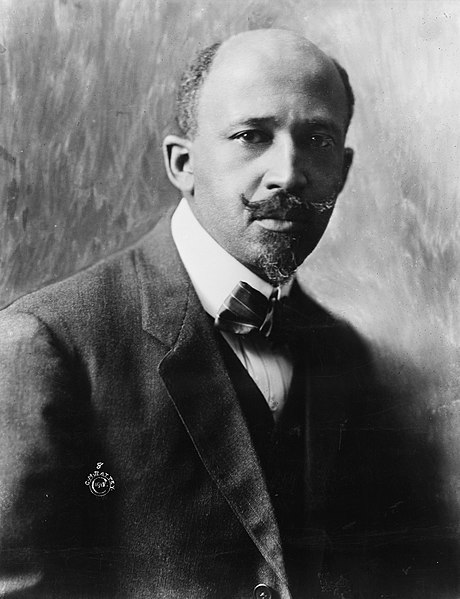
Dear Rich: I have a relative who wrote poetry and we would like to collect his work and publish a volume of his poems. None of the poems have ever been published. How do we copyright this in his name? We love poetry (and here's a photo of one of our favorite poets). He turned us on to this poem and it made quite an impression on the Dear Rich Staff (For poetry students, here's one take on the poem; and here's another).
Right, you had a question. Poetry, perhaps the oldest form of literary work, is protected under copyright law. Your relative's work is protected automatically, but you can obtain certain advantages -- as well as placing your relative on record at the Library of Congress -- by filing a copyright application. You can register a poetry collection (this should help) by completing Form CO. And congrats on publishing a poet. "A poet's autobiography is his poetry. Anything else is just a footnote."--Yevgeny Yevtushenko.
He Needs Poets' Permission for Choral Work
Dear Rich: I am a professional composer and I am looking to gain the text permissions from several authors for use in a commissioned choral composition I am writing. The author's works are found in a book entitled Earth Prayers, published by HarperCollins Publishers. The work I am writing has been commissioned by The Bucks County Choral Society. The authors are as follows; Wendell Berry, W. E. B. DuBois, Joyce Fossen, and Stephanie Kaza. I am comfortable with the fact that I may not be able to get any permissions from these authors. The DuBois permission I am sure would be through some estate. Since Berry is still alive and his poetry is widely published, he may deny permission as well. He may not even like music, though I cant imagine that. I just would like the chance to ask him. Joyce and Stephanie, I am not sure of. My initial research of their works online have yielded little results. The Dear Rich Staff wishes you well and hopes you don't run into the kind of problems faced by composer Eric Whiteacre (but if you do, there's always crowdsourcing). As for your permissions:
- It's possible that some (if not all) works by W.E. DuBois (above) are in the public domain. DuBois lived from 1868 to 1963. Any works of his published before 1923 -- for example Darkwater: voices from within the veil (published in 1920) -- are in the public domain. And all works published before 1964 were subject to renewal; most works were not renewed. Many of DuBois' works written after 1923 have been the subject of multiple copyright claimants, a strong sign that these works are either in the public domain, or that nobody is pursuing rights. You can check these details further by searching Copyright Office records.
- Stephanie Kaza appears to retain copyright in her work, at least according to Copyright Office records. So, you could start your search for her by checking with her most recent publisher Shambhala. They published her recent (2005) work, Hooked! Buddhist writings on greed, desire and the urge to consume.
- We love Wendell Berry (especially his recent book, Remembering).You should probably start your search through his current publisher, Counterpoint, which maintains the Wendell Berry website.
- We located Joyce Fossen in the Copyright Office records and if it is the poet you're seeking, she appears to have passed away in 1989. The copyright claimant for her work is a George J. Fossen and we imagine he would be the person to contact for permission (although we have no way of locating that information).
Subscribe to:
Posts (Atom)