Showing posts with label quotes. Show all posts

Why is Faulkner Suing Woody Allen?

Dear Rich: You have been advising people that it's okay to use quotations without infringing ... but the Faulkner estate recently sued several companies for using a Faulkner quote.  Is it okay or isn't it? Speaking of Faulkner, we recently read The Sound and the Fury for the first time and we have to say that was one heck of a confusing book. We kind of liked it but if it weren't for the Cliffs Notes-style explanation in Wikipedia, we're not sure we could positively distinguish Quentin and Ms. Quentin. We tried the movie version for clarity and that was a big mistake (although that's a pretty unique cast!) Right, you had a question. Yesthe Faulkner estate recently sued over the use of two Faulkner quotes. The first lawsuit is over the quote “The past is not dead! Actually, it's not even past." The estate sued Sony Pictures over the use of that quote in Woody Allen's "Midnight in Paris," (more details here), and they also sued Northrop Grumman and the Washington Post over an ad that used a second Faulkner quote, "We must be free not because we claim freedom, but because we practice it," (more details here). The two complaints are similar (see the movie complaint; see the Grumman complaint). They both have three claims --  copyright infringement, Lanham Act violation, and commercial appropriation. We'd bet our mortgage that the copyright infringement claim will fail for the reasons expressed in yesterday's blog. As for the other two claims, we have a feeling that the estate is unhappy with the associations (military contractors, Woody Allen) and is trying to push the limits of "endorsement" claims, which could be troublesome considering that Mississippi has little precedent for right of publicity claims.
Takeaway Dept. We'll stand by our position on copyright and quotations but add the caveat that being "right" doesn't mean that copyright owners can't sue you. If you're planning an advertisement that uses a quote from someone who is alive or recently deceased, get it reviewed by a lawyer.

Can I Use Quotes WIth Photobook?

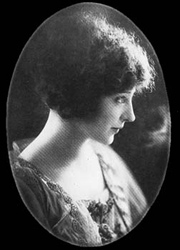
Portrait of Anais Nin (1920)
I made a photograph book for my school project from my photographs and quotes From Martha Graham (1894-1991), Anais Nin (1903-1972) and Stephen Nachmanovitch (1950-present). Now I like to reproduce them and want to know what I shall do. Also, please let me know what are the options to reproduce a photo books for a reasonable price and find a distributer? Yes, you are fine to use all three quotes in conjunction with your photos. As we've discussed in other "quote" related questions, your rights are partially based on fair use, partially based on the fact that copyright doesn't protect short phrases, and partially based on the fact that some quotes are so short as to qualify as being "trivial" or "de minimis" uses.
Reproduction and distribution. We couldn't tell you who to use or your options for making photo books (that's what Google is for) but we know there are lots of companies like shutterfly, lulu, and snapfish that produce those kinds of things.
Making Postcards or Posters? We're not sure what other types of reproduction you have in mind but if you intend to break out an image and quote for purposes of a poster or a postcard, a living person such as Stephen Nachmanovitch (or in some states, the estate of a dead person), may object under right of publicity laws. To successfully make such a claim, he would need to demonstrate that you were exploiting his personna. We think that's a longshot (or as a meteorologist might put it, "less than 10 per cent chance of rain") but we're lawyers and have to consider all possibilities.

Wants to Use Quotes About God

"God the Father" by Pompeo Girolamo Batoni
Dear Rich: Question No. 1 - If one is writing a book on quotations arranged by topic/subject, does the author need to get the permission for the quotations. Question No. 2 - I am writing a non-fiction book about the variety of human thoughts on God. My book will contain a lots of quotation from old and new ages about God. Do I need to get permission to use the quotations from different people.  Question No. 3 - My book has a section on how children think about God and I want to use about six independent short quotes from a book called "Children's Letters to God." I am referencing this book and other books on the same topic and using 4-5 quotes from each book as illustrative examples for my chapter on how children think about God. We sought divine advice on your questions but none has arrived as of time of our publication. So, we're forced to spout some time-honored copyright rules. Your ability to use quotations and short phrases is partially based on fair use, partially based on the fact that copyright doesn't protect short phrases, and partially based on the fact that many quotes are so short as to qualify as being "trivial" or "de minimis" uses. In addition, you don't need to worry about using quotes that were published before 1923 (see this chart for more details). As for using several quotes culled from a book that features quotations from children's letters, the rules may be a little different, depending on how long the quotes are, how many are taken, and whether your use qualifies as a fair use. In addition you need to avoid taking so many that you are stepping on the other author's compilation copyright.

How to Find Quotes to Use on Greeting Cards

Dear Rich: I have created a card line from my art. I want to use inspirational quotes. I was able to contact Mary Oliver's staff and they said no. Anais Nin's estate want money to use them. Other than those two I am having a hard time determining. Rumi? Rilke? Movie quotes? Music quotes? Others I haven't heard of before but have lovely things to say. Can you help me sort it out? First, the animated GIF issue. As regular readers may have noticed, we've settled down quite a bit and we seem to be finding our pace. Thanks for your helpful comments and feedback.
Right, you had a question. Attempting to negotiate permission from famous poets or songwriters (or their estates) can be expensive, frustrating and time-consuming. If we may recommend an alternative, legal course to pursue -- find similar writers whose works are in the public domain. One way to find out what potential consumers might like is to use Google's new Knowledge Graph feature. If you type Mary Oliver into Google, for example, a box appears on the right of the listings (see above) showing you what Oliver-searchers are also searching for (surprise - Jalal ad-Din Muhammad 'Rumi' is No. 1). How do you know which writers are in the public domain? This article provides the basics and if you need more help, consult Steve Fishman's helpful book.


Using Quotes and Seeing Ghosts

Dear Rich: I put together a book with quotes from various famous individuals and my own professional photos to encourage inspirational thought. I do not want to produce the book before I can clear the licenses. How does one go about clearing the licensing for that? Some authors, such as Seneca lived around 75 B.C. I guess for these authors I don't need a clearance? You guessed right. There is little chance that Seneca will rise from the grave (Dracula-style) and retain Boies, Schiller to smite all those who have malapropped his quotations. In any case, any reputable law firm would inform him that his texts, all published long before 1923 are in the public domain. As for the rest of your quotes, we think you're fine to use them for reasons we expressed two years ago and which we're too lazy to rewrite (and thereby up our SEO). You may wonder whether you can trust our response because as Seneca says, "advice is worth what you pay for it." But keep in mind he made that remark before the existence of freebies.

Wants to Use Heinz Quote

Dear Rich: There is a very well-known quote by someone named Heinz von Bergen (often found online as "Heinz V. Bergen"), which reads as follows:"Information is the seed for an idea, and only grows when it's watered." I have searched far and wide on the Internet for some source that would clarify if this quote is in the public domain, and/or information on Heinz von Bergen himself. We don't mean to offend, but this quote sure sounds like the kind of thing Steve Carrell might spout on an episode of The Office.  Anyway, does information (which is a collection of facts) actually grow? (It seems to us that information exists and we discover or categorize it.)
Right, you had a question. Regardless of whether you can find any information on the originator of this quote --  and our hard working staff couldn't find much on Heinrich von Bergen, Heinz von Bergen, Heinrich v. Bergen, or Heinz v. Bergen -- you can use any short quote freely. As we've noted in the past (type "short phrase" or "quotes" into the Search Dear Rich Box, right) copyright doesn't protect short phrases.
PS Dept. If you're looking for "idea" quotes, what about this one as an alternative -- "A half-baked idea is okay as long as it's in the oven."

Wants to Quote Movie Dialogue in Novel

Dear Rich: I don't see anything in your Getting Permission book on getting permission to quote dialog from films. I assume that the process is similar to getting permission to quote song lyrics, but it would be better if you covered this in detail. I want to quote with attribution some movie dialog in a novel I am writing. Any suggestions? Speaking of film dialogue, we were surprised recently when reading the French classic Pere Goriot to find a line about someone "making him an offer that he cannot refuse." Did Balzac travel to the 20th Century, watch the Godfather, return to the past and copy the movie dialogue for his novel? We guess we'll never know.
Right, you had a question. The rules for using film dialogue in a novel are the same as for all text uses (explained in Chapter 2 of the book). As you're probably aware, there is no fixed amount of words that you can use without permission, although some uses are so minimal as to be considered de minimis (scroll down). The difference with using film dialogue is that it's often difficult to figure who owns the rights and even harder to get permission for the use.
Why is it difficult to get permission for movie dialogue? Generally the studio (or a producer) owns all rights to the movie including the dialogue. But in some cases, screenwriters may retain rights. In other cases, if the movie were based upon a book, the author may retain certain rights. That's the challenge when using one layer from a multi-layered work -- determining who has the right to grant permission. Even if a studio does own the rights to the dialogue, you still have the practical problem of finding the person authorized to grant permission (and convincing that person not to hang up on you).
What's a novelist to do? If you're publishing the book yourself, you're probably less at risk because you won't be indemnifying against infringement. Publishers get uptight about stuff like that and insist on some security in the form of warranties and indemnity. On the other hand, a publisher may be able to assist you with getting rights and permissions from a studio. If you're on your own and you're still concerned about getting chased, consider whether you can make a realistic fair use claim. That is, can you demonstrate that your use of the dialog is transformative -- for example, Woody Allen's use of dialogue from Casablanca in Play It Again, Sam, was transformative (though Allen likely acquired permission for that and the film clips).
Speaking of great movie dialogue ... we're partial to Things Change (Don Ameche's swan song). It's got dialogue -- written by David Mamet and Shel Silverstein -- with some serious staying power.

Wants to "Own" Shakespeare Phrase for Merchandise

Dear Rich: I have a plan to use a "theme" idea involving stories that were told to me by friends of mine at a retreat. I would use these stories in a book and title it with a quote from a Shakespeare play that fits the subject matter very well. I recorded and transcribed the stories and prepared the book proposal. I received permissions from the original participants and have developed stories beyond original telling and will use pseudonyms for the participants. My questions: (1) Can I use the Shakespeare phrase as title of book, in logo and brand, on cards, plaques, and entire product line? I searched the trademark database for phrase and there were no results. I grabbed .com domain name with phrase and there were no other domains using the phrase. (2) What do I need to do to "OWN" that phrase so that I can feel free to license it to appropriate product partners, or to enter into strategic partnerships with various companies to create gift packets with book and products, like candy and greeting cards. I also want to take the idea on the road to gather more stories after my website will launch and then once the book is published as the part of the book tour. (3) Do you think that I need a lawyer to guide me through these early stages so that the correct and necessary legal infrastructure is set in place to allow for graceful launch of this commercial universe? If so, do you have any referrals? 
All that glistens is not gold. Your plan is admirable and ambitious but we're always a little wary of attempting to plan the launch of a commercial universe all at once. We think it's usually better to take it step by step and see what works and what doesn't. With that caveat in place, here are the answers to your questions.
Good enough to call your own.  The idea of "owning" a Shakespeare phrase for merchandise is possible but it requires money and diligence. As you're aware, "ownership" of the phrase would require that you acquire trademark rights. (And as with all intellectual property rights, your claim will only have value if you have the money to go after those who infringe your trademark.) For each class of merchandise, you will need to register a trademark claim (between $275 and $325 per class, depending on how you register). So, candy would be in one class, greeting cards another, etc. By the way, if you register the phrase for greeting cards, that would give you the right to use the phrase for a line of cards; it wouldn't guarantee your exclusive right to use the phrase as the card's message. You can get the trademark registrations only by using the mark on the goods in commerce -- that is, you'll need to be selling the goods to get the rights. However, you can reserve the mark by filing an intent-to-use application, provided you have a bona fide intent to use the marks on the goods. Also, you cannot get trademark rights for a single book, but you can get it for a series of books.
What's in a name? As for using Shakespeare quotes for a book title, no problem, though you might want to check this site to avoid any confusion.
Let's kill all the lawyers. As for your last question, the Dear Rich Staff cannot refer you to any attorneys although there are many online sources for locating attorneys (including our employer's legal directory). As for doing the legal work yourself, that's always possible. Publishing the book won't bring up many legal issues and it sounds as if you have the necessary releases. More can be found in our Getting Permission book. As for the licensing deals, those probably will involve a lawyer and we would recommend contacting one once you have a solid offer in hand.