Showing posts with label invasion of privacy. Show all posts

Does Architect Own Copyright in Building Photos?

Dear Rich: I have an architectural practice and have posted the photographs of a number of completed projects on a web site called Houzz. Now, a past client has seen my photos of her project and is demanding that I remove them. There was no clause in our contract either way, although I'm certain that case law has established that the rights to the architectural design and drawings remains with me, the professional who created them. But what about images of the completed project? Thanks for the link to Houzz.com, where we spent several hours deciding whether we liked our home office (photo) better than the posted ones (we did).
Right, you had a question. Image copyrights are owned by the person who created the image - the photographer. If the image contains separately copyrightable material--for example, there's artwork within the image, or the architectural design is copyrightable --  then permission is required from the photographer and the artist or architect whose work appears in the photo. There are many exceptions to these rules, for example, if the exterior is publicly viewable or the reproduction qualifies as a fair use. We wrote about many of these issues in this post on architectural photos. The only other issues that might arise would be contractual (did you agree not to post images?) or privacy (did you invade the client's privacy in some way by posting the images?). Assuming these are standard interior shots without client identification (as commonly seen on Houzz), we doubt that the latter issue will arise.

Wants to Publish 100-Year Old Floor Plans

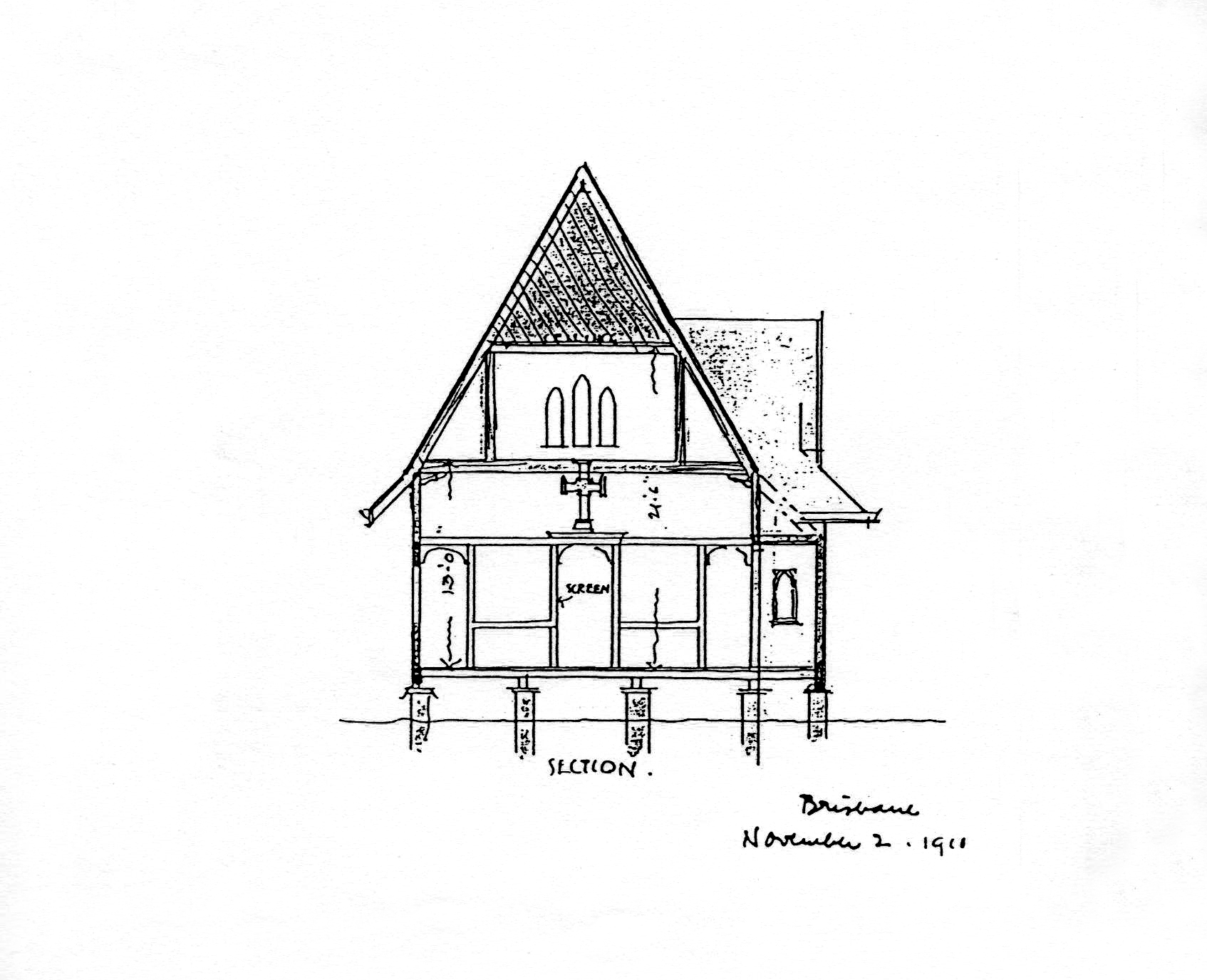
Dear Rich: I own a large collection of early 1900's architectural drawings and photographs of residential homes. Most of these homes were built during the 1920's and some are now owned by famous celebrities. This collection of drawings and photographs was left to me by an architect relative who died more than fifty years ago. I'm working on a book of this architecture and would like to display many of the drawings and photographs of these homes in the book and on the Internet. I believe the architect, or their heir (me, in this case) owns the rights to architectural drawings and ideas but I'm not sure of the legal issues of displaying these images to the public. Could privacy be an issue here even though all the original owners of these mansions are long dead and the homes are no longer owned by that family? Do I have the right to publish room layouts, dimensions and photographs of these homes? Some of the homes have been torn-down so I assume publishing anything about those would be safe but what about those that are still standing and occupied? I'm also concerned about losing the rights to these things if I put them online. Couldn't someone else copy them and claim a copyright for either the architectural idea or the image itself? Do I even own the copyright on these drawings and photographs and architectural ideas just because I own the paper they are printed on?  So many questions, so little time. Here goes: The photos and architectural drawings may be protected under copyright if the author died after 1942 and either (1) the works were never published, or (2) they were published after 1922 and properly renewed. If the works meet these criteria, and you are the heir to the copyright owner’s estate (and can prove it), you can register copyright in your name and stop others from copying the works.
Copyright for architectural works. Architectural drawings were not classified as protectable works until December, 1990.  Prior to that, courts tended to protect architectural blueprints. The extent of protection may depend on how distinctive or elaborate the plans are, but it's likely the works you describe will meet the standards for protection.
Privacy.  We don't believe that publication of architectural drawings would give rise to a successful invasion of privacy claim because the publication doesn’t disclose personal facts, or intrude into personal affairs. Even if we are correct, however, a wealthy homeowner could always still mount a tort claim. You may lower the chances of such a suit by not mentioning the names of the persons presently living at the home.

Publishing Personal Stories: What Permission is Needed?


Dear Rich: I am creating an online platform for people to share their personal stories that I am going to publish. What kind of legal document do I need to put together? Personal stories? We have a personal story we'd like to post. It's about a blogger who ordered some T-shirts but there was a problem making the registered symbol -- ® -- appear properly on the back (we're not assessing blame just yet) and so the blogger spent a lot of money on shirts with a misplaced ®. It started as a sad story but after some exchanges with customer service, we're starting to think that it will have a happy ending.
Right, you had a question. The good news is that your site can avoid most liability by abiding by the Digital Millenium Copyright Act (which shields you from claims of copyright infringement) and the rules set forth in Section 230 of the Communications Decency Act (which shields you from liability for statements published by others). Keep in mind, you must follow the rules for the shields to work. In general, your concerns for posting personal stories are outlined below:
  • Copyright: You should obtain an assurance that the work is original to the author and that the author has the right to permit publication and that the author grants you the limited right to post it online. If you want more rights -- say to publish a collection of stories in eBook format -- you should acquire those rights now. The same is true if you want the option for more rights. You should learn more about acquiring publishing rights 
  • Invasion of Privacy and Trade Secrets: Personal stories involve personal details. You need an assurance that the posting won't reveal any personal or trade secrets that will cause you to get sued.
  • Children's Privacy: We would suggest avoiding taking any materials from children under 13.  (You can seek an assurance that person submitting the story is 13 or older.) If you start taking information from children under that age, you'll need to deal with a law known as COPPA and that may not be worth the effort.
  • Defamation: Personal stories that include untrue statements about others could lead to defamation suits. You need an assurance there's nothing defamatory.
So, in summary, you need permission to publish and assurances that the publications don't violate any laws. These assurances and permissions can be bundled in a click-to-accept statement that the user must agree to before uploading the information. Any electronic method of assent that can be verified -- checking a box, clicking to accept, etc. --  will suffice.

Will Publishing Love Letters Invade Privacy?

Dear Rich: My question concerns the intersection of copyright permission and a release for invasion of privacy. I’ve written a memoir that quotes lines from a former girlfriend’s love letter to me. To get permission to do this, I am using a text permission agreement taken from your book Getting Permission. But, assuming the permission is forthcoming, it occurs to me that publishing her letter, even with a copyright clearance, also invades her privacy. Do I also need a release for this, or is the copyright permission alone sufficient to protect me? Ah, love letters ... Do people still put pen to paper any more? It's hard to believe that the mailbox was once a place where you could find intimate correspondence. We are reminded of the words of W.H. Auden: "And none will hear the postman's knock/Without a quickening of the heart./For who can bear to feel himself forgotten?"
Right, you had a question. Your copyright permission -- assuming it mentions the intended use in your memoir -- should protect you from claims of invasion of privacy. Invasion of privacy is typically either the public disclosure of private facts or it's an unwarranted intrusion into someone's private affairs. So, if your former girlfriend is consenting to publication, it would be difficult for her to later claim that her privacy is being invaded. There is one possible exception to her implied release of claims, and that is if you use false information -- for example, you deliberately misquote the letters -- in order to place your girlfriend in a bad light. In that case, she may have a claim for "false light" invasion of privacy or for defamation. In any case, it would be hard to shield yourself from these latter claims. We imagine that a former girlfriend would be hesitant to sign a bullet-proof "I won't sue about anything" release unless she had the ability to review the memoir ahead of publication.