How Do I Protect My Wife's Blog?


Dear Rich: My wife writes a weekly blog entry for a friend's blog which is syndicated on blogger. Her articles are well received and she has subsequently submitted different items to different trade magazines for potential publication. She currently receives no residual ad revenue from the blog's 'owner'. Should we separately 'trademark' or otherwise protect her articles under her name or company name? The concern would be that the blog owner could also submit her articles or otherwise generate separate revenue stream based on them. It is an unlikely situation, but we wanted to be educated on if and/or how to protect her writing. We've been wearing our Don't Drink and Blog T-shirt for months now (not continuously, of course) and we think it's been effective keeping drunks off of Blogspot. (We also support this Busted Tees special which made us realize how close we were to being Amish). One thing for sure, don't drive and blog.
Right, you had a question. We don't think you can acquire a trademark for the blog because we assume it's your friend's blog, not your wife's. If that's not the case, and your wife is co-owner of the name, the parties can register the blog name by following these instructions. Still, that will only get you the right to stop others from using a similar blog name; it won't give you the ability to stop copying of the blog's text.
Copyright's where it's at. Your wife already has the strongest form of protection -- copyright. She gets it automatically whenever she posts an entry. She can augment her rights by filing for copyright registration. Registration has some great benefits and soon we'll be posting an article on how to register blog articles (though this entry may help, for now). Assuming there is no written agreement to the contrary, your wife owns the copyright in whatever she creates. She impliedly gives her consent for publication in the blog, but not for anything beyond that use. So, if the blog's administrator/owner uses your wife's entries for some other purpose, your wife can legally prevent that use if she chooses to flex her copyright muscles. For the future, perhaps she may want to create a simple agreement explaining how any uses are to be handled -- that is what can be reproduced by the blog owner and her compensation for that use.

Am I Bound by NDA with Foreign Company?

Dear Rich: I'm in the U.S. and I'm working with a foreign company and we were talking about me possibly helping them with their marketing. I signed an NDA. We both have agreed that I will not do the marketing for them. Now we are talking about me private labeling their product and selling it here in the states. We're in the negotiating stage on price. They are 50% higher than another source for a similar product. I'm happy to give this company 15% to 20% higher payment for their supplement but not 50% higher then their competitor. Because I signed a NDA does this prevent me from going to another vendor? Again, under the NDA it was to discuss marketing consulting. Now we're talking private label/wholesale. So far the negotiating on price is going okay but I want leverage so I'm not handcuffed to buying from him 50% higher them competitive market place. Plus I don't want to sign an exclusive source deal. As far as I know I don't know of any trade secrets that they gave me, just common knowledge that can be found on the web. The Dear Rich Staff is sorry we're not giving you our full attention but we're trying to figure out why our most recent weekly Google Analytics report shows zero visitors since October 1. Oh we see why! Somebody snatched our tracking code. Was it the Chinese bots? Pardon us while we reinsert our code. Ahh ...  that feels better!
Right, you had a question. We're guessing that your primary concern is whether you can ditch the foreign company and go with somebody else without violating the NDA. That shouldn't be a problem, assuming that (1) the document you signed is strictly an NDA, and (2), you don't violate the NDA by giving up any confidential information provided by the foreign company.
Strictly an NDA? Probably you signed a typical NDA that prohibits disclosure of secrets. But be aware that some documents titled Nondisclosure Agreement, Confidentiality Agreement, or even Disclosure Agreement, go beyond just addressing trade secret issues and can include other restrictive provisions --  for example, it may temporarily prohibit solicitations of competitors or contact with customers. So, numero uno, be sure that you didn't sign paperwork that presents additional hurdles. If the agreement is more than an NDA, you may need to consult an attorney.
What can't you do? Assuming it is a straight NDA, keep in mind that their language is often overly restrictive and purposely vague. Those who insist on them sometimes rely on their ambiguity to instill a sense of fear. However, an NDA only prevents disclosure of trade secrets -- confidential information that's unknown by competitors and which is kept confidential via reasonable security efforts. Many such "secrets" don't qualify as trade secrets, and -- if you're confident that they're not protectible -- you are free to disclose them regardless of the NDA. In other words, if all of the information disclosed to you is publicly available, the foreign company will have no basis to sue under the NDA should you go with someone else.

Trademark v. Domain Name: Can We Co-Exist?

Dear Rich, I have a situation similar to one in a previous post. I acquired a unique domain name in 2008 with much trouble. I was planning to build an online store. The name is related to fashion accessories. My website was built in 2009 and it was open to the public. People can see it on the internet but the product and payment part was not done so there was no transactions. But at the same time, I used the same name in a local funding rasing event in California in 2009. I generated some transactions there. I was not able to do too much since then. Two months ago, in June 2011, I found a U.S. software company tried to register a trademark for that exact name for some computer software. I also found that it is online downloadable and it became first in Google listing for that name. My questions are: 1) Will I lose the domain? 2) Can I still apply for trademark? 3) Can we co-exist? The short answers to your questions are No, Yes, and Yes (To save you some time, we've provided an explanation of eCommerce trademark basics.)
A classy distinction. Our big takeaway is that trademark law only protects marks in regard to the class of goods or services being offered under that mark. That's why you can wear American Apparel while you're flying American Airlines, or look for jobs at Monster.com while listening to speakers connected by Monster cables, or fasten Arrow staples to your Arrow shirt. Only those marks that are rock stars in the trademark world --  think Nike or Coca-Cola -- can claim a likelihood of expanding into a broad array of goods and services, and more importantly can prevent another company's use of their famous mark because a third-party use dilutes it.
Domain names and trademarks. A registered trademark owner can only dislodge a domain name holder if the domain name is identical or substantially similar, and the domain name owner acquired or is using the domain name in bad faith. That generally means the domain name holder is exploiting the trademark owner's rights. You won't have that problem because you have a bona fide intent to use the mark for fashion accessories not to compete or trade off the software company's name.


Can I Use 'Fortune 500' ?

Dear Rich: I am working on a research project about architecture and Fortune 500 companies. I want to publish my research but would like to learn more about trademark and copyright. The questions I have are the following: Can I use "Fortune 500" in the name of my book? Do I need permission from Time Inc? Can I use a company's name from the list of "Fortune 500" in my book? Do I need permission from Time Inc. and/or each listed company? I have made original architectural drawings that contain the logo of the company and the design of their existing space, such as McDonald's. Do I need permission to publish my drawing? Here we go: 'Yes ' you can use Fortune 500 in your book title. We found at least eight books that made similar uses from dating as a business strategy to spirituality in marketing. Avoid duplicating the Fortune font and logo. And, no, you don't need permission from Time Inc. Yes, you can use a company's name or logo in your book without permission because your work is "informational." For the same reason, you can publish company logos and your drawings of the buildings - yes, buildings can be the subject of trademark protection. Buildings are also protected by copyright law, but not if they were created before 1990. Even with that protection you can take photographs or make other "pictorial representations" of post-1990 buildings. So you're good to go all around


One More Time: How to Register a Blog Name

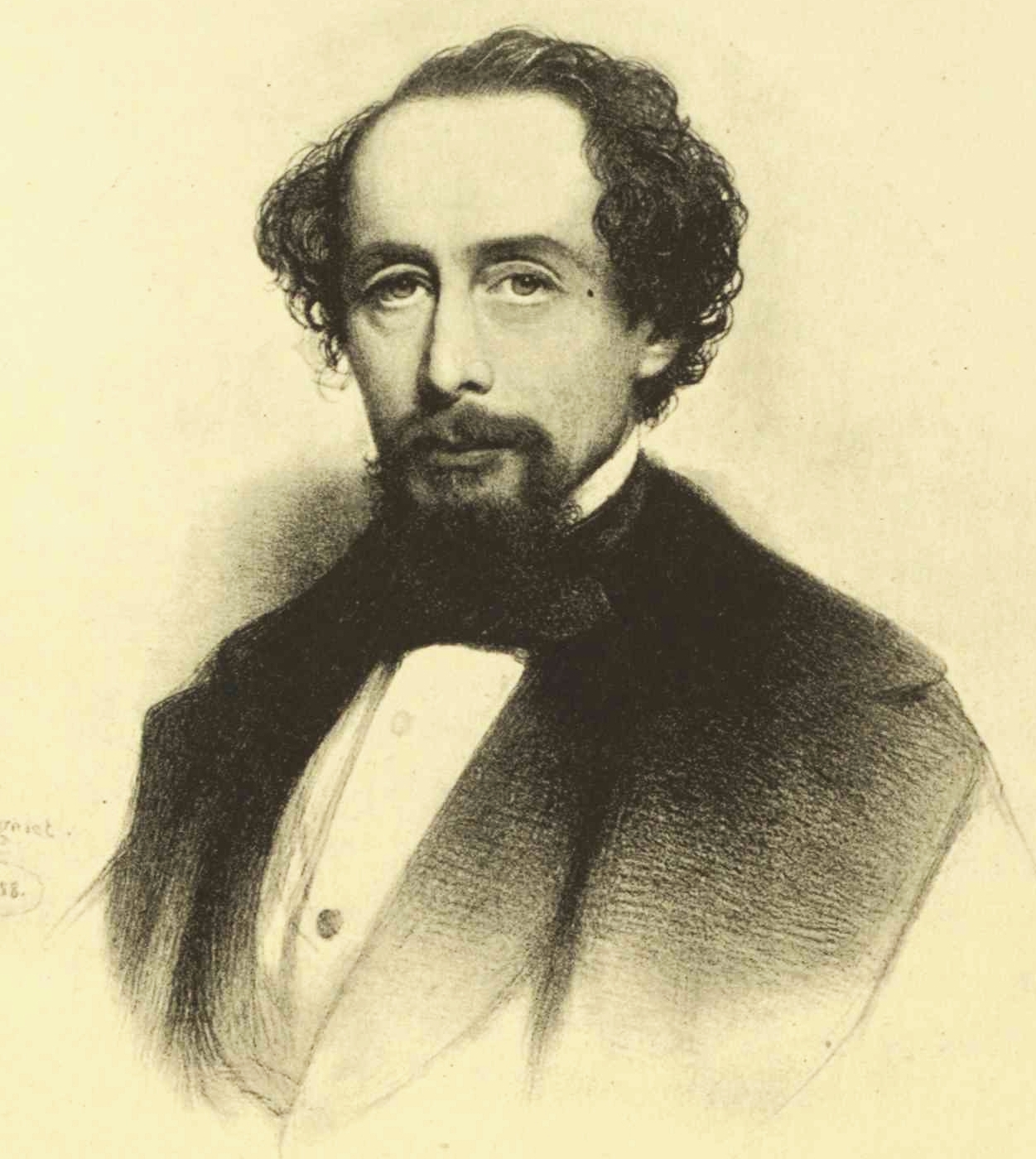
Charles Dickens:
The world's first blogger?
Dear Rich: I read your entry on whether you can register a blog name as a trademark. It's helpful but doesn't really explain how to register the name. Can you provide a step-by-step explanation for registering a blog name at the USPTO? It would be much appreciated. The Dear Rich Staff is here to serve. We posted this article explaining the registration process.

Eat Pray Ask Permission?


Dear Rich: I'm interested in knowing if you have ever encountered clearing an "inspired by" situation. For example, I have written a piano solo inspired by the novel, "Eat Pray Love." I have not put that information on the cover of the piece because my instinct tells me "Eat Pray Love" would need to be cleared. The Dear Rich Staff kind of missed the boat on Eat Pray Love. It's not that we don't like Chicklit or RomComs or Julia Roberts (We felt bad for her when she broke up with Kiefer Sutherland ... and then felt happy for her when she started dating Jason Patric because he was so great in that Kathryn Bigelow vampire movie). Anyway, we're glad you found the movie (or book) inspiring enough to write a piano solo. (This movie might inspire us to write a song, however.)
Right, you had a question. From a purely legal POV, there's nothing preventing you from calling your composition Eat Pray Love or from stating that it was inspired by Eat Pray Love. Many artists have named compositions after books and films (and vice versa). But you will run into problems if you imply that the owners or creators of the book or movie somehow endorse what you're doing. That might be the case if you have included an image of the book cover or a picture of Julia with your sheet music or performance. You also may run into problems if  buyers are confused with the song that's become associated with the movie.

When Will the 1-Year Grace Period for Patents End?

Dear Rich: I filed a provisional patent application this week. I've been selling my product that I hope to patent for the past three months. The new patent law ends the one-year grace period. So where does that leave me and my application? You should be fine, provided that you file your regular patent application within a year of the provisional filing. The aspect of the law that you're referring to doesn't go into effect until March 16, 2013, and only applies to patents filed on or after that date.
What about the one-year grace period? The one-year grace period -- which allowed applicants to obtain patents even if if they had been selling or had published their patent less than a year before filing -- will terminate (with some exceptions) on March 15, 2013. As David Pressman, author of Patent It Yourself, recently explained in his excellent analysis of the America Invents Act:
"The one-year grace period has been decimated so that any publication, public use, or offer of sale of an invention before an application’s actual filing date will bar the application. An exception: if the actual inventor-applicant created the publication and it was made up to one year before the filing date, it will not bar the application. However it is still unwise for an inventor to publish before filing since they will lose their foreign filing rights and another person may see the publication and file their own application on it before the true inventor files, thus requiring an expensive and uncertain derivation proceeding."
Check out the article for more details, and for more on the AIA, you can read about the USPTO's implementation plans, and you can review a timeline for AIA implementation.