Dear Rich: Can an employer in California require an ex-employee to disclose all inventions created after the employment has ended. I've been asked to sign an agreement that requires me to disclose all inventions I create even for a year after I leave the company? The Dear Rich Staff is always fascinated by post-termination provisions. Yes, they are usually insidious, over-reaching, poorly drafted, and a desperate attempt to assert control by the legal-capitalist puppet-masters. But there's also an element of hopefulness to them. After all the employer sees some kind of future for you. So, when you get that call from the HR department and you start to see pink, remember that the employer who is about to end your career also has enough faith in you to pursue you for months after you've cleaned out your desk.
Right, you had a question. We can't say for sure whether your post-termination clause is enforceable but we can give you some background. California's Labor Code Secs. 2870-72 sets the rules for some invention disclosures. That law prohibits the employer from claiming rights to inventions you create on your own time with your own supplies and equipment. It also permits an employer to require employee disclosures of all inventions created during the course of employment. Unfortunately, it doesn't say anything about disclosures made after employment is terminated.
Two cases that shed a little light. In a 2006 case, STMicroelectronics v. Harari, a federal court indicated that California's disclosure requirements could be construed broadly for purposes of protecting an employer's trade secrets (although it didn't specifically address post-termination provisions.) In Yield Dynamics v. Tea Systems, a California Court of Appeal looked at a post-termination disclosure and ruled that an ex-employee had honored it. Again, the court didn't specifically address whether such clauses are always enforceable.
California policy. We think that a California court will consider it unenforceable if the provision is primarily being used as a means of preventing you from competing (that is, like a noncompetition clause). If a court considers it as a legitimate attempt by the employer to preserve company trade secrets, it is more likely to be enforced. The factors that are likely to tip the decision are the length of the provision (generally the longer, the less enforceable), the industry, or category of technology or invention involved (in some industries such as high-tech, trade secrets are short-lived), and the relative behavior of the parties (for example, it would be less enforceable if the employer customarily uses this provision to hassle ex-employees). We also think this is something you should make your new employer aware of as you want to avoid disclosing any newly acquired trade secrets. It's also the kind of thing you may want to consider hiring an attorney for an opinion.
Home » All posts
Can I Copy Craigslist Ads?
Dear Rich: I am a book editor working on a collection of some fiction, some personal narratives, some nonfiction. I've asked one writer to rewrite a personal narrative because it included four lines from a fairly recent pop song (or get permission to use the lines though I warned her that there would probably be a pretty stiff fee and the publisher wouldn't pay it). She wants to submit a different narrative instead that quotes several Craigslist ads. Are those ads considered to be copyrighted? Would we contact Craigslist? Or try to contact the author of the post? We rarely use Craigslist (except to check houseboat prices and obscure audio equipment) but we have a fond spot in our heart for the site because we used to live in the Sunset District of San Francisco and we remember riding our bicycle by the tiny storefront office at 9th and Judah Streets many, many years ago and wondering what the heck is Craig’s List? Then – boom – it was a global phenomenon.
Right, you had a question. Craigslist doesn't claim the copyright on individual posts (see the Craigslist terms of use -- scroll down to Section 14, Proprietary Rights). Craigslist does claim a copyright (collective works) in the cumulative content on its site, but that’s primarily to stop others from scraping and reposting large chunks of its content.
So is there a copyright and if so, who owns it? Under copyright law, the author of the work (the Craigslist ad) claims copyright. But that presumes the posting is a copyrightable work and it's not always clear if that's true. We think the determination depends on the ad's length and the unique language used in the ad. As a general rule short phrases, or “stock” advertising terms are not protected under copyright. And under a principle known as the merger doctrine (or idea/expression doctrine), a want-ad writer can’t claim copyright if the ways to express an ad are limited -- say “Roommate Wanted: No Meat Eaters, Please.” Even if a want-ad can be protected under copyright, the reproduction in a book might be excused as a fair use (or as a de minimis, or “trivial” use of the material).
Conclusion Dept. As general rule, if you are simply quoting a few Craigslist ads in a personal narrative – and particularly if you are using those excerpts for purposes of commentary or criticism -- you can probably exercise your rights under fair use.
The music thing. Because you didn’t ask, we'll sidestep your comments about reproducing four lines from a pop song. But if we were a betting blog, we’d bet that most such uses in a personal narrative would be excused as a fair use.
Right, you had a question. Craigslist doesn't claim the copyright on individual posts (see the Craigslist terms of use -- scroll down to Section 14, Proprietary Rights). Craigslist does claim a copyright (collective works) in the cumulative content on its site, but that’s primarily to stop others from scraping and reposting large chunks of its content.
So is there a copyright and if so, who owns it? Under copyright law, the author of the work (the Craigslist ad) claims copyright. But that presumes the posting is a copyrightable work and it's not always clear if that's true. We think the determination depends on the ad's length and the unique language used in the ad. As a general rule short phrases, or “stock” advertising terms are not protected under copyright. And under a principle known as the merger doctrine (or idea/expression doctrine), a want-ad writer can’t claim copyright if the ways to express an ad are limited -- say “Roommate Wanted: No Meat Eaters, Please.” Even if a want-ad can be protected under copyright, the reproduction in a book might be excused as a fair use (or as a de minimis, or “trivial” use of the material).
Conclusion Dept. As general rule, if you are simply quoting a few Craigslist ads in a personal narrative – and particularly if you are using those excerpts for purposes of commentary or criticism -- you can probably exercise your rights under fair use.
The music thing. Because you didn’t ask, we'll sidestep your comments about reproducing four lines from a pop song. But if we were a betting blog, we’d bet that most such uses in a personal narrative would be excused as a fair use.
My Book Uses Paparazzi Photos
Dear Rich: Was lucky enough to be offered a book deal by a major trade publisher. The publisher intends to publish my book in both electronic and print format and sell it to all the major book retailers that still exist. The book is to include tons of paparazzi-esque celebrity photos and wanted to know how to go about this legally. Do I have to get permission to use each and every one from the photographer? Are there services that do this in batches? Are there any fair use of public domain instances I should be aware of? Because you mentioned the word "paparazzi," we must take a moment to honor Federico Fellini, whose film, La Dolce Vita (how did Anita Ekberg get that kitten to stay on her head?), introduced the character, Paparazzo, a photographer. That eventually led to the generic use of the term paparazzi, for annoying celebrity photographers.
Right, you had a question. As annoying as such photographers may be, they are still entitled to copyright for the photographs they take (though those copyrights are often sold to celebrity mags, licensing agencies, and TV shows). There are agents and photo reps who can acquire rights for you -- for example, the American Society of Picture Professionals can set you up with a photo researcher. But the costs for such experts may be cost prohibitive. You may find it easier to use licensing services such as PRPhotos.com. For example, we sought to license an image of Brad Pitt for use inside the first edition of a book and could have acquired the license for $200 (see below).
Again, that may seem prohibitive for many but we're afraid that's typical for licensing photos for print purposes.
Fair use and public domain. As for fair use and public domain issues, we don't think you're likely to have much luck with either claims. Fair use is a defense which means you and the publisher have been dragged into a dispute. That's not a good position for an author, particularly if your contract has established that you'll indemnify the publisher. As for the public domain, it's unlikely celebrity photos are in the public domain unless: (1) the photographer donated it to the public domain, (2) the photo was taken by a federal employee within the scope of employment (think of Nixon shaking hands with Elvis), or (3) the photo was published before 1923 (Will Rogers, anyone?).
Creative commons. You may want to look for celebrity photos that are offered under Creative Commons licenses. Finding these photos requires some search engine chops but it can be done. Note that many celeb photos are illegally posted on the web and the interloper labels them as Creative Commons, so unfortunately, you can't always count on the labeling; you need to go to the source, for example, the photographer's Flickr site.
Right, you had a question. As annoying as such photographers may be, they are still entitled to copyright for the photographs they take (though those copyrights are often sold to celebrity mags, licensing agencies, and TV shows). There are agents and photo reps who can acquire rights for you -- for example, the American Society of Picture Professionals can set you up with a photo researcher. But the costs for such experts may be cost prohibitive. You may find it easier to use licensing services such as PRPhotos.com. For example, we sought to license an image of Brad Pitt for use inside the first edition of a book and could have acquired the license for $200 (see below).
Again, that may seem prohibitive for many but we're afraid that's typical for licensing photos for print purposes.
Fair use and public domain. As for fair use and public domain issues, we don't think you're likely to have much luck with either claims. Fair use is a defense which means you and the publisher have been dragged into a dispute. That's not a good position for an author, particularly if your contract has established that you'll indemnify the publisher. As for the public domain, it's unlikely celebrity photos are in the public domain unless: (1) the photographer donated it to the public domain, (2) the photo was taken by a federal employee within the scope of employment (think of Nixon shaking hands with Elvis), or (3) the photo was published before 1923 (Will Rogers, anyone?).
Creative commons. You may want to look for celebrity photos that are offered under Creative Commons licenses. Finding these photos requires some search engine chops but it can be done. Note that many celeb photos are illegally posted on the web and the interloper labels them as Creative Commons, so unfortunately, you can't always count on the labeling; you need to go to the source, for example, the photographer's Flickr site.
Can I Use Ex-Employer's Customer List?
Dear Rich: Simple question: Can my ex-employer stop me from using the customer list I developed when I worked for him? Sorry, but it's not that simple. You should check out this article to determine whether your customer list qualifies as a trade secret. If it doesn't, it's unlikely that it can be protected by state trade secret law or an NDA you may have signed. On the other hand, state laws vary and most states honor noncompete agreements (not California) which may affect your ability to compete against your ex-employer by soliciting his clients. So, if you signed paperwork with your ex-boss, now's the time time to review it (or have an attorney review it).
Somebody Took My Dot-Org
Dear Rich: A company has copied our domain name but used it with a dot-org, not dot-com like we do. I thought you had to be a nonprofit organization to get a dot-org domain name. Can anybody be a dot-org? The Dear Rich Staff is sorry to hear that you are no longer the master of your domain ... and yes, anybody can be a dot-org.
The skinny on TLDS. When top level domain names (TLDs) such as .com, .org, .gov, .net, and .edu were created by the Internet Corporation for Assigned Names and Numbers (ICANN), the intention was that each TLD would cater to a specific type of domain name holder. For example, .org was intended for nonprofits, and .net for network related entities. But only some TLDs are really restricted--for example, .edu for educational institutions, .gov for government agencies, and .mil for military agencies. To get one of these you must qualify. But that’s not the case with .org, .net, and .com. all of which can be obtained freely by just about anyone, for any purpose.
What can you do about the interloper? If someone has taken your company’s trademark and is using it in bad faith to compete against your business as a .org, you can either sue for cybersquatting in U.S. federal court (very expensive), or you can request ICANN arbitration (approximately $1500 if you use only one arbitrator). We discussed cybersquatting in a recent post.
P.S. Coming Soon: Custom TLDs. ICANN has announced that companies can – commencing January 12, 2012 -- buy custom TLDS. For example, Nike can buy exclusive rights to .NIKE and Apple can buy .APPLE. Supposedly these custom domains will sell for $185,000, so it's for serious players only.
The skinny on TLDS. When top level domain names (TLDs) such as .com, .org, .gov, .net, and .edu were created by the Internet Corporation for Assigned Names and Numbers (ICANN), the intention was that each TLD would cater to a specific type of domain name holder. For example, .org was intended for nonprofits, and .net for network related entities. But only some TLDs are really restricted--for example, .edu for educational institutions, .gov for government agencies, and .mil for military agencies. To get one of these you must qualify. But that’s not the case with .org, .net, and .com. all of which can be obtained freely by just about anyone, for any purpose.
What can you do about the interloper? If someone has taken your company’s trademark and is using it in bad faith to compete against your business as a .org, you can either sue for cybersquatting in U.S. federal court (very expensive), or you can request ICANN arbitration (approximately $1500 if you use only one arbitrator). We discussed cybersquatting in a recent post.
P.S. Coming Soon: Custom TLDs. ICANN has announced that companies can – commencing January 12, 2012 -- buy custom TLDS. For example, Nike can buy exclusive rights to .NIKE and Apple can buy .APPLE. Supposedly these custom domains will sell for $185,000, so it's for serious players only.
Can We Use Cars in CD Cover Art or Movie?
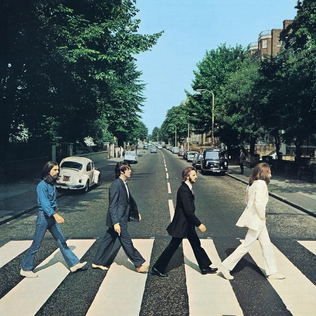
Dear Rich: On music CDs and in the movies I see images of different kinds of cars, and I wonder if the artist has had to pay any royalty to the car manufacturer. For example, the Beatle's Abbey Road album has a white Volkswagen Beetle right behind George Harrison. Does this imply endorsement of Beatle's music by Volkswagen Motor Company? And remember Walt Disney's use of a Volkswagen in the movie, The Love Bug. There are many classic old Fords and Chevys seen in movies all the time. Also, there is a musical group called REO Speedwagon. Using a car's image or trademark may (or may not) trigger problems on a CD cover or in a movie ... it depends on a few factors.
The Abbey Road Cover. The image of a VW on the Abbey Road cover (above) is unlikely to trigger any trademark issues because the usage is primarily editorial -- that is, it's an incidental use and no particular attention is drawn to the car. Of course, at the time, fans saw hidden meanings in the presence of the car (Beetle = Beatle) but it turns out the car was simply a vehicle owned by someone in a nearby flat. (BTW, the license of the car was stolen soon after the album came out). If consumers were likely to be confused into thinking that Volkswagen (or any other car manufacturer whose vehicle appears on the street) endorsed the Beatles (or vice versa), the car company never saw fit to take action. After all, if the world's most popular band at the time is including your product on a popular album, that's not something you're likely to complain about. (In general, it was a less litigious world back in 1970.) BTW, an editorial use of a trademark -- for example, a picture of a Ford truck in a documentary about trucks -- is not infringing.
Herbie and VW Marks. As for Herbie and the Love Bug movies, Disney removed the name and logos (scroll down) from Herbie in the first movie in the series. Apparently the company was concerned about claims of trademark infringement. But several years later when the sequel appeared (Herbie Rides Again) in 1974, VW sales were down and the VW company insisted that Disney put the trademarks and names back. (The names and marks stayed on Herbie for the subsequent four Love Bug sequels.)
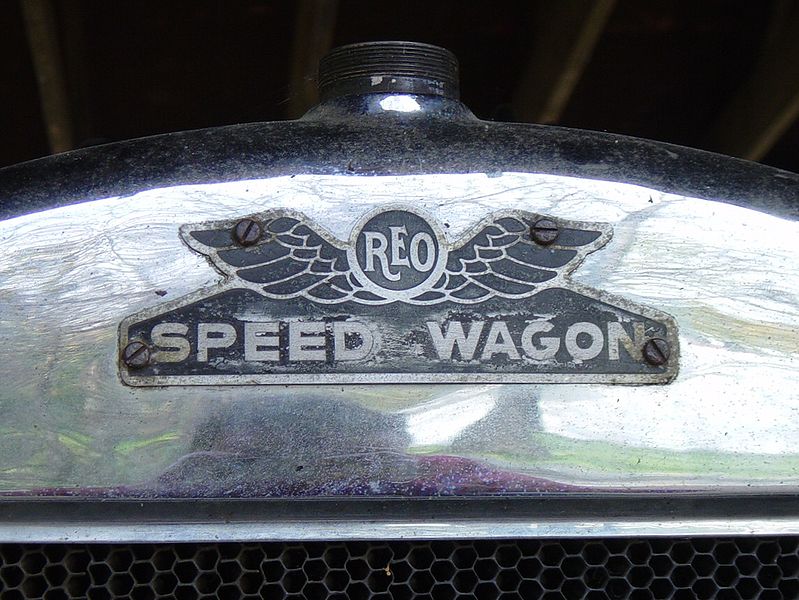
REO Speedwagon. The band, REO Speedwagon, was able to get away with using the name and logo of the REO Speed Wagon company probably because the auto company had likely abandoned any claims to the mark when it ceased production in 1936 (or some time in the later 1940s -- we're not sure) or perhaps when the later owners of the REO Motor Company declared bankruptcy in the early 1970s. An abandoned mark is free for anyone to use, although ceasing production of an automobile is not always a clear sign as to the status of the mark.
As a general rule, you want to avoid making people think the car company is affiliated or endorses your product or service -- for example, calling your band Miata -- or diluting a famous mark by tarnishing its reputation in a commercial context. However, we also note that there's plenty of leeway in these standards as the Caterpillar company found out when they tried unsuccessfully to prevent the use of their villainous tractors in a George of the Jungle movie.
The Abbey Road Cover. The image of a VW on the Abbey Road cover (above) is unlikely to trigger any trademark issues because the usage is primarily editorial -- that is, it's an incidental use and no particular attention is drawn to the car. Of course, at the time, fans saw hidden meanings in the presence of the car (Beetle = Beatle) but it turns out the car was simply a vehicle owned by someone in a nearby flat. (BTW, the license of the car was stolen soon after the album came out). If consumers were likely to be confused into thinking that Volkswagen (or any other car manufacturer whose vehicle appears on the street) endorsed the Beatles (or vice versa), the car company never saw fit to take action. After all, if the world's most popular band at the time is including your product on a popular album, that's not something you're likely to complain about. (In general, it was a less litigious world back in 1970.) BTW, an editorial use of a trademark -- for example, a picture of a Ford truck in a documentary about trucks -- is not infringing.
Herbie and VW Marks. As for Herbie and the Love Bug movies, Disney removed the name and logos (scroll down) from Herbie in the first movie in the series. Apparently the company was concerned about claims of trademark infringement. But several years later when the sequel appeared (Herbie Rides Again) in 1974, VW sales were down and the VW company insisted that Disney put the trademarks and names back. (The names and marks stayed on Herbie for the subsequent four Love Bug sequels.)
REO Speedwagon. The band, REO Speedwagon, was able to get away with using the name and logo of the REO Speed Wagon company probably because the auto company had likely abandoned any claims to the mark when it ceased production in 1936 (or some time in the later 1940s -- we're not sure) or perhaps when the later owners of the REO Motor Company declared bankruptcy in the early 1970s. An abandoned mark is free for anyone to use, although ceasing production of an automobile is not always a clear sign as to the status of the mark.
As a general rule, you want to avoid making people think the car company is affiliated or endorses your product or service -- for example, calling your band Miata -- or diluting a famous mark by tarnishing its reputation in a commercial context. However, we also note that there's plenty of leeway in these standards as the Caterpillar company found out when they tried unsuccessfully to prevent the use of their villainous tractors in a George of the Jungle movie.
Will Disclosure Docs Help Under First-to-File?
Dear Rich: Once the change is made to “First Inventor to File” under the America Invents Act, will the USPTO still accept filings of invention disclosure documents, as these would still be relevant and useful in derivation proceedings? Hey, welcome back everybody. It's 2012 and we're starting our fifth year of helping creative types answer pressing intellectual property questions. Sure, we never get selected for any "Best of" blog lists, and our Google Analytics are embarrassing, but hey, that's what happens when you're down in the trenches answering questions about Disney princess costumes, Miami Heat logos, and the copyrightability of reuben sandwich recipes. We're not sure how many zillions in dollars we've saved our readers in legal fees (or if we've actually saved anybody any money). But the important thing is that we think we're doing something worthwhile and so we continue on, paving a course that's punctuated by moments of unobscured clarity and unsuspected profundity. Did we say, "Welcome Back?"
Right, you had a question. Yes, disclosure documents might be helpful in the soon-to-come "derivation hearings" -- a process whereby the true creator of an invention is determined. However, if you are referring to the government's official Disclosure Document Program, that's been discontinued and so would not be available when first-to-file (and derivation hearings) kicks in on March 16, 2013. Patent it Yourself author David Pressman agrees with you that a record of conception and testing will be vital in a derivation proceeding, but in the absence of disclosure document filings, inventors will have to keep their own records. By the way, we've posted a series of articles on invention ownership issues at our Patents and Business site.
Subscribe to:
Posts (Atom)